The Hidden Reason Surveys Disqualify You (And How to Fix It)

Ajeet Thapa
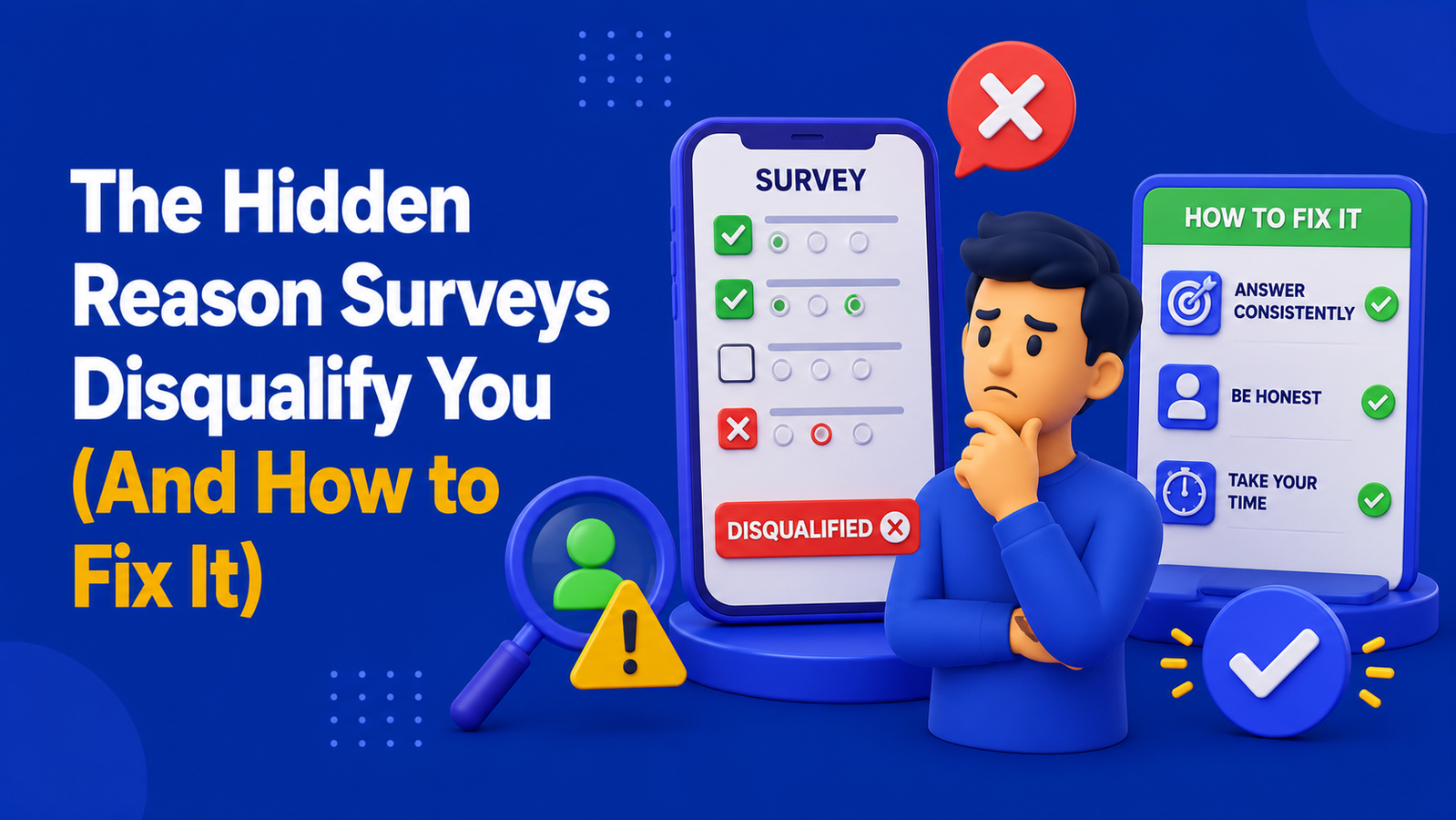
Understanding why surveys reject participants can help you avoid common mistakes and improve your approval rate over time. From screening questions and quality checks to profile consistency and trust signals, several factors determine whether you move forward or get screened out. By understanding these behind-the-scenes processes, you can become a more reliable respondent and significantly reduce unnecessary disqualifications.
1. Survey Disqualifications Usually Happen Before the "Real" Survey Even Begins
When users get disqualified, it often feels as though the system simply decided not to choose them. In reality, most rejections happen during the screening stage rather than during the actual survey. Before researchers begin collecting opinions, they first need to identify participants who match very specific demographic, behavioral, or purchasing criteria. Those opening questions exist to determine whether you fit the target audience—not to collect research data.
Because every survey looks for a different audience, honest respondents can still be screened out if they simply don't match the current quota. Sometimes the required audience has already been filled, while other times the study targets a narrow group of people. This screening process is a standard part of professional market research and helps brands collect relevant, high-quality insights instead of random responses.
Most survey disqualifications happen during the screening stage, where researchers determine whether you match the specific audience the study requires.
2. The Real Hidden Reason Is Trust Scoring, Not Just Demographics
Matching the target audience is only part of the qualification process. Modern survey platforms also evaluate how trustworthy your responses appear. Every answer contributes to an internal quality assessment that helps determine whether your data is reliable enough for research purposes. As a result, two people with identical demographics can experience very different approval rates based on how they complete surveys.
Survey systems analyze behavioral patterns such as response speed, consistency, attention checks, and repetitive answer selections. Rushing through questions, skipping important details, or providing contradictory responses can lower your trust score over time. Once a respondent begins showing patterns associated with low-quality data, future surveys may become more difficult to qualify for because the system gradually considers that participant a higher risk.
Survey platforms evaluate both who you are and how you answer, making response quality just as important as demographic matching.
3. Your Profile Is Always Being Updated
Many users assume their survey profile is limited to the information entered during registration. In reality, survey providers continuously build a more complete picture based on every survey you complete. Your answers gradually form a long-term respondent profile that helps determine which future studies you receive.
Consistency plays an essential role in maintaining this profile. If you identify yourself as a student in one survey, a business owner in another, and a senior manager in the next, those contradictions reduce confidence in your responses. Even smaller inconsistencies involving household size, employment status, shopping habits, or income ranges can accumulate over time, making it more difficult for survey systems to match you with future opportunities.
Every survey contributes to your long-term respondent profile, making consistency one of the most important factors in receiving future survey invitations.
4. Small Habits Can Build Long-Term Trust
Improving your qualification rate rarely requires special tricks or shortcuts. Instead, success comes from consistently demonstrating behaviors that survey systems associate with reliable participants. Reading every question carefully, maintaining a steady pace, and avoiding rushed responses all help strengthen your credibility over time.
Equally important is resisting the temptation to guess what researchers want to hear. Many users believe changing answers increases their chances of qualifying, but modern survey systems are specifically designed to detect unnatural response patterns. Honest, thoughtful, and consistent participation builds far more trust than attempting to manipulate screening questions, leading to better survey opportunities over the long term.
Reliable habits—careful reading, honest answers, and consistent responses—help build trust with survey platforms and reduce future disqualifications.
Why Trust Matters More Than Finding More Surveys
Survey success isn't simply about accessing a larger number of opportunities—it's about becoming the type of respondent that research platforms want to keep inviting back. Every survey you complete helps shape your reputation within the system, and over time, that reputation influences both your qualification rate and the quality of surveys you receive.
Rather than searching for shortcuts, focus on building consistency and credibility with every response. When survey platforms recognize you as a reliable participant, you're more likely to receive relevant studies, experience fewer frustrating screen-outs, and enjoy a smoother earning experience across GPT platforms.
The best way to qualify for more surveys isn't finding secret tricks—it's becoming a respondent that survey platforms consistently trust.