Offerwall SDK vs API Integration: Which Setup Should App Publishers Choose?

Ajeet Thapa
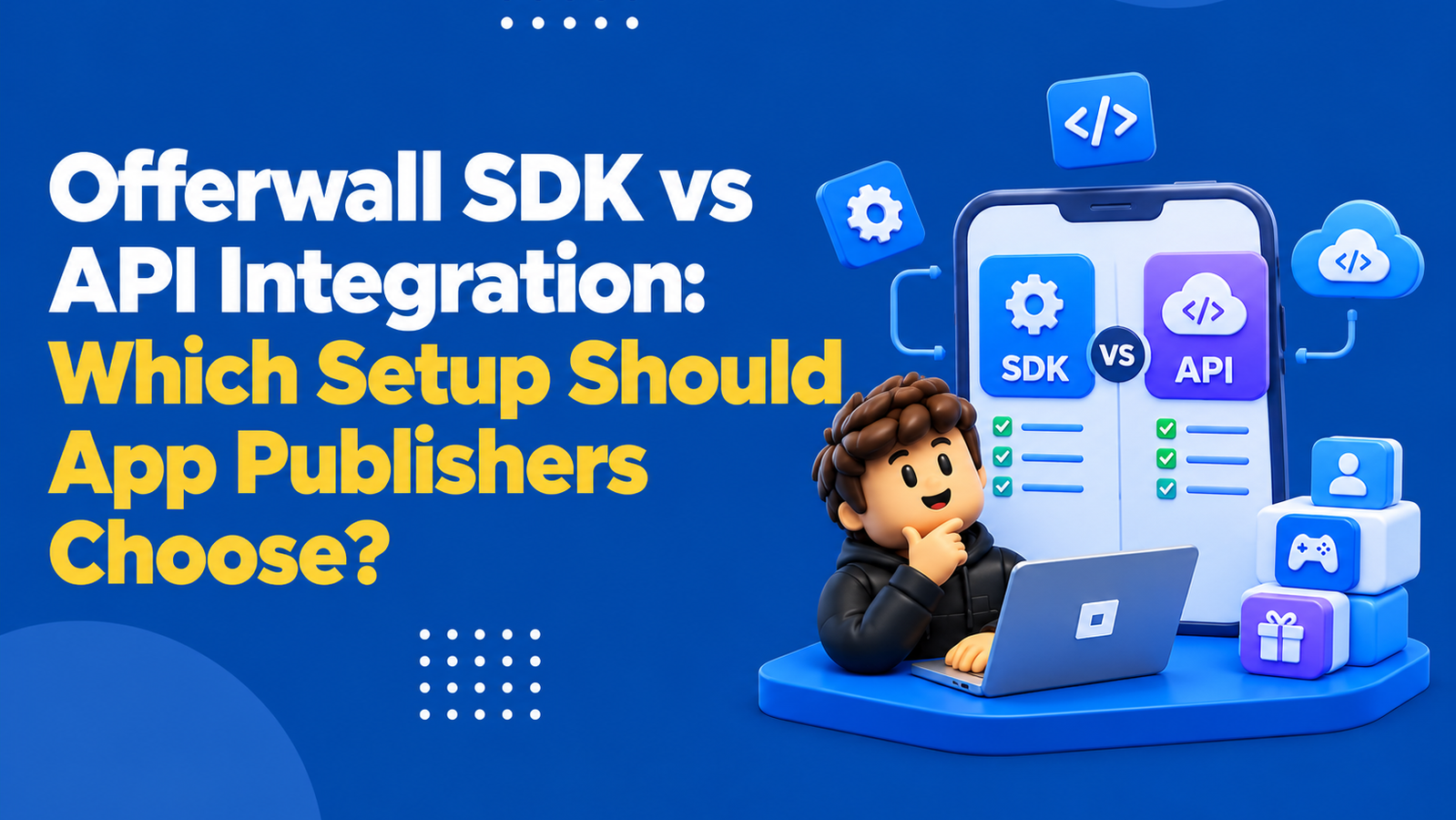
Choosing an offerwall integration method can affect how quickly a publisher launches, how much control developers have over the user experience, and how easily the monetization system fits into an existing application. For mobile app publishers, the decision often comes down to whether to use a provider-supported SDK or hosted offerwall, or to retrieve offer data through an API and build a more customized experience.
These approaches can serve different technical needs. A simpler integration may reduce development effort, while an API-based implementation can give a team greater control over how offers appear and interact with its app. However, the right choice depends on the provider's supported methods, the app's architecture, and the publisher's requirements for tracking and reward delivery. Understanding these differences helps publishers choose an integration that supports both reliable monetization and a consistent user experience.
1. Understanding the Difference Between Offerwall SDK and API Integration
An offerwall SDK, or software development kit, provides a set of tools and instructions for integrating a provider's functionality into a supported application. Depending on the platform, an SDK may handle tasks such as initialization, opening the offerwall, passing user information, and communicating with supported events. This can simplify implementation because developers do not need to build every integration component themselves. However, SDK availability, supported platforms, and included features vary by provider.
An API, or application programming interface, allows software systems to exchange information through defined requests and responses. In an offerwall integration, an API may allow a publisher to retrieve available offers and display them through its own interface. This provides more flexibility over presentation, filtering, and how offers fit into the app's existing navigation. It can also introduce additional responsibilities, such as managing API requests, handling errors, updating offer data, and ensuring that tracking parameters are passed correctly.
It is important to distinguish an API-based offer listing from the complete reward process. Fetching offers does not automatically confirm that a user has completed an offer or that a reward has been credited. Publishers must understand the provider's separate tracking and conversion-confirmation mechanisms before deciding how to implement the full workflow.
An SDK can simplify supported integration tasks, while an API can provide more control over how offer data is used. Neither option removes the need for reliable conversion tracking.
2. When a Hosted Offerwall or SDK-Based Approach Makes More Sense
For publishers that want to introduce offerwall monetization without building a custom offer interface, a hosted offerwall can be a practical starting point. The provider manages the offer presentation, while the publisher integrates an entry point into its website or application using the supported method. Depending on the implementation, this may involve an embedded web view, an iframe on a website, or a provider-supported SDK. Developers should verify which options are available for their specific platform rather than assuming every provider offers a native SDK.
This approach is particularly useful for smaller development teams, publishers validating a new revenue stream, or apps that do not require extensive customization. It can reduce the amount of front-end code the publisher needs to maintain and allow the team to focus on the surrounding user experience. Nevertheless, the integration still needs appropriate user identification, error handling, testing, and a clear process for investigating missing rewards or conversion discrepancies.
For AdbreakMedia publishers, the documented web offerwall provides an integration path using a placement identifier and a unique user ID. Its documentation also describes optional sub-IDs that can pass additional values for tracking purposes. Publishers can review the AdbreakMedia Web Offerwall integration guide to understand the supported setup. This is a documented web integration option, not a claim that the same implementation is a native mobile SDK.
If your priority is to launch an offerwall with less custom development, start by evaluating the provider's hosted integration options before committing to a fully custom interface.
3. When API Integration Is the Better Choice for Publishers
An API-based approach becomes more attractive when the publisher needs greater control over the offerwall experience. For example, a gaming app may want to present selected offers within a particular menu, while a rewards app may need to organize offers by category or display additional information alongside each task. An API can provide the offer data needed to create these experiences, subject to the provider's available endpoints and integration rules.
This flexibility comes with additional engineering work. Developers need to manage requests, handle unsuccessful responses, decide how frequently to refresh offer data, and prevent outdated offers from remaining visible. They should also ensure that any user-specific information is associated with the correct account and that click-through links preserve the parameters required for attribution. If the publisher builds its own interface, it becomes responsible for maintaining that interface as the app and integration evolve.
AdbreakMedia documents both a Client API and a Static API. The Client API documentation describes client-side offer retrieval, while the Static API documentation describes server-side retrieval of offer data. The Static API documentation advises publishers to refresh data periodically and notes that it is not intended for direct client-side offer fetching. Publishers should therefore select the documented endpoint that matches their intended architecture and follow its requirements for credentials, request frequency, and data handling.
API integration is most useful when its additional flexibility solves a real product or technical requirement. Custom development alone does not guarantee better monetization results.
4. Compare Integration Effort, Tracking, Security, and Maintenance
Before selecting an integration method, publishers should assess more than the initial development time. A hosted offerwall may require less custom interface code, but developers still need to test the user journey and verify that the offerwall receives the correct user context. An API-based implementation may provide more control, but it can also require additional code for offer rendering, caching, error handling, and compatibility with future app updates.
Tracking and reward handling deserve particular attention. A unique user identifier helps associate offer activity with the correct account, while supported tracking parameters may provide additional context for analyzing performance. Publishers should use stable, appropriately scoped identifiers and avoid exposing personal information unnecessarily. They should also understand how the provider reports completed conversions, how discrepancies are investigated, and whether server-side notifications or other verification mechanisms are available.
Security requirements depend on the integration method. Publishers must protect secret credentials, avoid placing private API keys in client-side code, and follow the provider's authentication requirements. They should test incomplete requests, unavailable endpoints, duplicate conversion notifications where applicable, and interrupted user sessions. These checks help prevent implementation errors from becoming reward disputes or reporting inconsistencies after launch.
Evaluate the full operating cost of an integration, including tracking, security, troubleshooting, and ongoing maintenance—not just the time needed to display the offerwall.
5. How to Choose the Right Offerwall Integration for Your App
The most suitable integration depends on the publisher's existing technology and the experience it wants to deliver. A website publisher that needs a straightforward implementation may prefer a hosted web offerwall. A publisher building a custom offer interface may prefer an API that exposes the required offer data. A native mobile app should first verify whether its chosen provider offers a compatible SDK or whether a supported web-based integration is more appropriate.
Before committing, developers should document the required platforms, expected customization, user-identification method, conversion-tracking workflow, and security requirements. They should then confirm that the provider's documentation supports each requirement. A small test implementation can help validate offer loading, click attribution, conversion reporting, and the user journey before the feature is released to a wider audience.
For publishers considering AdbreakMedia, the appropriate starting point is its official integration documentation, which outlines its offerwall and API options. Publishers can also visit the AdbreakMedia publisher registration page to explore the platform. The goal should be to choose a supported integration that fits the app's needs and can be maintained reliably as the product grows.
The best integration is the one your team can implement securely, measure accurately, and maintain without compromising the app experience.
Choosing an Integration That Supports Long-Term Monetization
Offerwall SDKs, hosted offerwalls, and API-based implementations address different development requirements. Hosted solutions can reduce the need to build a custom offer interface, while APIs can provide more control over how offer data is presented. The right choice depends on platform compatibility, development resources, customization needs, and the provider's tracking and security capabilities.
For AdbreakMedia publishers, evaluating the documented integration options before development can help avoid unnecessary engineering work and establish a clearer path to launch. A well-planned implementation should do more than display available offers: it should preserve user attribution, support reliable conversion verification, provide useful performance data, and deliver a consistent experience. These foundations make it easier to maintain the integration and evaluate its contribution to app monetization over time.
Related Articles
Offerwall Integration Checklist: What App Developers Should Verify Before Launch
Use this offerwall integration checklist to verify SDK compatibility, conversion tracking, reward delivery, user experience, analytics, and launch readiness before release.
Tapjoy vs AdGem: Comparing Two Mobile Offerwall Platforms
Learn how Tapjoy and AdGem compare across offerwall integration, campaign relevance, tracking, reporting, and monetization strategy to help mobile publishers evaluate their options.

Why High-Value Offers Can Underperform: The Psychology Behind Bigger Rewards
Discover why bigger rewards do not always drive conversions and how effort, trust, complexity, and perceived value influence offerwall performance.