How Subscription Fatigue Impacts Reward Offer Conversions in 2025

Ajeet Thapa
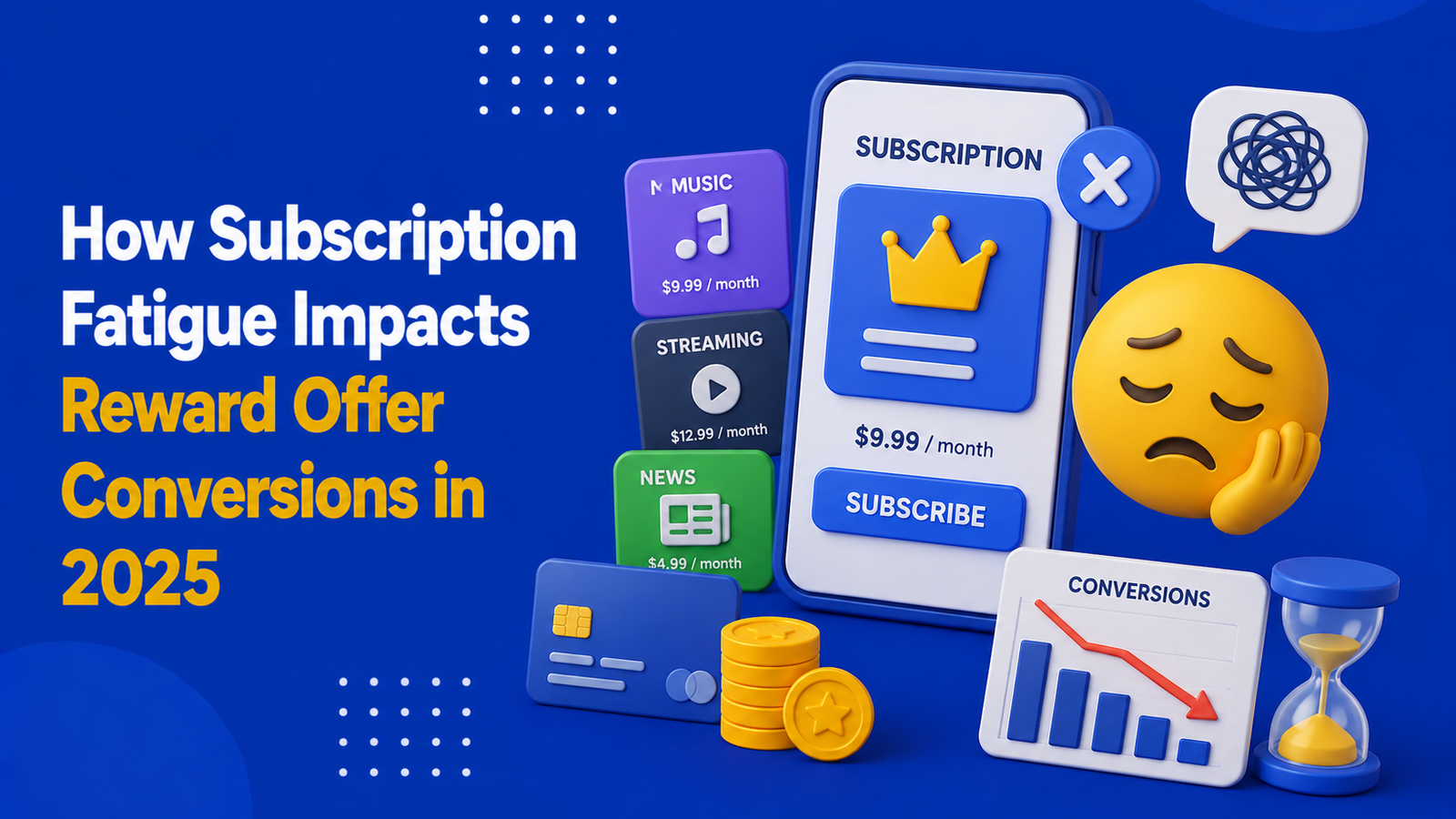
By 2025, subscriptions have become deeply embedded into everyday digital experiences. From entertainment platforms and gaming services to fitness apps, productivity tools, cloud storage, and financial products, recurring payments have transformed how consumers access products and services. However, the same convenience that made subscriptions popular has also created a new challenge: users are overwhelmed by the growing number of monthly commitments they manage.
This growing frustration has led to the rise of subscription fatigue—a consumer mindset where people become more cautious about signing up for new recurring services. Rising prices, forgotten renewals, complicated cancellation processes, and subscription overload have changed how users evaluate digital offers. Instead of immediately accepting free trials or promotional deals, consumers are increasingly asking whether a service provides enough long-term value to justify another monthly payment. The following sections explore why subscription fatigue emerged as a major consumer trend, how it impacts reward ecosystems and advertisers, and what businesses must do to adapt in a subscription-heavy economy.
1. The Subscription Economy Reached a Point of Saturation
Over the past decade, subscription models transformed from a niche business strategy into one of the dominant ways companies deliver digital products. Streaming platforms, software tools, gaming memberships, online education platforms, and lifestyle services all adopted recurring payment models because they provide predictable revenue and stronger customer relationships. However, as more companies adopted subscriptions, consumers found themselves managing an increasing number of monthly expenses.
By 2025, many users had accumulated multiple active subscriptions across entertainment, productivity, shopping, and personal services. While each individual subscription may appear affordable, the combined cost creates financial pressure and decision fatigue. Consumers are no longer evaluating subscriptions individually—they are considering the total number of recurring commitments already attached to their accounts.
The problem is no longer whether consumers like subscriptions—it is whether they can handle another one.
2. Consumer Trust in Free Trials and Auto-Renewals Is Declining
Free trials were once among the most effective strategies for acquiring new subscribers. Users could experience a service without financial risk, while companies gained opportunities to convert trial users into paying customers. However, years of automatic renewals, unclear pricing structures, and difficult cancellation experiences have changed how people perceive these offers.
Modern consumers have become more cautious when they see subscription-based promotions. Many users now associate free trials with potential frustration rather than convenience, especially when they need to provide payment details upfront or remember cancellation deadlines. This shift has created a trust gap between brands and consumers, making transparency a critical factor in subscription success.
For reward platforms and offerwall ecosystems, this change in behavior is especially important. Users who previously completed subscription trials easily may now hesitate unless they understand exactly what they are receiving, how long the trial lasts, and how they can manage their subscription afterward.
In a crowded subscription market, trust has become just as valuable as the product itself.
3. Subscription Fatigue Is Changing Reward Offer Performance
Subscription offers have historically been strong performers in digital reward ecosystems because they combine high advertiser value with attractive user incentives. Users could complete a trial, explore a service, and receive a reward for their participation. However, subscription fatigue has changed the conversion journey. The moment users see recurring billing, payment requirements, or long-term commitments, many become more hesitant.
This hesitation directly impacts offerwall performance. Lower trust leads to fewer clicks, incomplete sign-ups, and higher drop-off rates during conversion funnels. Even users who are interested in the reward may abandon the process when they encounter additional steps such as entering payment information or reviewing renewal conditions.
Advertisers must now focus on reducing friction throughout the user journey. Clear instructions, transparent messaging, and strong brand recognition have become essential factors in convincing users to complete subscription-based offers.
Higher rewards alone cannot overcome user hesitation when trust and clarity are missing.
4. Advertisers Are Balancing Higher Acquisition Costs With User Quality
As subscription fatigue increases, advertisers face a more complex challenge. Increasing payouts can attract more users, but incentives alone do not guarantee valuable subscribers. Many users may complete a subscription offer only to receive the reward and cancel shortly afterward, creating lower retention and reduced customer lifetime value.
This has pushed brands to look beyond simple acquisition numbers. Metrics such as retention rate, customer lifetime value (LTV), return on ad spend (ROAS), and churn have become increasingly important when evaluating subscription campaigns. Advertisers are no longer focused only on how many users subscribe—they want to understand whether those users remain engaged after the initial conversion.
As a result, companies are improving onboarding experiences, refining targeting strategies, and creating subscription offers that attract users who genuinely need the service rather than users motivated only by short-term rewards.
The future of subscription growth depends less on acquiring more users and more on attracting the right users.
5. Value-Driven Subscriptions Are Still Winning Consumer Attention
Although subscription fatigue is growing, consumers have not rejected subscriptions completely. Instead, they have become more selective. Services that provide clear, immediate, and meaningful value continue to perform well because users can easily understand why the recurring cost is worthwhile.
Entertainment bundles, premium learning platforms, productivity tools, gaming memberships, and financial services with strong benefits remain attractive when they solve specific problems or provide consistent value. Familiar brands also maintain an advantage because users already understand what they offer and feel more confident about their reliability.
For reward platforms, this means successful subscription offers will depend on better matching between users and services. Instead of showing every subscription offer to every user, platforms will increasingly rely on personalization, behavioral data, and smarter segmentation to improve relevance.
Consumers are not abandoning subscriptions—they are demanding subscriptions that earn their place in their daily lives.
6. The Future of Subscription Offers in a More Selective Market
Subscription fatigue represents a major shift in consumer behavior rather than the end of the subscription economy. As users become more careful with recurring payments, businesses will need to prioritize transparency, flexibility, and long-term value. Subscription models that rely only on aggressive acquisition tactics will struggle, while brands that build trust and deliver meaningful experiences will continue to grow.
For reward platforms and advertisers, the future will involve smarter targeting, improved user education, and more personalized offer experiences. Artificial intelligence and advanced analytics will help identify users who are more likely to benefit from specific subscriptions, improving both conversion quality and customer retention.
The subscription economy is entering a more mature stage where consumers have greater awareness and stronger expectations. In this environment, success will not come from convincing users to subscribe to everything—it will come from proving why a subscription deserves their attention, money, and loyalty.
The next phase of subscriptions will be built around value, trust, and meaningful user relationships—not simply recurring payments.