What “Verification” Really Means in Offerwall Tasks (And Why It Takes Time)

Ajeet Thapa
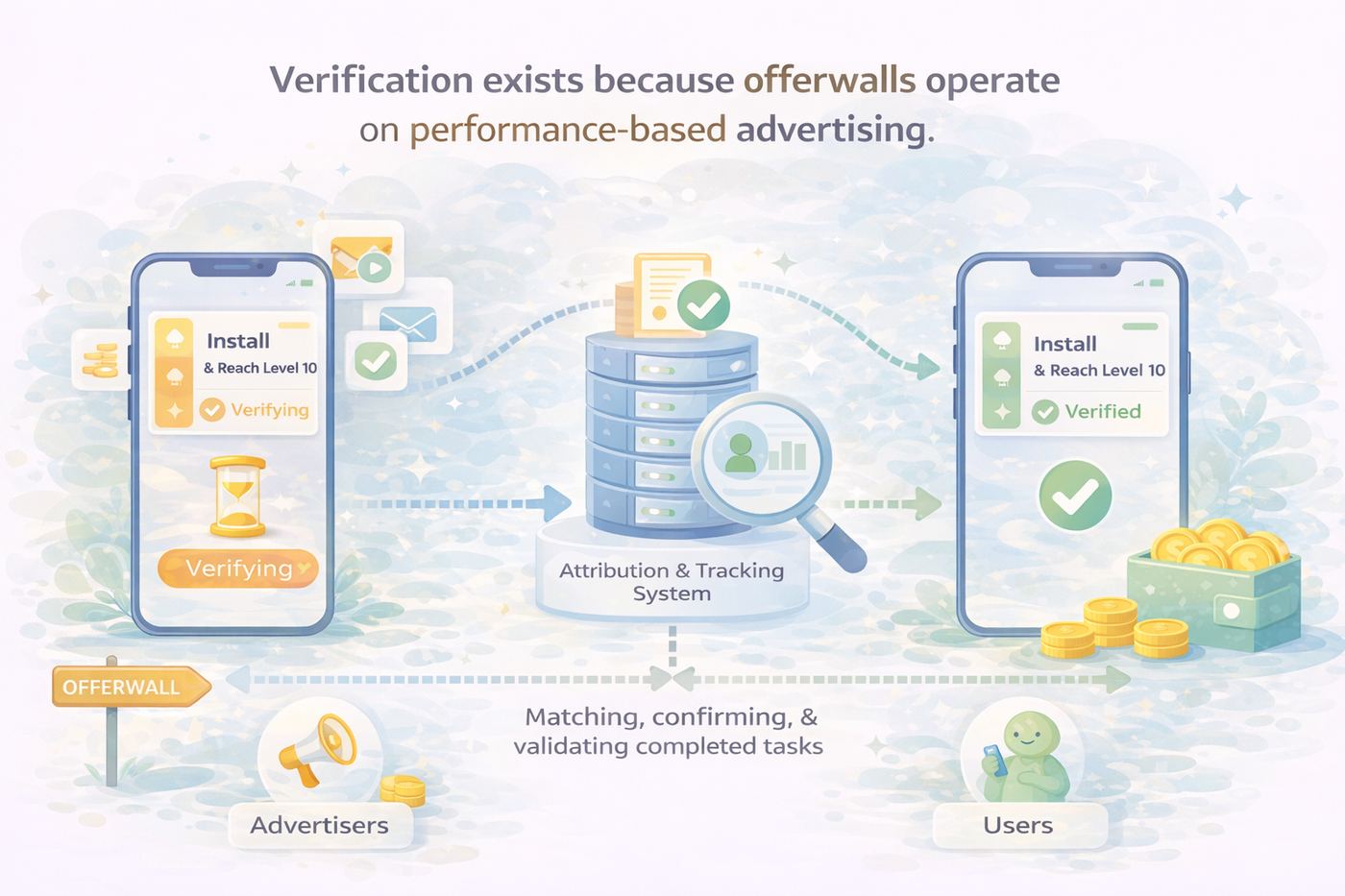
Verification exists because offerwalls operate on performance-based advertising, not instant rewards
When an offerwall task enters verification, it is not being manually reviewed or questioned—it is following the same confirmation process used across performance advertising. Offerwalls act as intermediaries between users and advertisers, and they cannot issue rewards until advertisers confirm that a valid action occurred. This confirmation is handled through mobile attribution and tracking systems that match installs, signups, or in-app events to a specific campaign. The process ensures that advertisers are only charged for actions that were properly tracked and compliant with campaign rules. Because attribution data must be processed, matched, and validated after completion, verification always happens after the task is finished rather than during it, which is why instant crediting is not always possible.
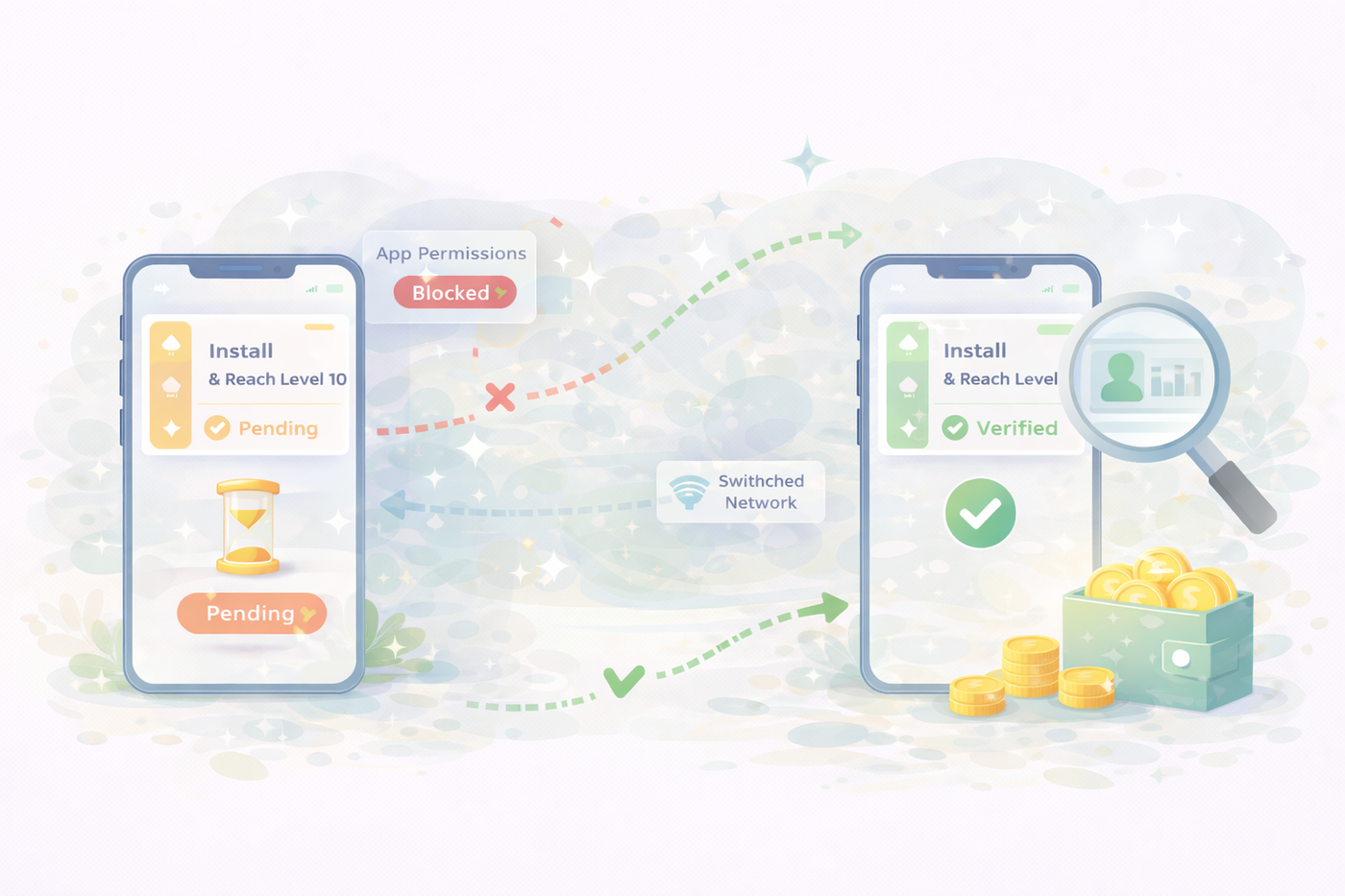
Verification evaluates whether the action was valid, not just whether it was completed
From the user’s perspective, completing the steps feels like the end of the process. From the advertiser’s perspective, completion is only meaningful if it meets a defined set of technical and contextual conditions. Verification checks whether the action was attributed correctly, occurred on an eligible device, complied with geographic restrictions, and maintained uninterrupted tracking throughout the process. Even small disruptions—such as reinstalling an app, switching networks, or blocking tracking permissions—can prevent attribution systems from confirming the action. Attribution providers explain that when required signals are missing or inconsistent, conversions cannot be validated, regardless of user intent, which is why some completed offers remain pending or fail verification.
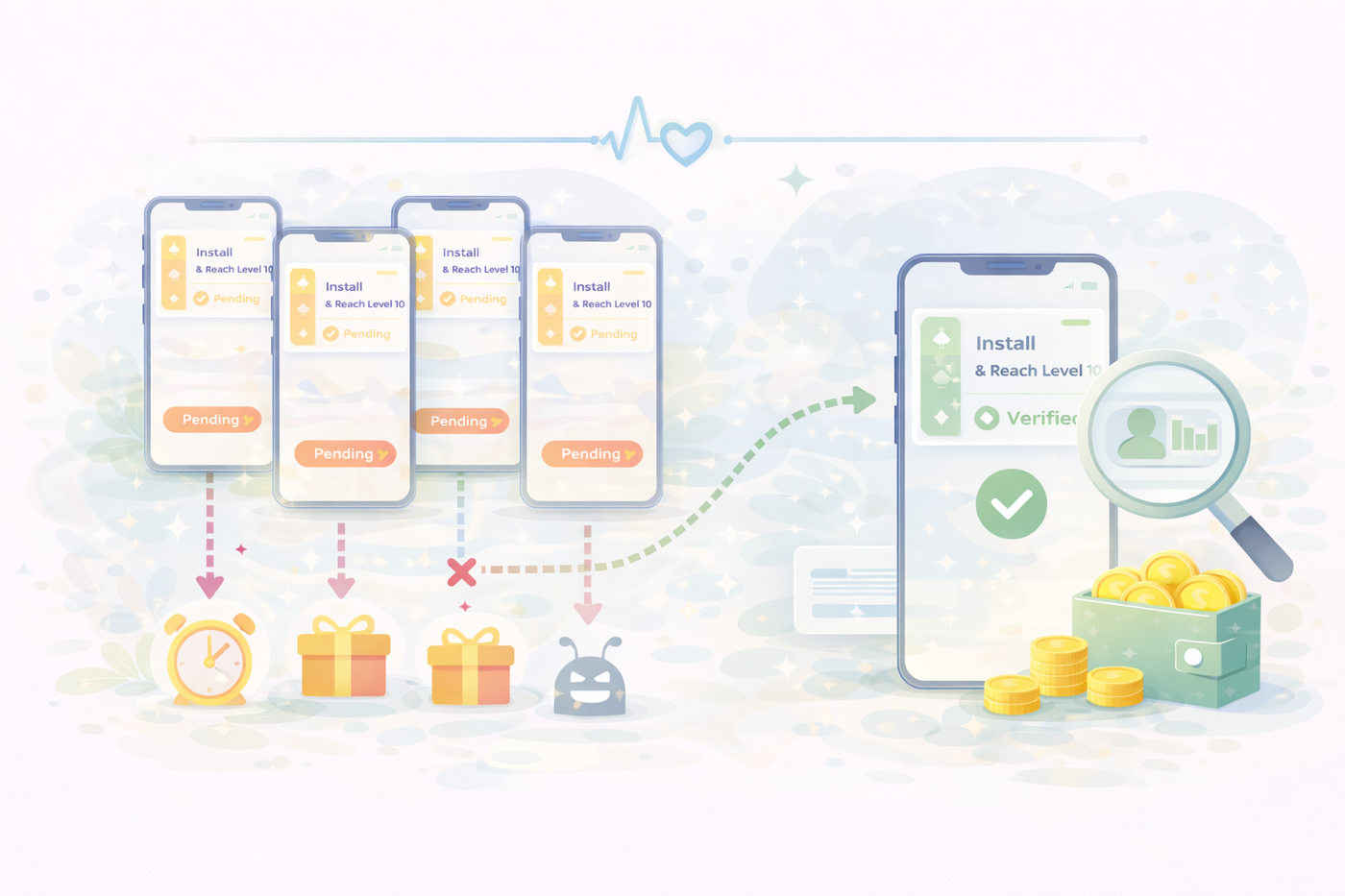
Behavioral consistency plays a larger role in verification than most users realize
Verification systems do not only analyze technical signals; they also assess whether user behavior resembles normal, organic usage. Actions completed extremely quickly, repeated across multiple offers, or performed in patterns that resemble automation may trigger additional review. This does not necessarily mean the user is doing anything wrong, but it does cause advertisers to apply stricter scrutiny. Performance marketing platforms document that fraud prevention systems rely heavily on behavioral signals to distinguish genuine users from risky traffic. As a result, users who complete offers at a natural pace, avoid multitasking disruptions, and interact consistently are more likely to experience smoother verification outcomes over time.
Verification delays exist because advertisers validate engagement, not just initial actions
Many offerwall tasks are intentionally verified after a delay because advertisers are not paying solely for an install or signup—they are paying for meaningful engagement. Waiting periods allow advertisers to confirm that users did not immediately uninstall the app, abandon the account, or complete the task only to trigger a reward. These validation windows are common in mobile advertising and are often processed in batches rather than in real time. Advertisers explain that post-install and post-action validation protects campaign budgets and improves long-term performance, which is why verification timelines can vary depending on the offer type and advertiser requirements.

Verification protects legitimate users by preserving advertiser trust and offer availability
Although verification can feel frustrating, it exists to keep the offerwall ecosystem sustainable. Without verification, advertisers would quickly lose confidence in offerwall traffic, reduce budgets, or exit entirely—leading to fewer offers and lower rewards for users. Verification ensures that rewards are backed by real advertiser value and that abuse does not dilute opportunities for genuine participants. Industry marketplaces emphasize that strong quality controls benefit reliable users over time by enabling higher payouts, better offers, and more consistent availability. In this way, verification is not an obstacle to earnings but the system that makes those earnings possible in the first place.
Related Articles

Earn $5–$10 Every Day on GPT Sites: The Complete Daily Strategy
A complete strategy for earning $5–$10 per day using GPT sites. Discover the best tasks, platforms, and daily routines used by top earners.

Why Some Countries Earn More on GPT Sites (Explained With Real Data)
Ever wonder why users in some countries make more on GPT sites? Here’s a simple explanation based on real data, country tiers, and offer availability.