Offerwall Placement by Game Genre: What Works for RPGs, Puzzle Games, Casino Games, and Strategy Games

Ajeet Thapa
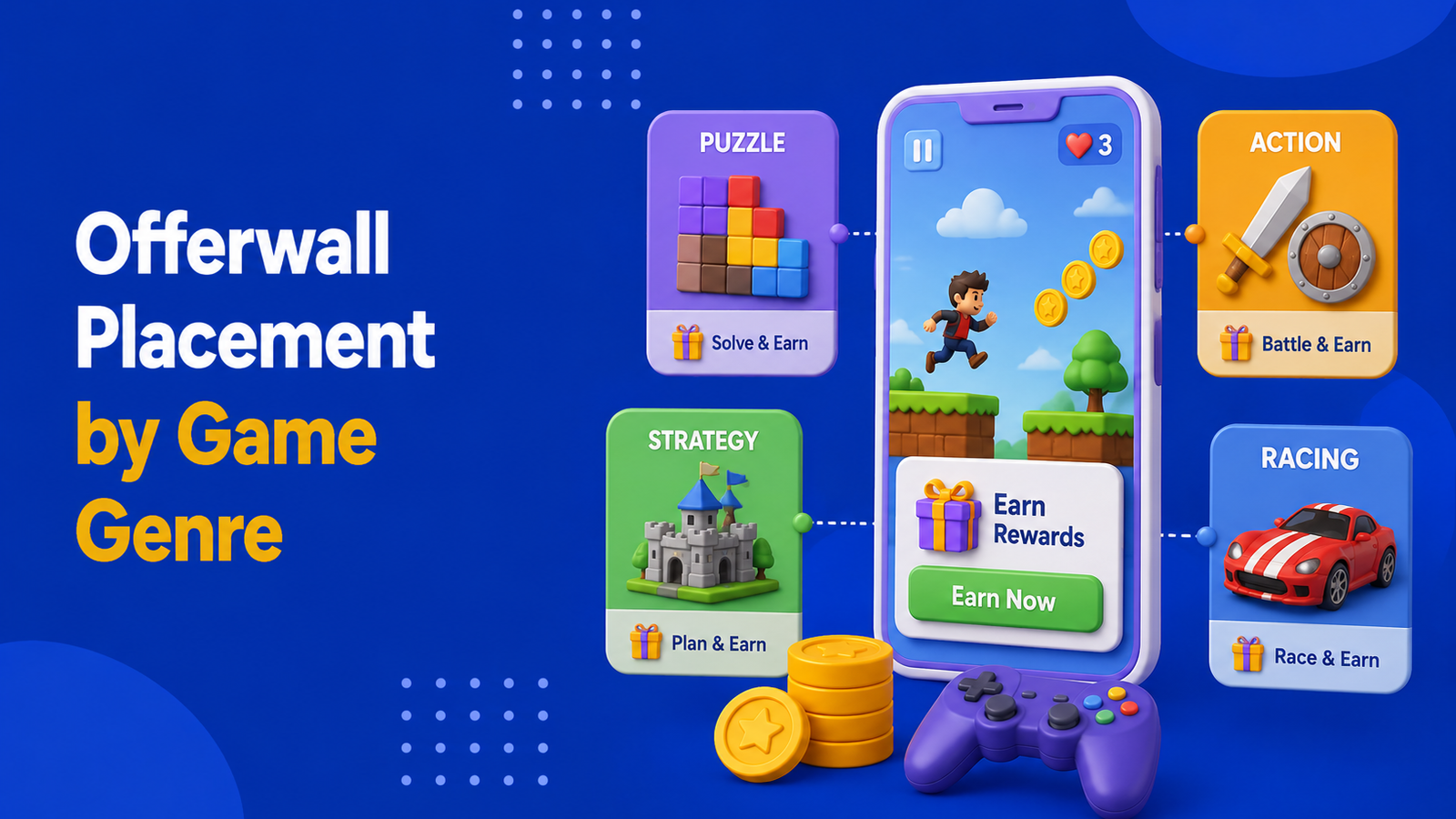
There is no universal location that guarantees strong offerwall performance across every mobile game. While offerwalls have become one of the most effective rewarded monetization tools, their success depends heavily on how well they fit within the gameplay experience. The same placement that generates high engagement in a role-playing game may feel completely out of place in a puzzle game or a casino-style title because every genre is built around different progression systems, player motivations, and reward expectations.
Understanding these differences has become increasingly important for publishers looking to maximise both revenue and player satisfaction. Instead of copying the same placement strategy across every game, successful publishers design offerwall experiences around the moments when players naturally need additional resources or support. Explore how offerwall placement should be adapted for RPGs, puzzle games, casino games, and strategy games, along with the principles that help publishers create monetization experiences that feel helpful rather than disruptive.
1. Why Game Genre Should Influence Offerwall Placement
Every mobile game follows its own progression loop, economy, and player behaviour, making genre one of the most important factors when deciding where an offerwall should appear. Puzzle games focus on short sessions and immediate problem-solving, while RPGs encourage long-term character progression. Strategy games revolve around resource management and planning, whereas casino-style games are driven by virtual currency and continuous play.
Because these gameplay mechanics differ significantly, players experience moments of need at different points in their journey. An offerwall becomes most effective when it appears during these naturally occurring moments rather than being placed in the same location across every title. Publishers who recognise these behavioural differences are more likely to increase engagement while maintaining a positive gameplay experience.
The best offerwall placement begins with understanding how players interact with each game genre, not with choosing the most visible screen.
2. RPG Games Perform Best When Offerwalls Support Character Progression
Role-playing games are built around continuous progression. Players invest time upgrading heroes, unlocking equipment, completing quests, and strengthening their characters. Because resource shortages are a natural part of this progression system, offerwalls perform best when they appear near upgrade-related activities.
The in-game store is often one of the strongest locations because players are already searching for premium currency or valuable resources. Character upgrade screens, equipment enhancement pages, quest progression menus, and stamina refill prompts also create highly relevant placement opportunities. Instead of interrupting gameplay, the offerwall provides players with an alternative way to continue progressing toward their next objective.
When offerwall messaging directly connects rewards with upgrading heroes, unlocking equipment, or completing quests, players are more likely to perceive the feature as part of the progression system rather than a separate advertising element.
In RPGs, offerwalls become most valuable when they help players continue building their characters and advancing through the game.
3. Puzzle Games Benefit From Placement During High-Intent Moments
Puzzle games are designed around quick gameplay loops where players frequently encounter obstacles such as running out of moves, lives, or boosters. These moments naturally create demand for additional resources, making them ideal opportunities for introducing an offerwall.
The level-fail screen consistently performs well because players already want another chance to complete the level. Booster purchase pages, hint screens, and life refill menus also encourage strong engagement since users are actively looking for ways to continue playing. Rather than forcing players to leave the game or wait for resources to regenerate, the offerwall provides an immediate alternative.
Because puzzle players often make quick decisions, placement should remain simple, highly visible, and closely connected to the immediate challenge they are trying to overcome.
For puzzle games, the strongest offerwall placement appears exactly when players need one more opportunity to keep playing.
4. Casino Games Respond Best to Currency and Reward-Based Placement
Casino-style mobile games revolve around maintaining virtual chips, coins, spins, and bonus rewards that allow players to continue participating. As a result, offerwalls are most effective when positioned around moments where users actively seek additional virtual currency.
Low-balance notifications, virtual coin stores, daily reward screens, bonus spin pages, and event hubs all provide highly relevant placement opportunities. These screens already encourage players to think about increasing their balance, making an offerwall feel like another legitimate way to earn resources instead of simply presenting another advertisement.
Publishers should also prioritise transparency by making it clear that offerwall rewards provide virtual in-game currency. Clear messaging builds trust while reinforcing the offerwall as part of the overall entertainment experience.
Casino game offerwalls work best when they extend gameplay by giving players another way to earn the resources they need.
5. Strategy Games Perform Well Around Resource Shortages and Timers
Strategy games focus heavily on long-term planning, construction, upgrades, research, and resource management. Throughout gameplay, players regularly encounter situations where they lack the resources or time required to continue progressing, creating natural opportunities for offerwall engagement.
Building upgrade menus, research timers, resource shortage notifications, troop training screens, and speed-up options all provide highly contextual placement opportunities. Event centres also perform well because strategy players often seek additional resources to compete more effectively during limited-time competitions.
Instead of interrupting planning, offerwalls should appear when players are actively searching for ways to overcome progression barriers. This creates a stronger connection between monetization and gameplay while preserving the strategic nature of the experience.
Strategy players value offerwalls most when they help reduce waiting time and unlock meaningful progression.
6. Successful Placement Depends on Testing Every Genre Independently
Although genre provides a strong foundation for offerwall placement, no two games behave exactly alike. Different economies, player demographics, progression systems, and reward structures mean that publishers should continuously test placement strategies rather than assuming one approach will always succeed.
Metrics such as offerwall open rate, conversion rate, reward completion, revenue per user, retention, and player feedback provide valuable insights into how different placements perform. Testing multiple locations within each genre allows publishers to discover where offerwalls generate the greatest value without disrupting gameplay.
The strongest monetization strategies evolve alongside player behaviour. Publishers who regularly optimise placement based on real user data create offerwall experiences that feel relevant, supportive, and naturally integrated into every stage of gameplay.
The best offerwall placement isn't determined by genre alone—it is refined through continuous testing within each individual game.