How Poor Reward Support Can Kill Offerwall Performance

Ajeet Thapa
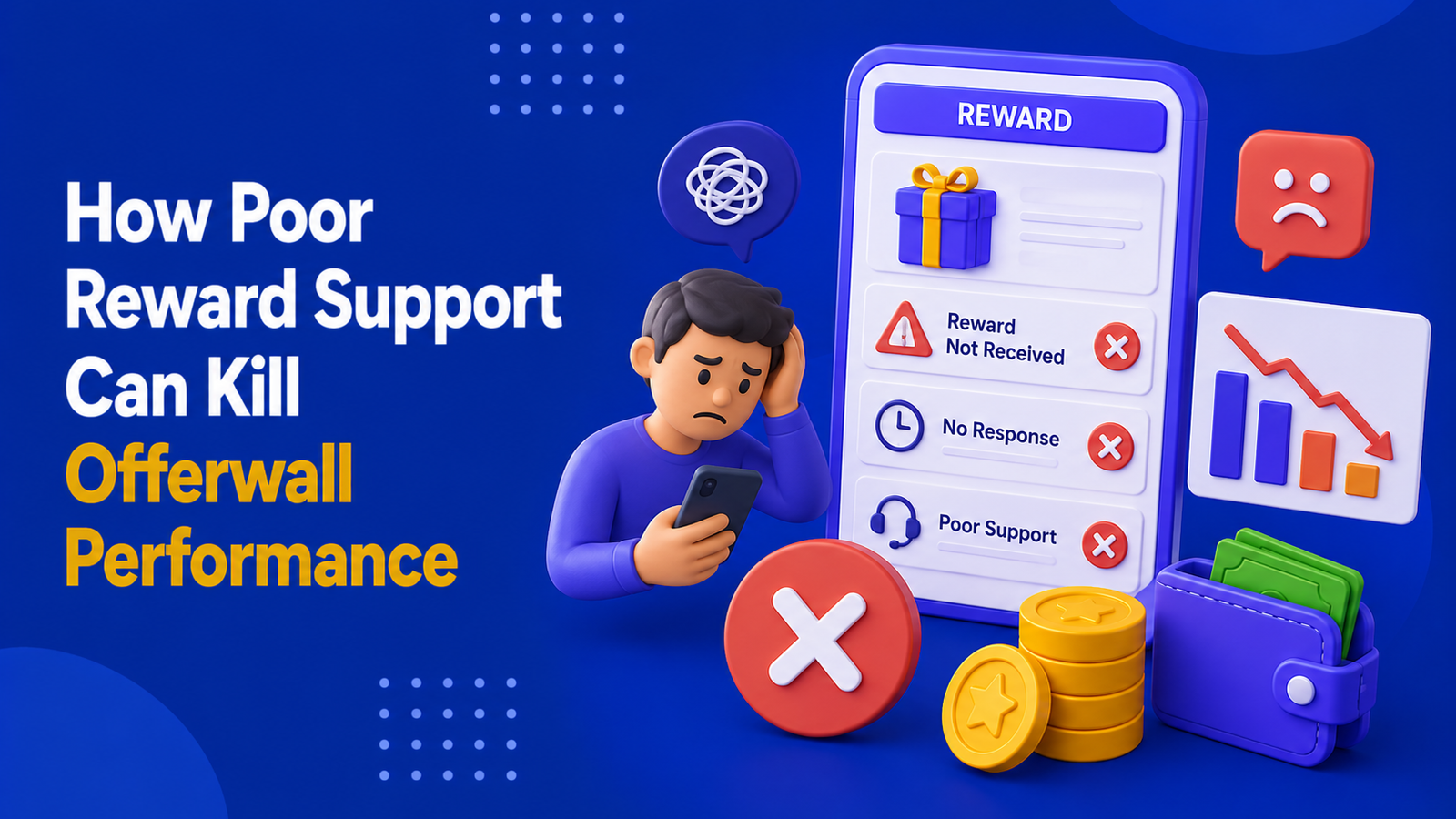
Rewards are the foundation of every successful offerwall experience. They motivate users to complete offers, build trust in the platform, and encourage repeat engagement over time. However, delivering rewards is only part of the equation. When users experience delayed payouts, missing rewards, unresolved support requests, or confusing claim processes, their confidence in the entire reward ecosystem begins to decline. Even if advertisers deliver high-quality offers, poor reward support can quickly discourage users from participating again.
For publishers and monetization teams, reward support is no longer just a customer service function—it has become a critical driver of user retention, engagement, and revenue. Fast issue resolution, transparent communication, and reliable reward delivery directly influence how users perceive an offerwall and whether they continue using it. Explore how poor reward support affects offerwall performance, the warning signs publishers should monitor, and the strategies that help maintain user trust while maximizing long-term monetization.
1. Reward Support Shapes the First Impression of an Offerwall
For many users, their first interaction with an offerwall determines whether they will return in the future. Completing an offer and receiving the promised reward immediately creates confidence in the platform, while delays or missing rewards create uncertainty. Even if the issue affects only a small percentage of users, negative first impressions can discourage future participation and reduce overall engagement.
Trust is particularly important because offerwalls ask users to invest time and effort before receiving value. When users believe the reward process is reliable, they are more willing to complete larger and higher-value offers. Conversely, repeated reward issues quickly damage credibility and make users hesitant to engage with future campaigns.
The success of an offerwall begins not when an offer is completed, but when users trust that their effort will be rewarded.
2. Delayed or Missing Rewards Quickly Reduce User Motivation
One of the fastest ways to reduce offerwall engagement is through inconsistent reward delivery. Users complete offers with the expectation that rewards will arrive within the promised timeframe. When rewards are delayed without explanation or fail to appear entirely, frustration often replaces motivation.
These negative experiences extend beyond individual offers. Users who lose confidence in one reward may become reluctant to participate in other campaigns, regardless of the advertiser. Over time, this leads to fewer offer completions, declining repeat usage, and lower monetization performance across the entire platform.
Providing realistic reward timelines and keeping users informed throughout the verification process helps reduce uncertainty and maintain confidence, even when certain offers require additional validation before rewards can be issued.
Reliable reward delivery keeps users motivated, while uncertainty encourages them to stop participating altogether.
3. Slow Customer Support Damages Trust More Than the Original Problem
Occasional reward issues are unavoidable in any large offerwall ecosystem. Tracking failures, advertiser verification delays, or technical errors may occasionally prevent rewards from being delivered immediately. What determines the overall user experience is not whether problems occur, but how quickly and effectively they are resolved.
When support responses take several days or users receive generic replies without meaningful updates, frustration often grows far beyond the original issue. Users begin questioning whether anyone is actively investigating their case, reducing confidence in both the offerwall and the publisher.
Fast, transparent support demonstrates that user concerns are taken seriously. Even when immediate resolution is impossible, regular communication helps maintain trust and reassures users that their efforts have not been ignored.
Strong support doesn't eliminate every problem—it prevents temporary issues from becoming permanent trust issues.
4. Poor Reward Experiences Affect More Than Individual Users
Reward-related issues rarely remain isolated. Users frequently share their experiences through app reviews, online communities, social media, and gaming forums. A handful of unresolved complaints can influence the expectations of thousands of potential users before they ever interact with an offerwall.
Negative reputation also affects monetization performance. Lower trust leads to fewer offer completions, weaker engagement, and declining advertiser confidence. Publishers may see reduced participation even when new offers provide competitive rewards simply because users no longer believe rewards will arrive as promised.
Protecting reputation therefore requires consistent support quality as much as reliable reward systems. Every resolved issue strengthens confidence, while unresolved complaints can quietly reduce long-term platform growth.
One unresolved reward issue may affect a single user, but its reputation can influence many more.
5. Better Reward Support Creates Better Monetization
Reliable support benefits every participant in the offerwall ecosystem. Users remain confident when they know problems will be handled fairly, advertisers receive higher-quality conversions because users continue engaging with offers, and publishers benefit from stronger retention and increased lifetime value.
Clear reward policies, easy ticket submission, transparent tracking, and proactive communication all contribute to a smoother experience. Self-service tools such as reward status tracking and detailed offer histories also reduce user frustration by providing visibility before support is even required.
As trust grows, users become more willing to complete higher-value offers that require additional effort, ultimately improving both engagement and revenue performance.
Great reward support transforms user confidence into stronger engagement and long-term monetization.
6. Long-Term Success Depends on Building a Trustworthy Reward Ecosystem
The strongest offerwall platforms recognise that reward support is an ongoing investment rather than a reactive support function. Continuous monitoring of reward completion rates, support response times, unresolved ticket volumes, and user feedback allows publishers to identify recurring issues before they affect broader monetization performance.
Working closely with trusted offerwall providers and advertisers also improves reward reliability by reducing tracking errors and ensuring faster verification processes. As user expectations continue rising, platforms that combine accurate tracking with responsive support will build stronger relationships, encourage repeat participation, and maintain healthier monetization over time.
Ultimately, users return to offerwalls they trust. Delivering consistent rewards, resolving issues efficiently, and communicating openly creates an experience where users feel confident investing their time—and that confidence becomes one of the most valuable drivers of sustainable offerwall performance.
An offerwall succeeds not because it offers rewards, but because users trust they will receive them fairly, consistently, and on time.