Top User Complaints About Offerwalls and How to Fix Them – Real User Feedback

Ajeet Thapa
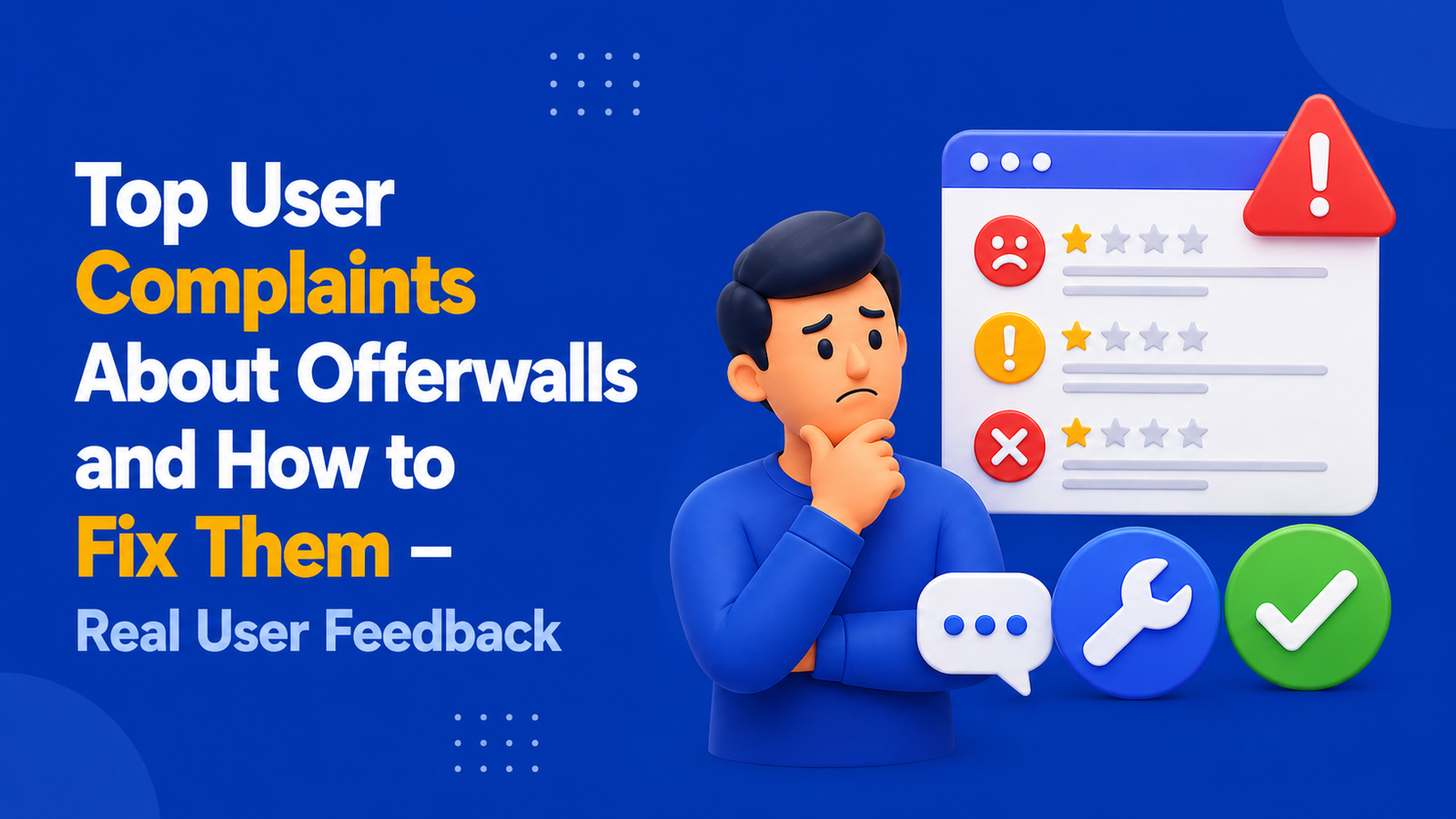
In the world of app monetization and digital engagement, offerwalls have emerged as a powerful tool to reward users and drive revenue. These interactive panels, which allow users to complete tasks, watch videos, or install apps in exchange for rewards, can significantly enhance user engagement and retention. However, while offerwalls provide value for both users and publishers, they are not without challenges. Many users encounter friction points that can affect their overall experience and engagement, and understanding these complaints is essential for building a more effective and user-friendly offerwall experience.
This blog explores the most common user complaints about offerwalls and offers actionable strategies for addressing them. By improving the offerwall experience, app developers and marketers can create a more satisfying user journey, boost retention, and maximize revenue potential.
Confusing Offer Layouts and Navigation

One of the primary complaints users report is that offerwalls can be confusing and difficult to navigate. Users often struggle to identify which offers to complete, which tasks provide the most value, or how the reward system works. When the layout is cluttered or instructions are unclear, users may abandon the offerwall entirely, resulting in missed engagement opportunities.
To address this issue, it is crucial to design offerwalls with simplicity and clarity in mind. Organizing offers into clear categories, highlighting popular or high-value options, and providing concise instructions can guide users effectively. Visual cues, such as icons, progress bars, and hover explanations, help users quickly understand their options and reduce cognitive load. A well-structured interface ensures that users feel confident and motivated to interact with the offerwall, improving completion rates and overall satisfaction.
Rewards That Are Delayed or Missing

Nothing erodes trust faster than completing an offer and not receiving the promised reward. Users often complain about delayed points, missing credits, or unclear reward timelines. Such issues can lead to frustration, negative reviews, and reduced engagement with the app or platform.
Ensuring instant or timely reward delivery is critical to maintaining user trust. When immediate crediting is not possible, clear communication about reward timelines is essential. Additionally, providing a simple support system for users to report missing rewards ensures that problems are resolved quickly and transparently. By prioritizing reliable and predictable reward distribution, publishers can reinforce a sense of fairness and reliability, encouraging continued engagement.
Low-Value or Irrelevant Offers

Many users also express dissatisfaction with the prevalence of low-value or irrelevant offers on offerwalls. Completing numerous low-reward tasks can feel tedious and diminish the perceived value of the offerwall. If users feel that their time is not being rewarded appropriately, they are less likely to return.
To combat this, offerwalls should focus on high-value, relevant offers that align with user preferences and behavior. Personalization can improve the user experience by showing tasks that are meaningful and engaging. Rotating low-performing or outdated offers and continuously analyzing which tasks drive the highest engagement ensures that users always encounter worthwhile opportunities. A thoughtful approach to offer selection can maintain user interest and enhance the perceived value of the platform.
Intrusive or Overbearing Ads

Another common complaint relates to the perception that offerwalls are overly intrusive or ad-heavy. Pop-ups, autoplay videos, or frequent notifications can disrupt the user experience, making the offerwall feel more like a forced advertisement than a rewarding feature.
Mitigating this issue requires balancing engagement with user experience. Integrating offerwalls seamlessly into the app, minimizing disruptive elements, and allowing users to opt into notifications or promotions preserves engagement without causing annoyance. A non-intrusive approach keeps the offerwall enjoyable, increases user satisfaction, and prevents negative feedback that could harm retention or app ratings.
Conclusion

Offerwalls are a powerful engagement and monetization tool, but their effectiveness hinges on the user experience. By addressing common complaints such as confusing layouts, delayed rewards, low-value offers, and intrusive ads, app developers and marketers can transform user feedback into actionable improvements. Prioritizing clear navigation, reliable reward systems, relevant offers, and a seamless, non-intrusive design creates a more satisfying experience for users, which in turn drives higher engagement and revenue. Listening to real user feedback and continuously optimizing the offerwall experience is the key to building trust, loyalty, and long-term success in the competitive app ecosystem.
By taking these steps, publishers not only enhance the experience for their users but also unlock the full potential of offerwalls as a growth engine. When done right, offerwalls reward both the users who engage with them and the developers who design them thoughtfully.
Related Articles

Offerwall SDK vs API Integration: Which Setup Should App Publishers Choose?
Compare offerwall SDK and API integration methods to understand development effort, customization, tracking, security, and how app publishers can choose the right setup.

Offerwall Integration Checklist: What App Developers Should Verify Before Launch
Use this offerwall integration checklist to verify SDK compatibility, conversion tracking, reward delivery, user experience, analytics, and launch readiness before release.
Tapjoy vs AdGem: Comparing Two Mobile Offerwall Platforms
Learn how Tapjoy and AdGem compare across offerwall integration, campaign relevance, tracking, reporting, and monetization strategy to help mobile publishers evaluate their options.