What Makes an Earning Platform Feel Trustworthy to Users

Ajeet Thapa
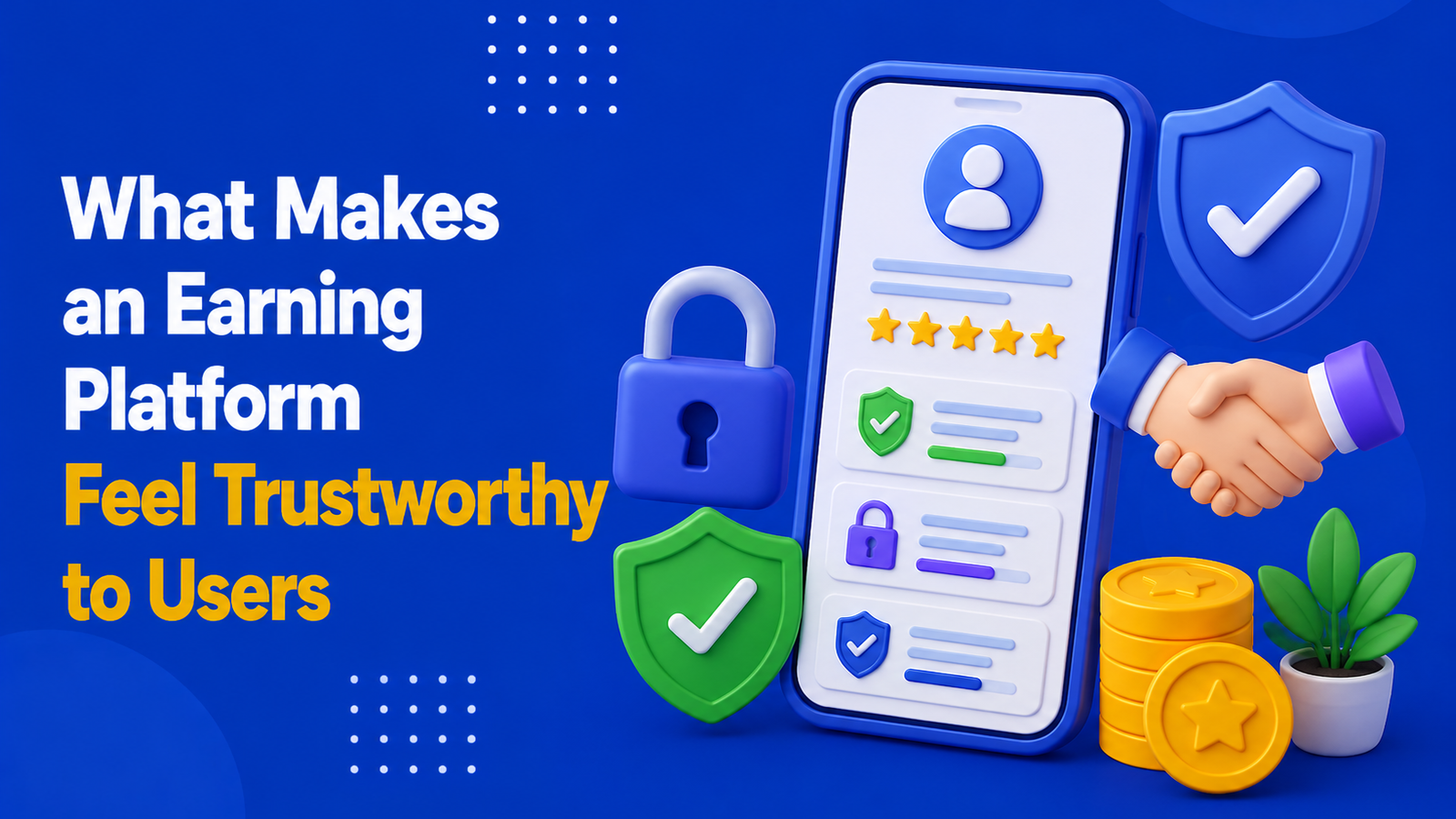
In an increasingly competitive digital economy, earning platforms have more ways than ever to attract users. Higher payouts, new reward opportunities, and attractive promotions can all generate initial interest, but they rarely guarantee long-term engagement. Before users decide whether an earning platform deserves their time, they make a much simpler judgment: Can I trust it?
That first impression shapes every interaction that follows. From the way a platform presents information to how consistently it delivers rewards, trust influences whether users complete a single task or become long-term members. The following factors explain why trust remains one of the strongest drivers of user retention on modern earning platforms.
1. Trust Is the First Decision Users Make
Before users think about earning money, they subconsciously evaluate whether a platform feels legitimate. This assessment happens within seconds and is driven more by emotion than careful analysis. Clean visuals, professional branding, and clear communication immediately create a sense of credibility, while cluttered layouts or confusing messaging often trigger hesitation.
Research in consumer psychology suggests that people rely heavily on emotional cues when judging unfamiliar digital products. If a platform appears transparent and well-organized, users are more willing to invest their time. Conversely, if something feels unclear or misleading, many users leave before even attempting their first task.
Trust begins long before the first reward—it starts with the very first impression.
2. Simplicity Makes Platforms Feel Safer
One of the strongest indicators of trust is a simple, intuitive user experience. When navigation is straightforward, instructions are easy to understand, and important information is easy to find, users naturally feel more comfortable interacting with the platform.
Complicated interfaces filled with excessive banners, aggressive promotions, or unclear buttons often create unnecessary uncertainty. Instead of encouraging engagement, they make users question whether the platform is reliable. Simple design reduces this cognitive burden and allows users to focus on completing tasks rather than figuring out how the platform works.
A platform that feels easy to understand also feels easier to trust.
3. Transparency Builds Confidence Through Clarity
Trust grows when users know exactly what to expect. Clear explanations about tasks, reward amounts, payout requirements, and processing times remove uncertainty and help users feel in control of their experience.
Unexpected conditions or hidden requirements, on the other hand, quickly damage credibility. Even when rewards are genuine, poor communication can make users feel misled. Platforms that openly explain how earning works demonstrate respect for their users, making it much easier to build lasting confidence.
Clear expectations reduce uncertainty, and reduced uncertainty strengthens trust.
4. Consistency Turns First-Time Users Into Loyal Ones
Trust is reinforced every time a platform delivers on its promises. When completed tasks track correctly, balances update accurately, and payouts arrive as expected, users gradually develop confidence that the system works reliably.
These repeated positive experiences create psychological safety. Instead of questioning every task or reward, users begin to interact with the platform naturally because previous experiences have consistently met their expectations. Over time, reliability becomes more valuable than occasional high rewards.
Consistency is what transforms trust from a first impression into long-term confidence.
5. Giving Users Control Strengthens Their Confidence
People naturally trust systems that allow them to make their own decisions. Earning platforms that let users freely choose tasks, skip offers they don't want, and earn at their own pace create a more positive experience than platforms that rely on pressure or artificial urgency.
When users feel they control their own earning journey, participation becomes voluntary rather than forced. This sense of autonomy reduces anxiety and makes every interaction feel more comfortable, encouraging users to return because they genuinely want to—not because they feel pushed.
Trust grows when users feel empowered rather than pressured.
6. Social Proof Reinforces Trust Through Shared Experience
Even when a platform looks trustworthy, many users still seek reassurance from others before fully committing. Reviews, testimonials, ratings, and community discussions help reduce uncertainty by showing that real people have successfully used the platform.
Social proof is particularly important in digital environments where users cannot physically verify a company's credibility. Seeing consistent positive experiences from other members gives new users greater confidence that the platform is reliable and worth their time.
When trust is reinforced by other users, uncertainty becomes much easier to overcome.
Why Trust Remains the Foundation of Long-Term Engagement
Every successful earning platform depends on more than attractive rewards. While incentives encourage users to join, trust is what convinces them to stay. Clear communication, intuitive design, consistent experiences, user control, and visible credibility all work together to create an environment where users feel comfortable investing their time.
Platforms that consistently earn trust rarely need to rely on exaggerated promises or aggressive marketing. Instead, they build lasting relationships by delivering predictable experiences that users can rely on. In the long run, trust becomes more valuable than any individual reward because it is the foundation upon which every successful earning experience is built.
Users may join for the rewards, but they stay because they trust the platform.
Related Articles
The “Almost There” Effect: Why Near-Complete Offers Can Drive More Engagement
Near-complete offers can create a stronger motivation to finish. Discover how visible progress, milestones, and perceived effort influence offerwall engagement.
Gamified Earning: Why Users Love Levels, Streaks & Badges
Earning apps use levels, streaks, and badges to spark motivation and boost retention. See why these gamified features keep users engaged daily.
Why Users Are Starting to Ignore “Limited-Time” Rewards
Limited-time rewards are losing impact as users become more selective. Discover why urgency alone no longer drives engagement.