Why Some Offers Don’t Credit: The Full Technical Explanation

Ajeet Thapa
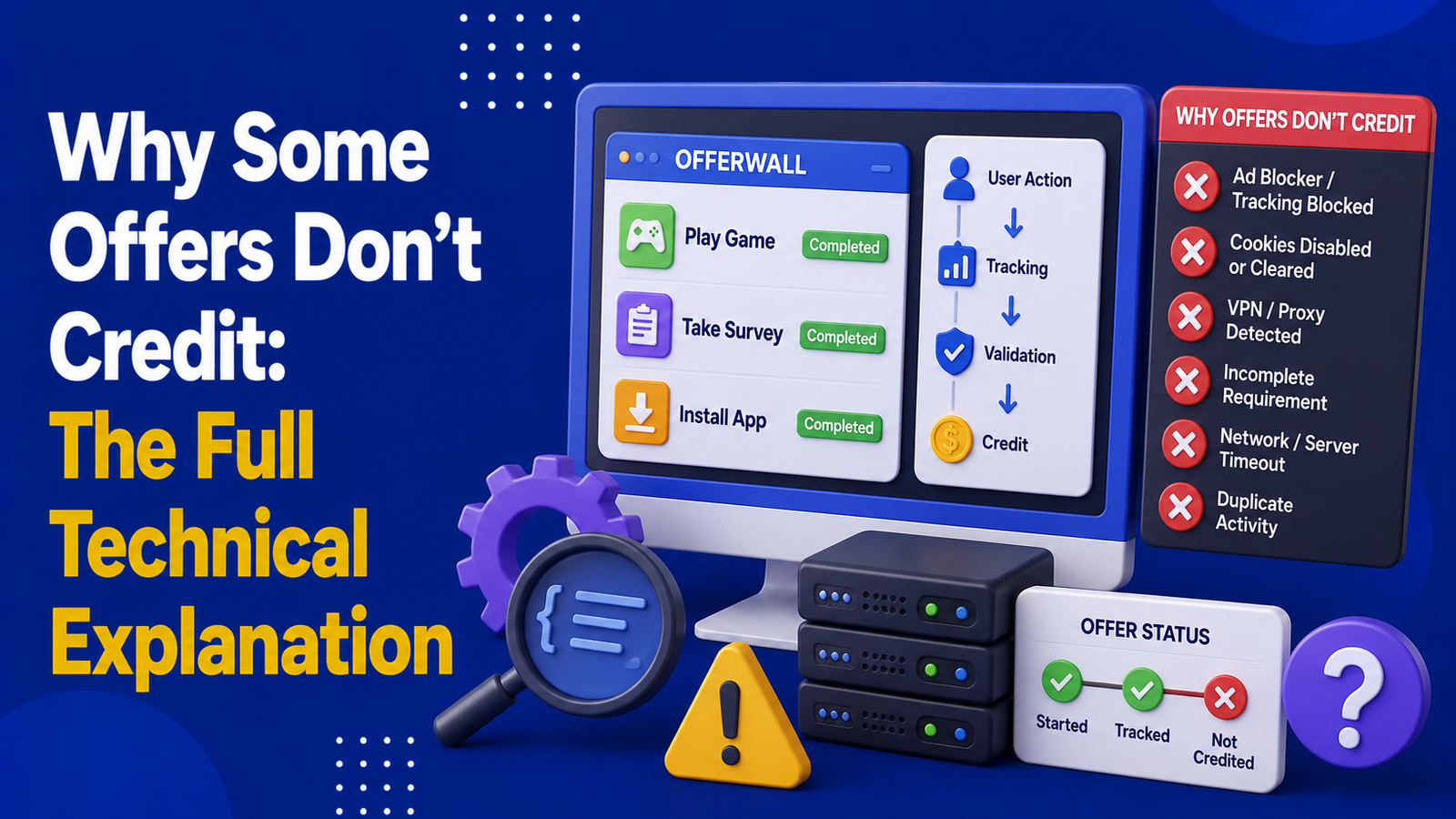
GPT (Get-Paid-To) platforms like Freecash, Swagbucks, Idle-Empire, GaintPlay, and offerwalls such as OfferToro make earning online seem straightforward. Install an app, complete a survey, reach a game level, or sign up for a service, and you'll receive a reward. For millions of users, this system works exactly as expected. However, every experienced GPT user eventually encounters a frustrating situation: an offer is completed successfully, but the reward never appears.
The reason is rarely as simple as a platform refusing to pay. Behind every offer is a complex tracking system that connects your device, the offerwall, and the advertiser. If any part of that process breaks, the completion cannot be verified and the reward may never be issued. The following sections explain how offer tracking works, why credits sometimes fail, and what you can do to maximize your chances of getting rewarded consistently.
1. Understanding How Offer Tracking Actually Works
Every offer you complete follows a technical tracking process long before any reward reaches your account. When you click an offer, the offerwall generates a unique tracking ID and redirects you to the advertiser's landing page. That identifier follows your interaction as you install an app, register for a service, complete a survey, or progress through a game. Once the required action is finished, the advertiser sends a server-to-server confirmation—commonly called a postback—to the offerwall, which then credits your GPT account.
Because every stage depends on the previous one, the entire tracking chain must remain intact from beginning to end. If the click ID is lost, the advertiser cannot match your completion with your original click, meaning the reward cannot be verified. Understanding this process makes it easier to see why successful tracking depends on much more than simply completing the task itself.
Successful offer crediting isn't based on the final action alone—it depends on every step of the tracking chain remaining connected from click to completion.
2. Tracking Interruptions Are the Most Common Cause of Missing Credits
Most missing rewards are caused by tracking interruptions rather than mistakes made after completing the offer. Modern advertisers rely on cookies, redirects, browser data, and device identifiers to connect your click with your completion. If any of these signals disappear before the process finishes, the advertiser simply cannot verify that you completed the task.
Common interruptions include browser privacy features, ad blockers, VPNs, proxy services, or clearing cookies while an offer is still active. Even closing the browser too quickly during the initial redirect can prevent the tracking ID from reaching the advertiser. Although these interruptions often happen without users realizing it, they remain one of the leading reasons why otherwise legitimate offer completions fail to credit.
An offer can only be rewarded if it can be tracked. Even a perfectly completed task cannot be verified when the tracking connection is interrupted.
3. Device and Location Consistency Matter More Than Most Users Realize
Advertisers identify each participant using information such as device advertising IDs, operating systems, IP addresses, and geographic location. Mobile campaigns often rely on Android Advertising IDs (GAID/AAID) or Apple's Identifier for Advertisers (IDFA) to verify that the person who clicked the offer is the same person who completed it. If those identifiers change during the process, the conversion may no longer be considered valid.
Location consistency is equally important. Many offers are available only within specific countries, and advertisers expect your IP address, device region, and account information to align. Using VPNs, switching between Wi-Fi and mobile data repeatedly, traveling during an active campaign, or attempting offers on multiple devices can all introduce inconsistencies that prevent successful tracking.
Stable devices and consistent locations create reliable tracking. The fewer variables that change during an offer, the higher your chances of receiving credit.
4. Advertiser Validation Goes Beyond Simply Completing the Task
Completing an offer is only part of the advertiser's validation process. Modern fraud detection systems analyze how users interact with campaigns, looking for genuine engagement instead of automated or suspicious behavior. They evaluate factors such as how quickly a task is completed, whether users actively engage with an app, device fingerprints, repeated installation attempts, and numerous other behavioral signals.
Surveys use even stricter validation methods. Survey providers compare demographic information, monitor response quality, detect unusually fast completion times, and identify repetitive answer patterns. Even if a survey reaches the final page, inconsistent responses or abnormal behavior may still cause it to be rejected automatically. These systems operate without manual review, making consistency and genuine participation essential for long-term success.
Advertisers reward authentic engagement—not just completed actions. Consistent behavior and realistic participation build long-term credibility across offerwalls.
5. Sometimes the Problem Happens After You Finish the Offer
Not every missing reward is caused by the user. Even when every instruction is followed correctly, technical problems can occur between the advertiser and the offerwall. Server outages, delayed postbacks, campaign configuration errors, expired offers, or temporary tracking issues may prevent successful communication after the completion has already taken place.
Offer requirements can also contribute to failed credits if a single condition is overlooked. Some campaigns require users to keep an app installed for several days, verify an email address, reach an exact game level, avoid uninstalling the application prematurely, or complete additional milestones before qualifying. Missing just one requirement can cause the advertiser to classify the conversion as incomplete, even though significant progress was made.
Not every missing reward is the user's fault. Technical failures and advertiser-side issues can occasionally interrupt even perfectly completed offers.
6. Why Understanding the System Leads to Better Results
Successfully earning on GPT platforms is about more than completing offers—it requires understanding the technology that verifies every action. By maintaining a stable device, avoiding VPNs, preserving cookies, following offer instructions carefully, and completing tasks under consistent conditions, users dramatically improve their chances of receiving every reward they earn. Small adjustments in setup often have a much greater impact than simply attempting more offers.
As GPT platforms and offerwalls continue to evolve, tracking systems will become even more sophisticated. Users who understand how advertisers validate conversions will experience fewer missing credits, spend less time dealing with support requests, and achieve more consistent earnings over time. Building good tracking habits today creates a stronger foundation for long-term success across every GPT platform you use.