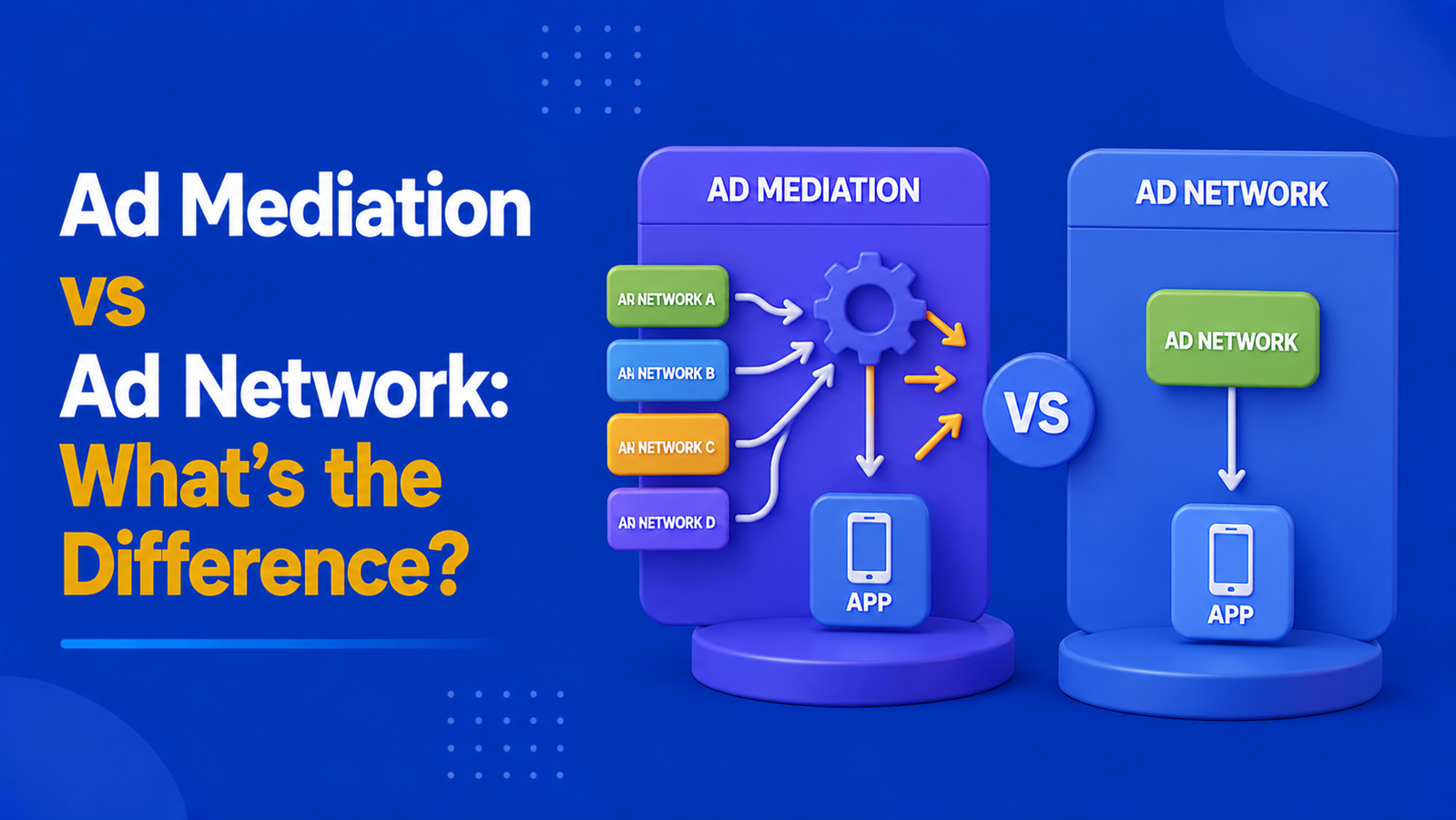
1. Why This Difference Matters for App Monetization
Many app publishers use the terms ad network and ad mediation as if they mean the same thing, but they solve different problems. Understanding the difference is important because it directly affects revenue stability, fill rate, optimization control, and how efficiently an app can scale monetization. When publishers rely on a single ad network, they are essentially trusting one source of demand to monetize all inventory. When publishers use ad mediation, they are building a system that brings multiple demand sources into competition so each impression can be monetized at the best possible value.
This matters even more today because mobile advertising is highly dynamic. Demand changes by region, device type, ad format, seasonality, and user behavior. If an app is not set up to access multiple demand partners efficiently, it often loses revenue without realizing it. The difference between “using ads” and “optimizing ads” often comes down to whether a publisher is using only an ad network, or a mediation layer that helps them orchestrate multiple networks.
2. What an Ad Network Does
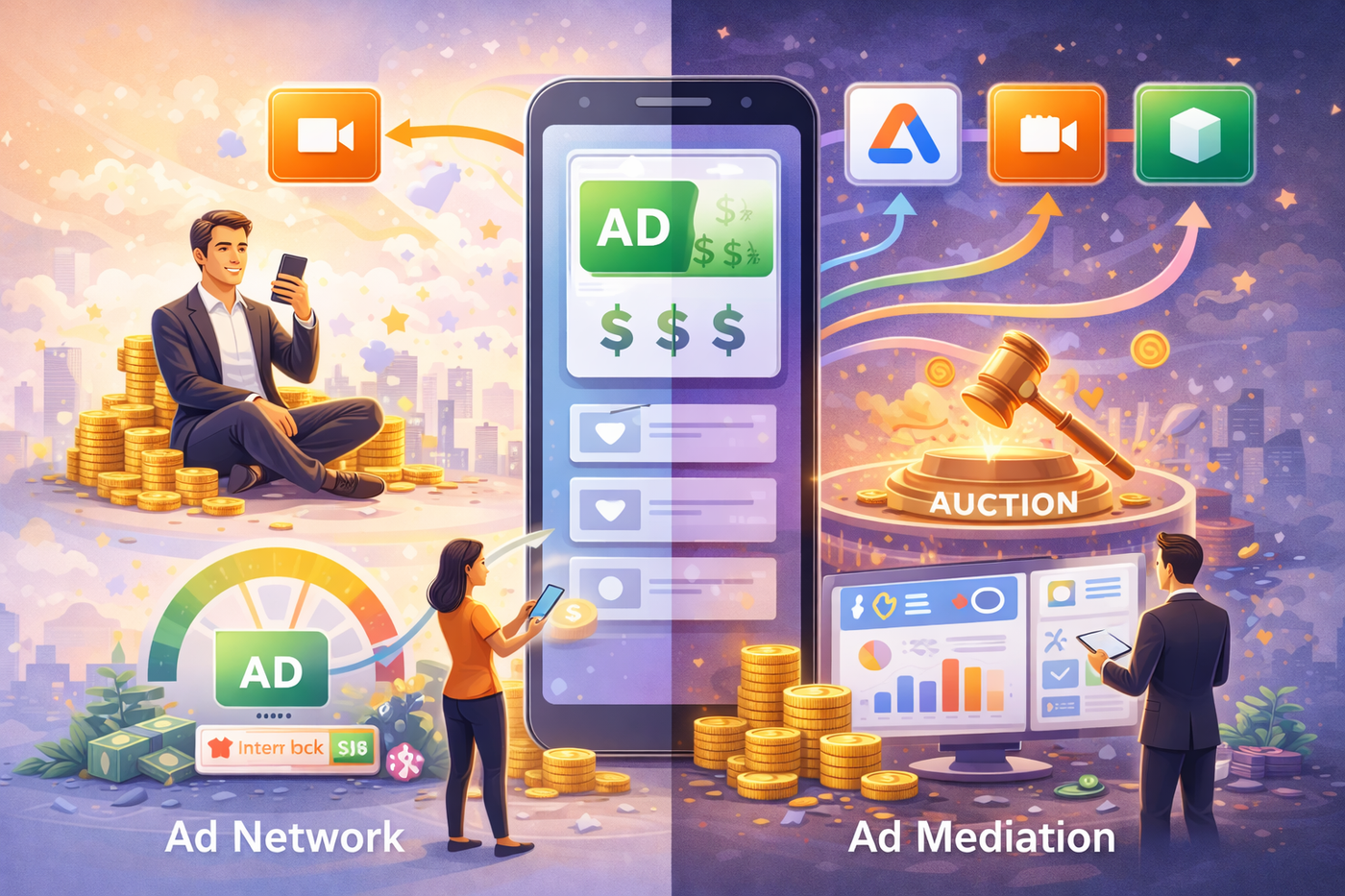
An ad network is a demand source that connects advertisers with publishers. For app developers, an ad network provides the ads that appear inside the app and pays the publisher based on impressions, clicks, or conversions depending on the ad format and pricing model. Ad networks typically offer an SDK that publishers integrate, along with tools for reporting, ad unit setup, and basic optimization. When an app requests an ad, the ad network decides what to serve based on its available advertisers and targeting capabilities.
In practice, an ad network is where the money comes from, because it delivers the actual ads and pays for performance. Different networks have different strengths. Some perform better in Tier 1 countries, others are stronger in emerging markets. Some specialize in rewarded video while others may do better with interstitials or banners. A network’s performance also depends heavily on its advertiser demand, targeting quality, and auction dynamics, which can vary widely across apps and geographies.
3. What Ad Mediation Does
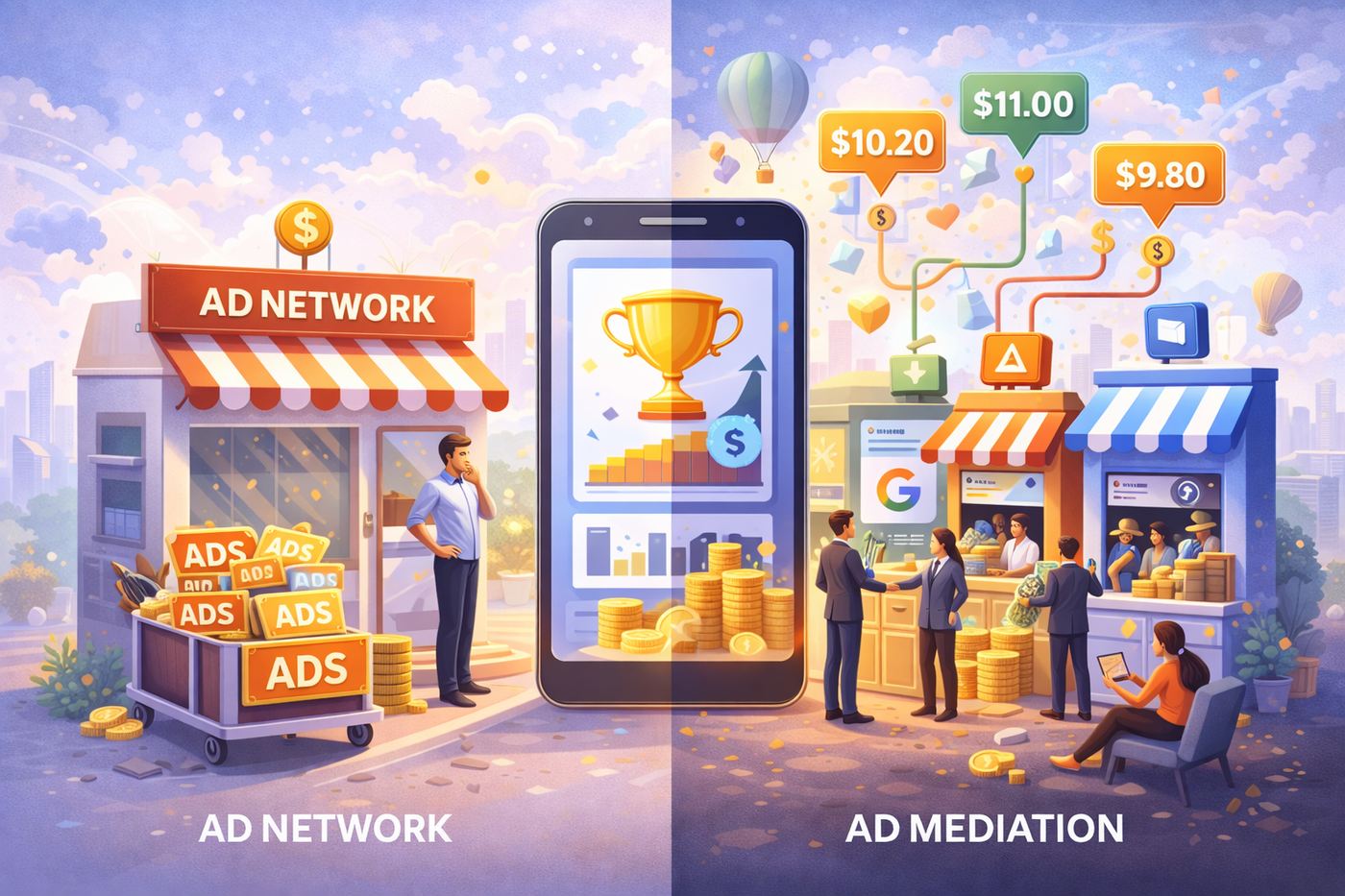
Ad mediation is not a demand source. Instead, it is the system that manages and optimizes multiple ad networks together. Rather than integrating one network and hoping it performs well everywhere, mediation allows an app to connect to many networks simultaneously and decide which one should serve each impression. The main goal is to increase competition and ensure the app is always showing the highest-value ad available at that moment.
Historically, mediation was managed through waterfall setups, where networks were ranked and called in order until one filled the impression. Today, most modern mediation platforms support bidding, where multiple networks can bid in real time for the same impression. This often improves transparency and increases eCPM, because networks are competing directly rather than being placed in fixed order. For many apps, mediation is the layer that turns ad monetization from a single-channel setup into an optimized revenue engine.
4. The Simple Way to Remember the Difference
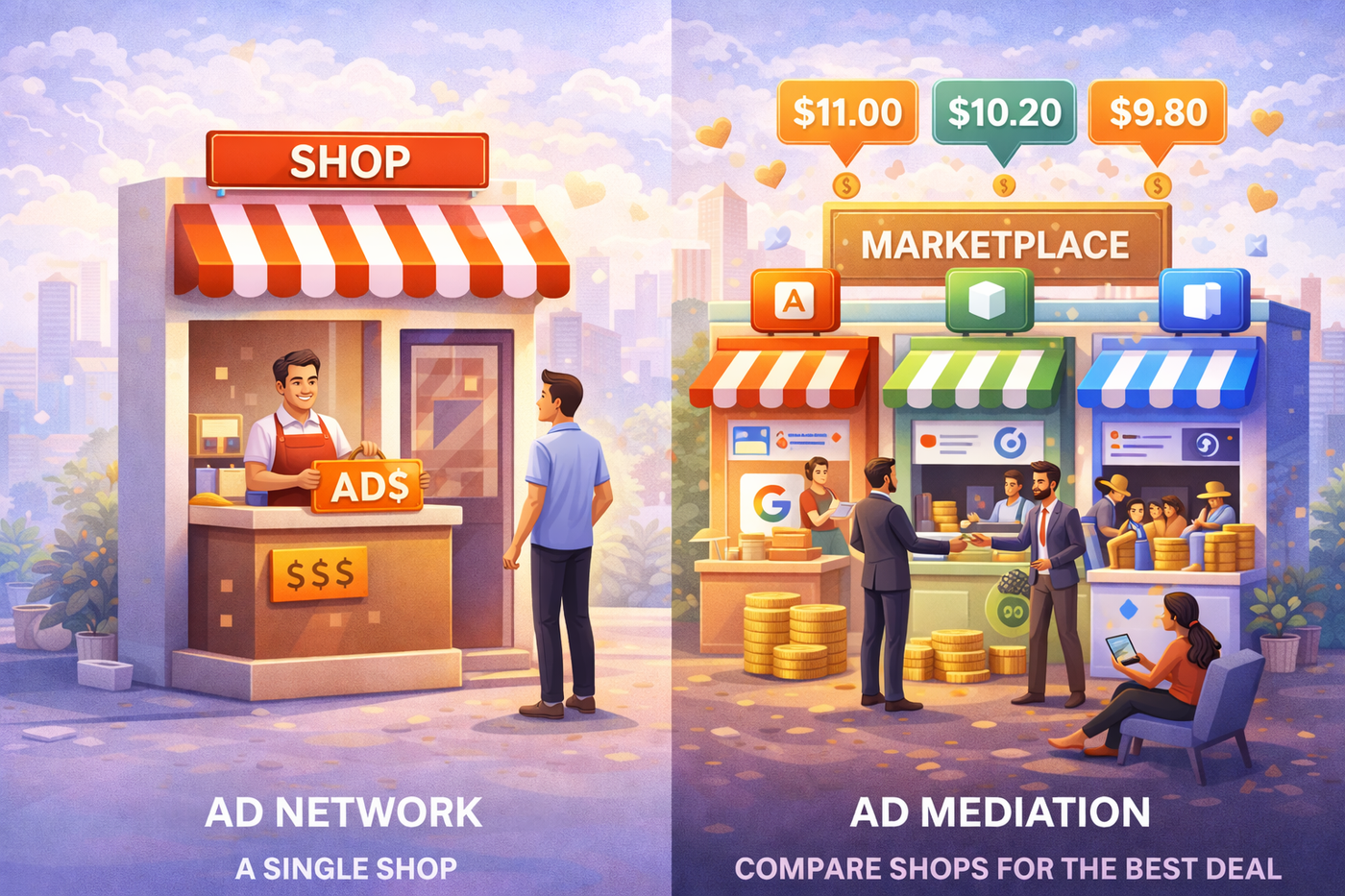
A clean way to think about it is this: an ad network is a shop that sells ads, while mediation is the marketplace that compares shops and chooses the best deal for every sale. The network provides demand and pays you, while mediation helps you choose the best-paying demand source each time. Without mediation, the app only sees the demand from one network. With mediation, the app can access and optimize across many networks, reducing dependency and improving revenue stability.
This is why it is common for early-stage apps to start with one ad network, but later move to mediation as they scale. As traffic grows, the value of competition increases. With more impressions and more geographies, the app benefits from selecting the best network dynamically rather than locking itself into one demand partner.
5. Revenue, Fill Rate, and Stability: Where Mediation Usually Wins
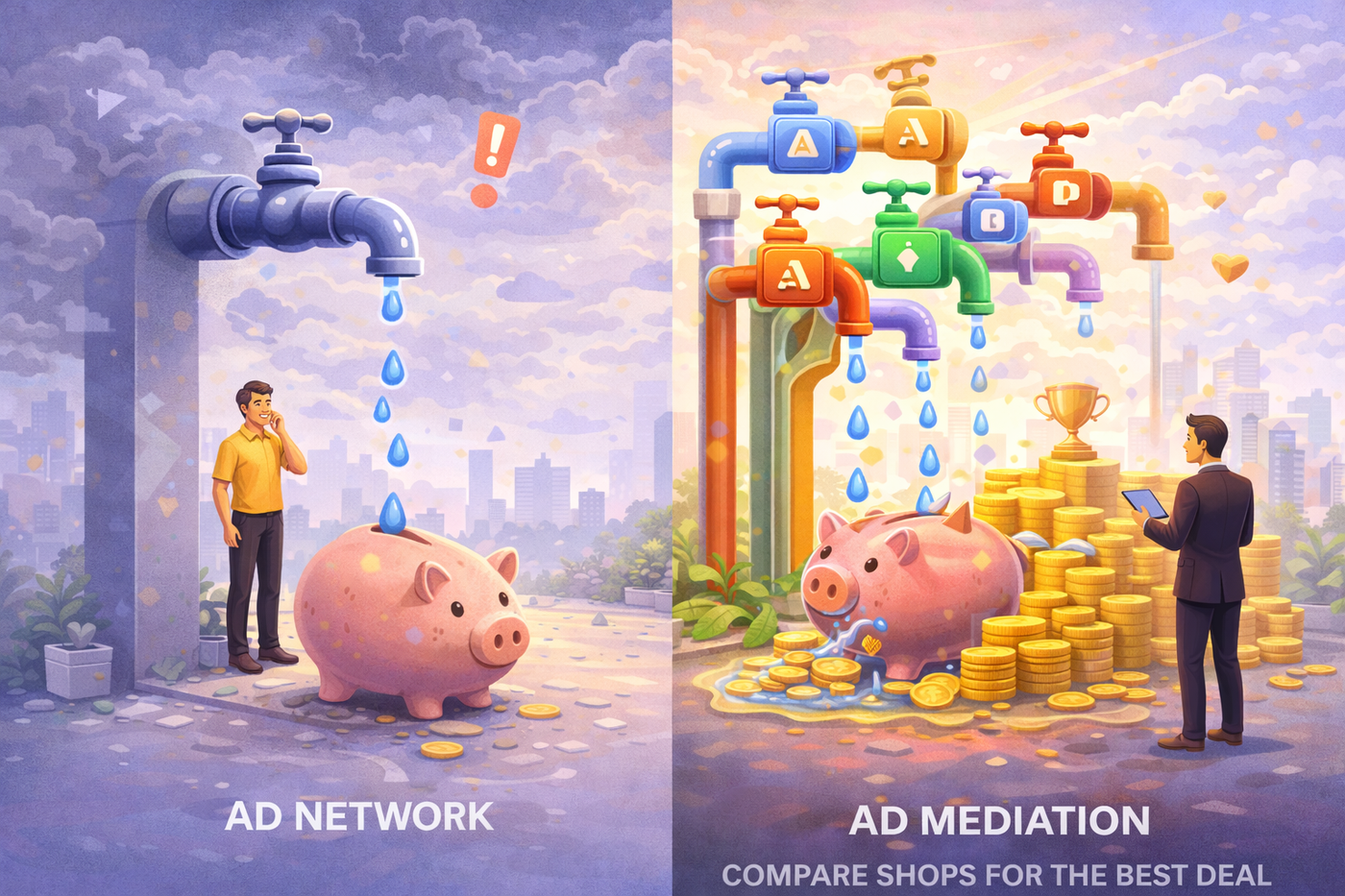
One of the biggest benefits of mediation is improving fill rate. If one network does not have demand for a specific user, region, or time window, another network might. Mediation helps ensure impressions do not go unfilled, which protects revenue and improves the overall monetization experience. Mediation can also improve eCPM by creating competitive pressure. When networks know they must compete for impressions, the auction becomes more efficient and publishers often see higher value per ad.
Stability is another reason mediation matters. If a single network changes policy, demand drops, or an integration issue occurs, an app relying on that network can see immediate revenue impact. With mediation, revenue is diversified across multiple partners, making monetization more resilient. This is especially important for apps with global audiences or seasonal traffic, where demand fluctuations are normal and performance shifts between partners frequently.
6. When a Single Ad Network Can Still Make Sense
There are cases where using only one ad network is acceptable, especially for very early-stage apps. If the app has low traffic, limited engineering resources, or is still validating product-market fit, it may be more practical to integrate one strong network and focus on retention and growth first. In some cases, publishers may also choose a single network if they have a strong direct deal relationship or if their audience is concentrated in one region where that network performs consistently.
However, even in these cases, publishers should be aware of the limitations. Without mediation, optimization options are narrower, and revenue may depend heavily on the network’s performance and pricing. Once traffic grows, many apps discover that mediation becomes less of a “nice-to-have” and more of a requirement for maximizing revenue.
7. How to Choose the Right Setup for Your App
If an app is early and testing monetization, starting with one ad network can be a good way to move fast. But once the app has meaningful scale, multiple geographies, or a monetization strategy that includes rewarded formats, mediation becomes a strong next step. The right setup depends on factors like traffic volume, regions, ad formats, user experience goals, and how actively the team wants to optimize performance.
For many publishers, the best approach is using mediation with a balanced stack of networks, then continuously optimizing based on revenue, latency, ad quality, and retention impact. This creates a system where ads are not just displayed, but intelligently managed as part of a long-term monetization strategy. In a competitive market, understanding the difference between ad networks and mediation is one of the simplest ways to make smarter monetization decisions.
Related Articles
Deep Dive: Ad Mediation Platforms and Why They Matter
Relying on one ad network can limit revenue. Discover why ad mediation platforms matter, how bidding works, and how publishers improve eCPM and fill rates.

The Real Reason Users Skip Ads (And What They Prefer Instead)
Users don’t skip ads because they hate monetization—they skip ads because of poor timing and low value. Learn what users prefer instead and how apps can monetize smarter.

How User Experience Impacts Revenue
User experience directly shapes how users engage, trust, and spend. Learn why UX plays a critical role in driving sustainable app revenue.