
1. Why Offerwall Metrics Matter More Than “Revenue” Alone
Offerwalls can be one of the strongest monetization channels for mobile apps because they are optional, reward-driven, and built on a clear value exchange. But the biggest mistake many publishers make is tracking offerwall performance only through total revenue. Revenue is important, but it does not explain why performance is rising or falling. Offerwalls impact user behavior, retention, trust, and even the overall monetization balance of the app. If you only look at earnings, you may miss problems like low-quality offers, drop-offs in the user journey, or reward fatigue.
The best offerwall strategies are built through measurement. When you track the right metrics, you can see where users are getting stuck, what motivates them to complete offers, and whether the offerwall is improving long-term value or just creating short-term spikes. Strong performance comes from optimization, and optimization starts with tracking the right signals.
2. Offerwall Views and Unique Visitors (Visibility Metrics)

Before you measure conversions, you need to know whether users are actually seeing and opening the offerwall. Offerwall views and unique visitors help you understand visibility. Many apps assume the offerwall is underperforming when the real issue is that users are not discovering it. If the offerwall is hidden inside a menu or placed too far from the core user journey, adoption stays low even if the offers are good.
Tracking how many users open the offerwall daily and how often they return also tells you whether users see it as valuable. If views are rising over time, it usually means the offerwall is becoming part of the habit loop. If views drop, it may indicate the placement is weak, the rewards feel less attractive, or users are losing trust in the offers being shown.
3. Click-Through Rate (CTR) and Offer Engagement

Once users open the offerwall, the next question is whether they actually engage with the offers. Click-through rate is one of the most important engagement metrics because it shows whether users find the offer catalog interesting. If users view the offerwall but do not click anything, it often means the offers are not relevant, the reward value feels too low, or the offer descriptions feel confusing.
Beyond CTR, publishers should also monitor engagement depth, such as how many offers a user clicks per session and how much time they spend browsing. These signals help you understand intent. High browsing with low clicks can suggest that users want rewards but are not convinced the offers are worth the effort. High clicks with low completions can signal friction in the offer flow or poor offer quality.
4. Completion Rate and Conversion Rate (Core Performance Metrics)

Completion rate is the strongest indicator of offerwall success because clicks alone do not generate revenue. A healthy offerwall converts interest into real completed actions. If users click frequently but rarely complete, it usually means the offers are too difficult, the flow is broken, or the requirements are unclear. This creates frustration and can reduce long-term trust, even if short-term engagement looks high.
Conversion rate becomes even more powerful when you break it down by offer type. Some offers naturally convert better than others, depending on the region and user segment. Tracking completion rates by category helps you identify what your audience prefers and what is actually driving value. The best offerwalls balance easy wins with higher-value offers so users stay motivated and the app maintains stable monetization.
5. Revenue Metrics That Actually Explain Performance
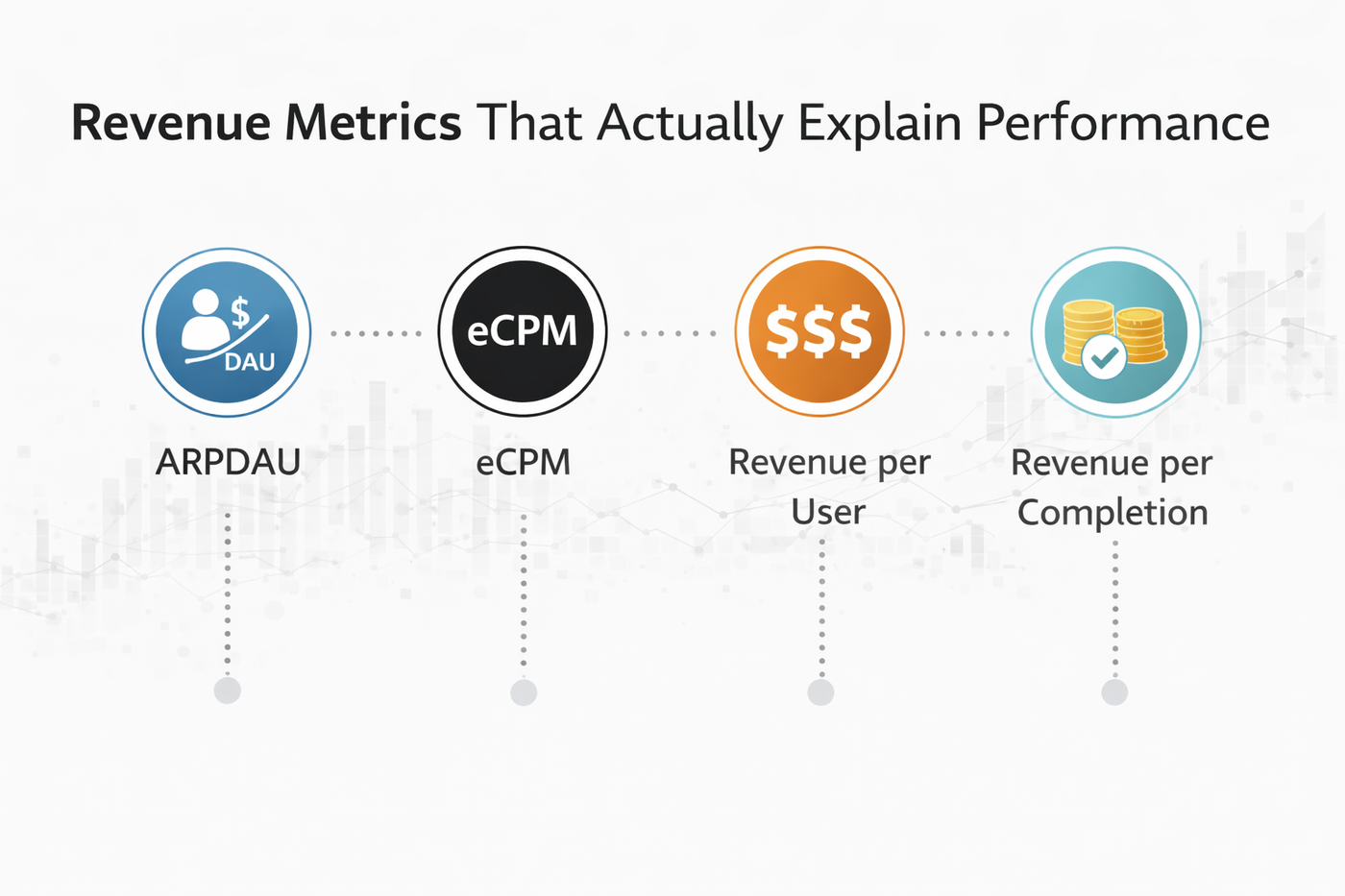
Total revenue is useful, but it does not show efficiency. That is why publishers should track offerwall revenue per active user, which helps compare offerwall performance against other monetization channels like rewarded video or interstitial ads. Revenue per completion is also important because it shows the average value of each successful offer. If revenue per completion is high but completions are low, the offerwall may be too dependent on a few high-paying offers. If completions are high but revenue per completion is low, the offer mix may need improvement.
These revenue metrics help publishers optimize the offerwall like a business system instead of a black box. The goal is not just earning more today, but building a stable model where revenue scales as the user base grows, without being dependent on random spikes or a small group of high-performing offers.
6. Retention and Long-Term User Quality Impact
Offerwall performance should never be measured only by short-term revenue. The most important long-term metric is retention. Publishers should compare retention for users who engage with the offerwall versus users who do not. In many cases, offerwalls improve retention because users return to earn rewards and progress faster. But if the offerwall feels spammy or interrupts the experience too often, it can reduce trust and increase churn.
Tracking long-term user quality also helps you understand whether offerwall users behave like real product users or only like reward hunters. The strongest offerwall setups support the core app experience by increasing engagement, not replacing it. When retention stays healthy and revenue grows, it means the offerwall is working as a true value exchange model rather than a short-term monetization shortcut.
Related Articles

Offerwall SDK vs API Integration: Which Setup Should App Publishers Choose?
Compare offerwall SDK and API integration methods to understand development effort, customization, tracking, security, and how app publishers can choose the right setup.

Offerwall Integration Checklist: What App Developers Should Verify Before Launch
Use this offerwall integration checklist to verify SDK compatibility, conversion tracking, reward delivery, user experience, analytics, and launch readiness before release.

Tapjoy vs AdGem: Comparing Two Mobile Offerwall Platforms
Learn how Tapjoy and AdGem compare across offerwall integration, campaign relevance, tracking, reporting, and monetization strategy to help mobile publishers evaluate their options.