Offerwall A/B Testing Ideas Every Mobile Game Publisher Should Try

Ajeet Thapa
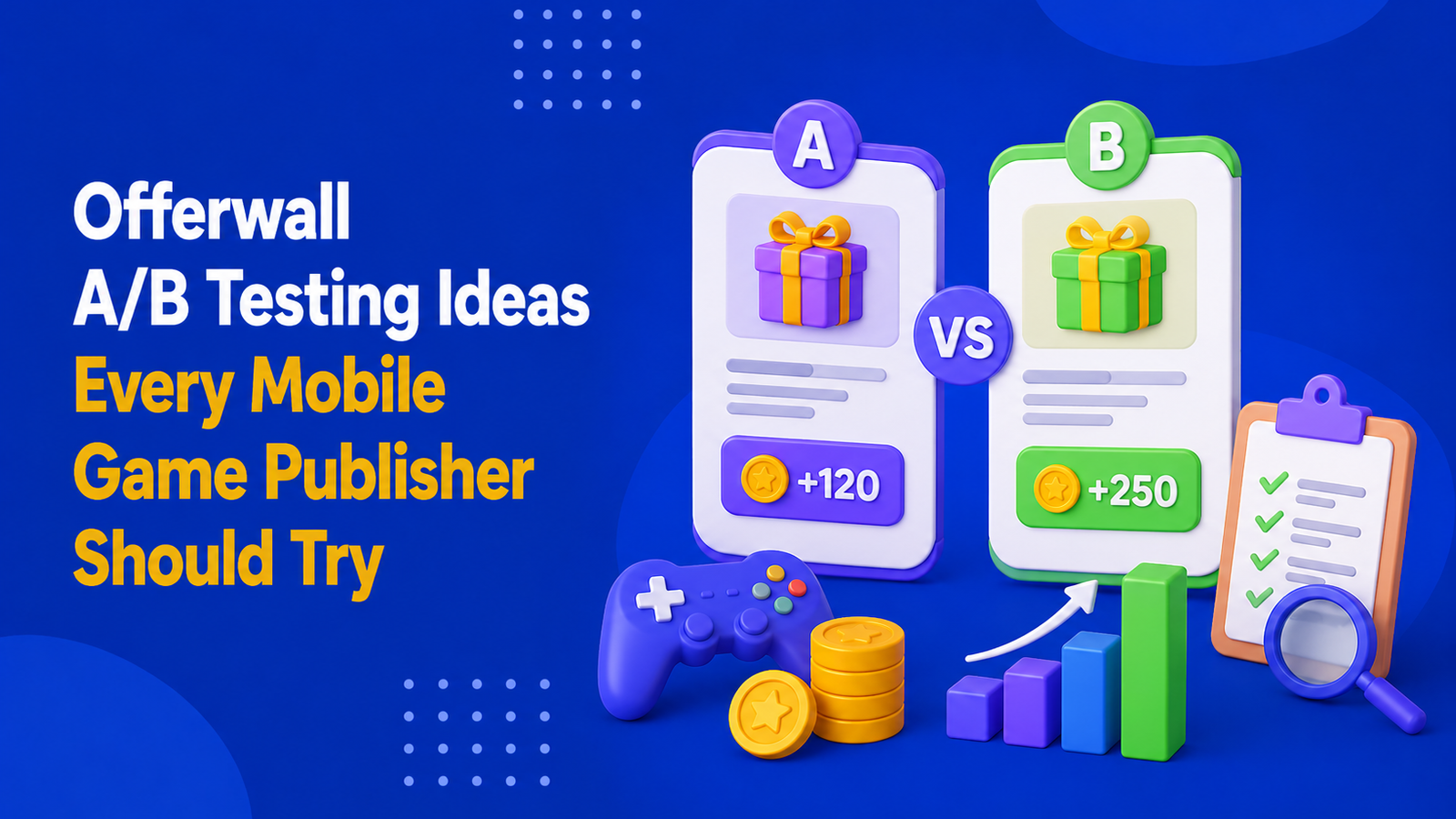
Integrating an offerwall into a mobile game or app is only the first step toward successful monetization. What determines long-term performance is how effectively that offerwall fits into the overall user experience. Factors such as placement, reward value, messaging, timing, user segmentation, and visual design all influence whether users engage with offers or ignore them completely. Even small adjustments to these elements can significantly impact conversion rates, revenue, user satisfaction, and retention.
This is why A/B testing has become an essential practice for publishers using offerwall monetization. Rather than relying on assumptions, publishers can compare different versions of the offerwall experience and make decisions based on real user behaviour. Continuous experimentation helps identify what motivates users while maintaining a balance between monetization and gameplay. Explore how strategic A/B testing improves offerwall performance, strengthens engagement, and creates a more rewarding experience for both publishers and players.
1. Placement Can Determine Whether Users Engage or Ignore the Offerwall
Offerwall placement is one of the first elements publishers should evaluate because visibility alone does not guarantee engagement. Users are far more likely to interact with an offerwall when it appears during moments of genuine need rather than as an interruption. Positioning the offerwall alongside premium currency, within the in-game store, after a failed level, or when resources are depleted can create a much stronger motivation to participate.
Different placements create different user mindsets. Someone browsing a virtual store is already thinking about acquiring additional resources, while a player who has just run out of energy may actively seek an immediate solution to continue playing. Testing multiple entry points allows publishers to discover where the offerwall feels like a helpful feature instead of an intrusive advertisement.
The most effective offerwall placement is not necessarily the most visible—it is the one that appears when users are naturally looking for value.
2. Reward Value Should Balance Motivation and Game Economy
Rewards are the primary reason users engage with offerwalls, making reward optimisation one of the most important areas for A/B testing. If rewards appear too small, users may not consider offers worthwhile. Conversely, rewards that are excessively generous can disrupt the game's economy, reduce the appeal of in-app purchases, and affect long-term monetization.
Publishers should test not only different reward amounts but also how rewards are presented. Connecting rewards to meaningful in-game objectives often creates stronger motivation than displaying a simple currency amount. For example, helping users earn enough currency to unlock a character or complete an upgrade gives the reward greater purpose and emotional value
Finding the right balance ensures that rewards encourage participation while preserving healthy progression throughout the game.
Users respond not only to the size of a reward, but to the value they believe it creates within the game.
3. Clear Messaging Can Significantly Improve Offerwall Engagement
The first message users see before opening an offerwall shapes their expectations and influences whether they decide to explore available offers. Generic calls to action may communicate functionality, but personalised messaging that reflects the player's current situation often generates much stronger engagement.
A player who has exhausted their lives may respond better to messaging focused on continuing gameplay, while someone visiting the in-game shop may be more interested in earning premium currency. Similarly, the tone should match the overall style of the game. Casual games, strategy titles, and role-playing games all benefit from messaging that feels consistent with their own design and audience.
Testing different headlines, descriptions, and calls to action helps publishers identify language that creates trust, curiosity, and stronger conversion rates without feeling overly promotional.
The right message transforms the offerwall from another feature into an opportunity users genuinely want to explore.
4. Timing Has a Major Impact on User Behaviour
Even the best-designed offerwall can underperform if it appears at the wrong moment. Timing influences user motivation, making it one of the most valuable variables to test. Showing an offerwall immediately after launching the app may generate little interest because users have not yet developed a need for additional rewards. Presenting it after users run out of currency or complete a difficult level often creates much higher engagement.
Publishers should also evaluate how frequently offerwall prompts appear. Excessive reminders can create fatigue and frustration, while infrequent visibility may prevent users from discovering valuable earning opportunities altogether. Testing different timing triggers and reminder frequencies helps identify an approach that supports both revenue generation and a positive player experience.
Successful timing strategies consider more than clicks—they also monitor downstream effects such as session length, retention, and user satisfaction.
An offerwall delivers the greatest value when it appears at the moment users are most motivated to engage.
5. Different User Segments Require Different Offerwall Experiences
Not every player interacts with an offerwall for the same reason. New users, long-term players, non-spenders, event participants, and highly engaged users all have different motivations and expectations. Treating every player identically often limits monetization opportunities because a single experience rarely satisfies every audience.
Segment-based A/B testing allows publishers to tailor offerwall placement, messaging, rewards, and frequency according to user behaviour. New players may benefit from simple explanations and smaller rewards that introduce the feature naturally, while experienced users may be willing to complete longer, higher-value offers. Likewise, non-paying users often appreciate offerwalls as an alternative way to access premium content without making purchases.
Personalised offerwall experiences create stronger engagement because users receive opportunities that better align with their individual needs and playing habits.
The most effective monetization strategies recognise that different players are motivated by different types of value.
6. Continuous Optimisation Creates Stronger Long-Term Monetization
Successful offerwall monetization is not achieved through a single configuration. User behaviour evolves, games introduce new features, seasonal events change engagement patterns, and acquisition channels bring in different audiences over time. Continuous testing allows publishers to adapt to these changes while improving monetization performance without compromising gameplay.
Publishers should evaluate outcomes beyond simple click-through rates. Metrics such as offer completion, revenue per user, retention, customer support requests, and overall game economy provide a more complete understanding of whether an A/B test genuinely improves the player experience. Design elements, icons, notification badges, and visual consistency should also be tested regularly because presentation influences both trust and visibility.
The strongest offerwall strategies are built through ongoing experimentation, careful measurement, and a willingness to refine every aspect of the user journey as player behaviour changes.
The most successful offerwall is not the first version a publisher launches—it is the one continuously improved through data, testing, and real user behaviour.