The Psychology of Reward Timing: Instant vs Delayed Gratification in Offerwalls

Ajeet Thapa
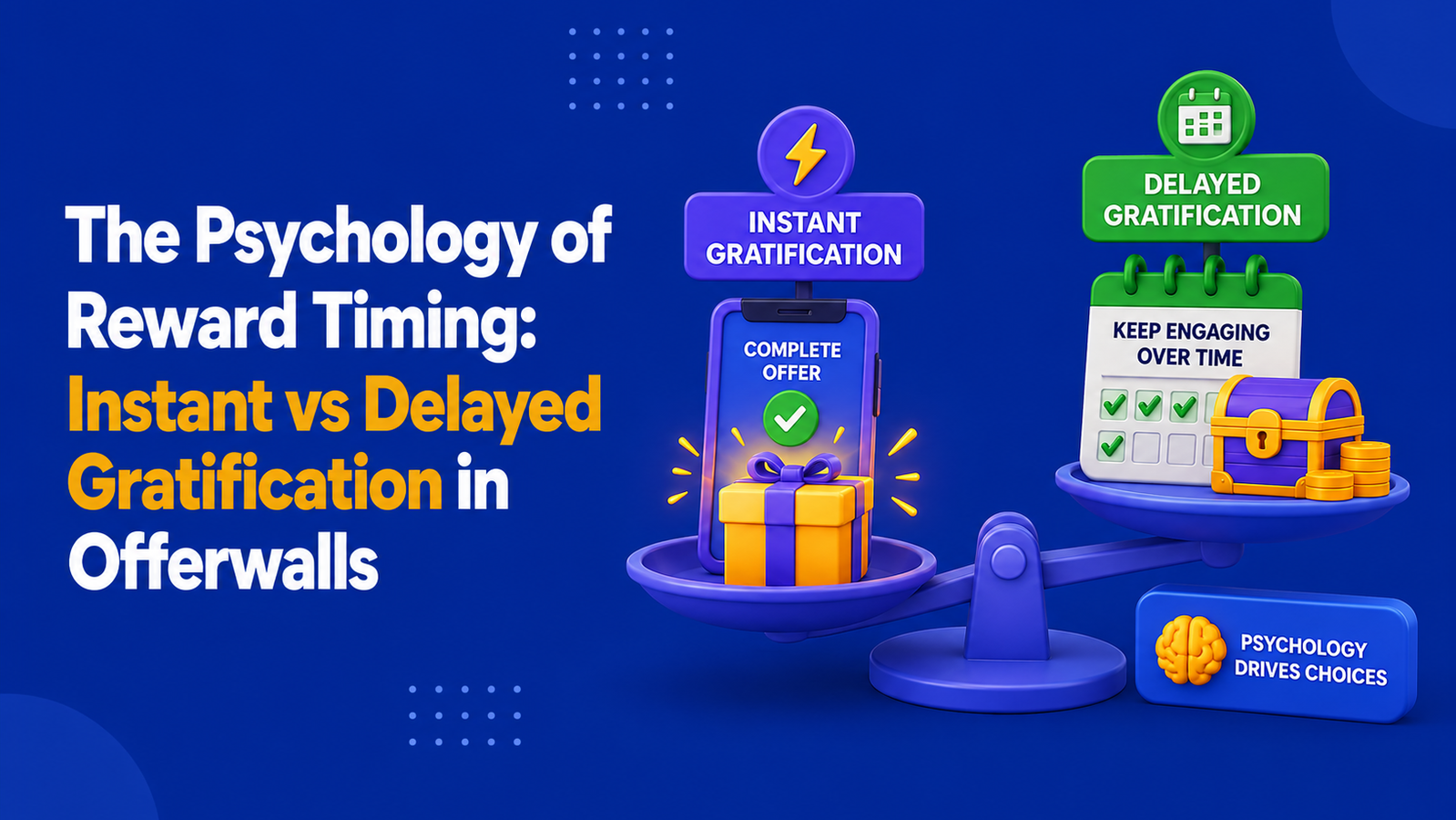
The design of offerwalls plays a pivotal role in how users engage with digital platforms. One of the most critical factors is the timing of rewards—deciding whether to provide incentives instantly or after a delay. Reward timing can influence user motivation, engagement patterns, and conversion rates in profound ways.
Understanding the psychology behind reward timing allows app developers and marketers to optimize offerwalls for both short-term wins and long-term user retention. The challenge lies in finding the right balance between satisfying users immediately and keeping them engaged over time.
Understanding Reward Timing

Reward timing refers to the point at which a user receives an incentive after completing a task. In offerwalls, these incentives can be delivered immediately or delayed. Instant rewards might include in-app currency, points, or virtual items provided as soon as a task is completed, such as downloading an app, watching a video, or filling out a survey. Delayed rewards require users to complete multiple tasks, reach a milestone, or wait a specific amount of time before they receive the reward.
The concept is rooted in basic psychological principles. Humans are wired to seek rewards, but the perceived value and behavioral impact of a reward depend heavily on when it is received. Instant rewards create immediate satisfaction, while delayed rewards introduce anticipation, which can increase the perceived value of the incentive.
Understanding how reward timing influences user behavior is crucial for designing effective offerwalls. Immediate rewards can drive fast conversions, but they may not encourage deeper engagement. Delayed rewards can foster long-term habits, but if the wait or effort is too high, users may disengage. The timing mechanism also interacts with task complexity, user expectations, and the perceived value of the reward.
The Psychology Behind Instant Gratification

Instant rewards leverage the brain’s natural dopamine-driven feedback loop. When a reward is received immediately after an action, it triggers a pleasurable response, reinforcing the behavior and encouraging repetition. This immediate positive feedback is particularly effective for microtasks or low-effort offers, where users can see the payoff instantly and feel motivated to continue completing additional tasks.
The psychology of instant gratification is why users often prefer smaller, immediate rewards over larger delayed ones, even when the delayed reward has a higher objective value. Instant rewards also reduce hesitation, making it easier for users to complete tasks without second-guessing. This is especially important in mobile environments, where attention spans are short and friction can lead to drop-offs.
However, over-reliance on instant rewards has limitations. Users may become conditioned to expect immediate payoff and lose patience with offers requiring more effort or time. Additionally, frequent small rewards may diminish perceived value over time, potentially reducing engagement with high-value or more complex offers.
The Power of Delayed Rewards

Delayed rewards operate on a different psychological principle: anticipation. By requiring patience or repeated engagement, delayed rewards can increase excitement and the perceived value of the incentive. For instance, users might need to complete multiple offers or accumulate points over time to unlock a high-value reward. This creates a sense of accomplishment and encourages users to return repeatedly.
Delayed rewards are particularly effective for habit formation. They keep users engaged over time by establishing a progression system. Gamified milestones, tiered bonus structures, and cumulative points are examples of mechanisms that encourage repeated interactions and deeper involvement with the platform.
The effectiveness of delayed rewards depends on balancing effort and payoff. Too long a wait or overly complex requirements can frustrate users and lead to abandonment. Properly calibrated delayed rewards create anticipation without discouraging engagement, motivating users to continue interacting with the platform.
Balancing Instant and Delayed Rewards in Offerwalls

The most effective offerwalls combine instant and delayed rewards to maximize both engagement and retention. Low-effort tasks with instant rewards can drive immediate conversions, while higher-effort tasks tied to delayed rewards encourage long-term participation.
For example, completing a simple offer may provide a small, instant reward to hook the user. Over time, accumulating points through repeated activity could unlock a larger, delayed reward. This balance ensures users feel continuously motivated while building loyalty and habit over weeks or months.
Personalization is key. Different users respond differently to reward timing. Some may be motivated by quick gratification, while others are more patient and motivated by long-term goals. Adaptive systems can monitor behavior and tailor reward timing, presenting users with offers that match their engagement patterns and maximize conversions.
Impacts on User Engagement and Monetization

Reward timing affects both user behavior and revenue outcomes. Instant rewards drive immediate task completion and can boost short-term monetization. Delayed rewards, however, enhance retention and long-term user value, encouraging repeated engagement over time. By combining both approaches, platforms can maximize overall revenue and sustain long-term growth.
Strategically designed reward timing also impacts user perception. Users who experience a thoughtful balance of instant and delayed rewards are more likely to perceive the platform as rewarding and fair, which strengthens trust and loyalty. This ultimately leads to higher retention, improved lifetime value, and a more engaged user base.
When implemented effectively, reward timing creates a win-win situation: users are motivated to engage, earn incentives, and feel satisfied, while platforms enjoy consistent task completion, higher retention rates, and optimized monetization.
Conclusion
Reward timing is a critical element in offerwall design. Instant rewards provide quick gratification, reinforcing behavior and driving immediate engagement. Delayed rewards foster anticipation, build habits, and encourage long-term interaction. By understanding the psychological principles behind reward timing, platform designers can create offerwalls that optimize both user satisfaction and conversion performance.
The key is balance: combining instant and delayed rewards to cater to different user motivations, ensuring immediate engagement while cultivating sustained participation. Thoughtful reward timing transforms offerwalls into a powerful tool for both user retention and monetization, shaping behavior in ways that benefit both users and platforms.
Related Articles

The Real Reason Users Skip Ads (And What They Prefer Instead)
Users don’t skip ads because they hate monetization—they skip ads because of poor timing and low value. Learn what users prefer instead and how apps can monetize smarter.

How User Experience Impacts Revenue
User experience directly shapes how users engage, trust, and spend. Learn why UX plays a critical role in driving sustainable app revenue.

Ethics in Offerwalls: How to Keep Users Happy and Honest – Transparency and trust tips.
Ethical offerwalls build user trust and long-term engagement. Learn how transparency, clear requirements, reliable rewards, and honest communication create a better and fairer offerwall experience.