The Sustainability Factor: How Offerwalls Create Win-Win Ecosystems

Ajeet Thapa
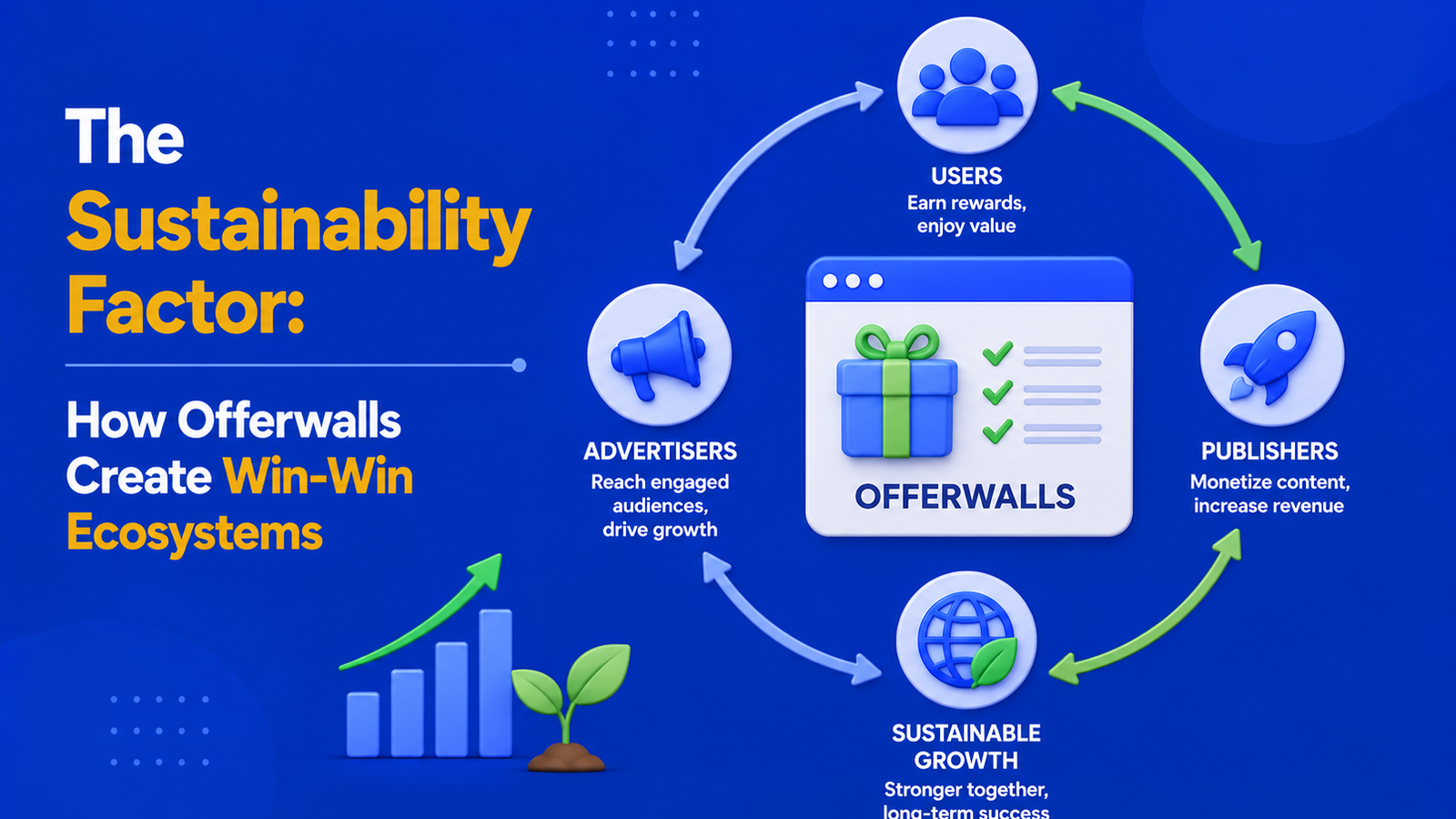
Sustainability is no longer a concept limited to environmental initiatives. Across today's digital economy, it increasingly describes how businesses build systems that create long-term value while balancing commercial success with ethical responsibility. In advertising, this means moving beyond short-term metrics and designing monetization models that respect user attention, encourage transparency, and generate measurable outcomes without compromising the overall experience.
Traditional digital advertising often struggles to achieve that balance. Intrusive banners, autoplay videos, excessive tracking, and low-quality impressions create friction for users while forcing developers to choose between revenue and experience. Offerwalls represent a different approach. Rather than interrupting users, they invite voluntary participation through meaningful rewards, creating a model where engagement is earned instead of demanded. As the industry continues shifting toward privacy-first and performance-driven advertising, offerwalls are becoming an increasingly important example of how sustainable monetization can benefit every participant in the ecosystem.
1. Sustainable Advertising Begins With User Choice
The foundation of sustainable advertising is respecting user attention. Unlike traditional formats that compete for visibility through interruptions, offerwalls allow users to decide whether, when, and how they want to engage with advertising. This simple difference transforms advertising from an obstacle into an optional experience, creating stronger trust while reducing frustration and ad fatigue.
Clear value exchange further strengthens this relationship. Users understand exactly what action is required and what reward they will receive, whether that involves completing a survey, installing an application, watching a rewarded video, or reaching gameplay milestones. Because participation is entirely voluntary, engagement tends to be more authentic, producing higher satisfaction and encouraging long-term interaction with the platform.
Sustainable advertising doesn't compete for attention—it earns participation through clear value.
2. A Better Balance for Developers and Advertisers
Offerwalls create sustainable value because they improve outcomes for both publishers and advertisers simultaneously. For developers, they provide an additional monetization channel that complements rather than disrupts the core user experience. Instead of relying entirely on intrusive advertisements or in-app purchases, developers can monetize highly engaged users while preserving gameplay, navigation, and overall product quality.
Advertisers benefit from the same balance through performance-driven campaigns focused on verified user actions instead of passive impressions. Since users voluntarily complete meaningful tasks such as registrations, subscriptions, purchases, or gameplay objectives, advertisers gain higher-quality conversions while reducing wasted advertising spend. This emphasis on measurable outcomes makes offerwalls particularly attractive as businesses continue prioritizing efficiency and long-term return on investment.
The strongest monetization ecosystems are built when publisher revenue and advertiser performance grow together instead of competing with user experience.
3. Efficiency Makes Offerwalls More Sustainable
Sustainability also extends beyond user experience into the technical efficiency of digital advertising. Every unnecessary impression, autoplay video, and failed advertising request consumes bandwidth, computing resources, and energy. Traditional advertising often generates large volumes of activity without creating meaningful engagement, increasing operational waste while reducing campaign efficiency.
Offerwalls naturally reduce much of this inefficiency because advertising is only presented when users actively choose to participate. Combined with lightweight interfaces, optimized creative assets, and responsible data collection, this approach reduces unnecessary resource consumption while delivering stronger performance metrics. As environmental considerations become increasingly important within AdTech, efficiency is emerging as an important component of sustainable monetization rather than simply a technical optimization.
4. Trust and Transparency Are Becoming Competitive Advantages
Long-term sustainability depends as much on trust as it does on technology. Users increasingly expect transparency around rewards, privacy, and data usage, while advertisers demand accurate reporting and measurable performance. Offerwalls naturally support these expectations because the exchange between user and platform is explicit. Users understand the requirements before participating, advertisers receive verified actions, and developers can monitor campaign performance through transparent reporting systems.
Maintaining this trust requires thoughtful implementation. Meaningful rewards, clear eligibility requirements, privacy-first data practices, lightweight user experiences, and continuous optimization all contribute to healthier monetization ecosystems. Rather than maximizing short-term engagement through aggressive tactics, sustainable platforms focus on creating consistent experiences that encourage users to return voluntarily.
Transparency isn't simply good practice—it has become one of the most valuable assets in modern advertising.
5. The Future of Sustainable Monetization
Digital advertising continues moving toward a future shaped by privacy regulations, AI-powered personalization, and greater accountability around performance. Success will increasingly depend on delivering relevant advertising experiences that respect user choice while generating measurable business outcomes. Offerwalls are well positioned within this evolution because they naturally combine consent-based engagement, performance measurement, and flexible reward systems into a single monetization model.
As developers, advertisers, and technology providers place greater emphasis on long-term growth instead of short-term metrics, sustainable monetization will become less about serving more advertisements and more about creating better interactions. Platforms that continuously improve transparency, optimize reward design, and measure success through lasting engagement will be better prepared for the next generation of digital advertising.
The future of advertising belongs to platforms that create lasting value—not simply more impressions.
Building a More Sustainable Digital Advertising Ecosystem
Sustainability in advertising is ultimately about balance. Users expect rewarding experiences that respect their time, developers need reliable monetization that preserves product quality, and advertisers require measurable performance that justifies every campaign investment. Offerwalls bring these priorities together through a model built on voluntary participation, transparency, and meaningful value exchange rather than interruption.
As the digital economy continues to evolve, the platforms that succeed will be those that view monetization as part of the overall user experience rather than something separate from it. Sustainable advertising is no longer defined only by financial performance—it is increasingly measured by trust, efficiency, and the ability to create value for everyone involved.
Related Articles
Why Offerwall eCPM Drops (And How to Fix It)
Offerwall eCPM drops can happen due to offer mix changes, low-quality traffic, reward imbalance, or tracking issues. Learn the real causes and how to fix them fast.

Voice & AR-Enabled Offerwalls: Using Augmented Reality and Voice Commands for Immersive Rewards
Unlock next-level engagement with offerwalls that use AR and voice commands. Turn every reward into an immersive experience users can’t resist interacting with.

Interoperable Rewards: Using Offerwalls to Reward Users Across Multiple Apps or Devices
Expand the value of offerwalls with interoperable rewards. Let users earn and redeem incentives across apps and devices, boosting engagement and retention.