Voice & AR-Enabled Offerwalls: Using Augmented Reality and Voice Commands for Immersive Rewards

Ajeet Thapa
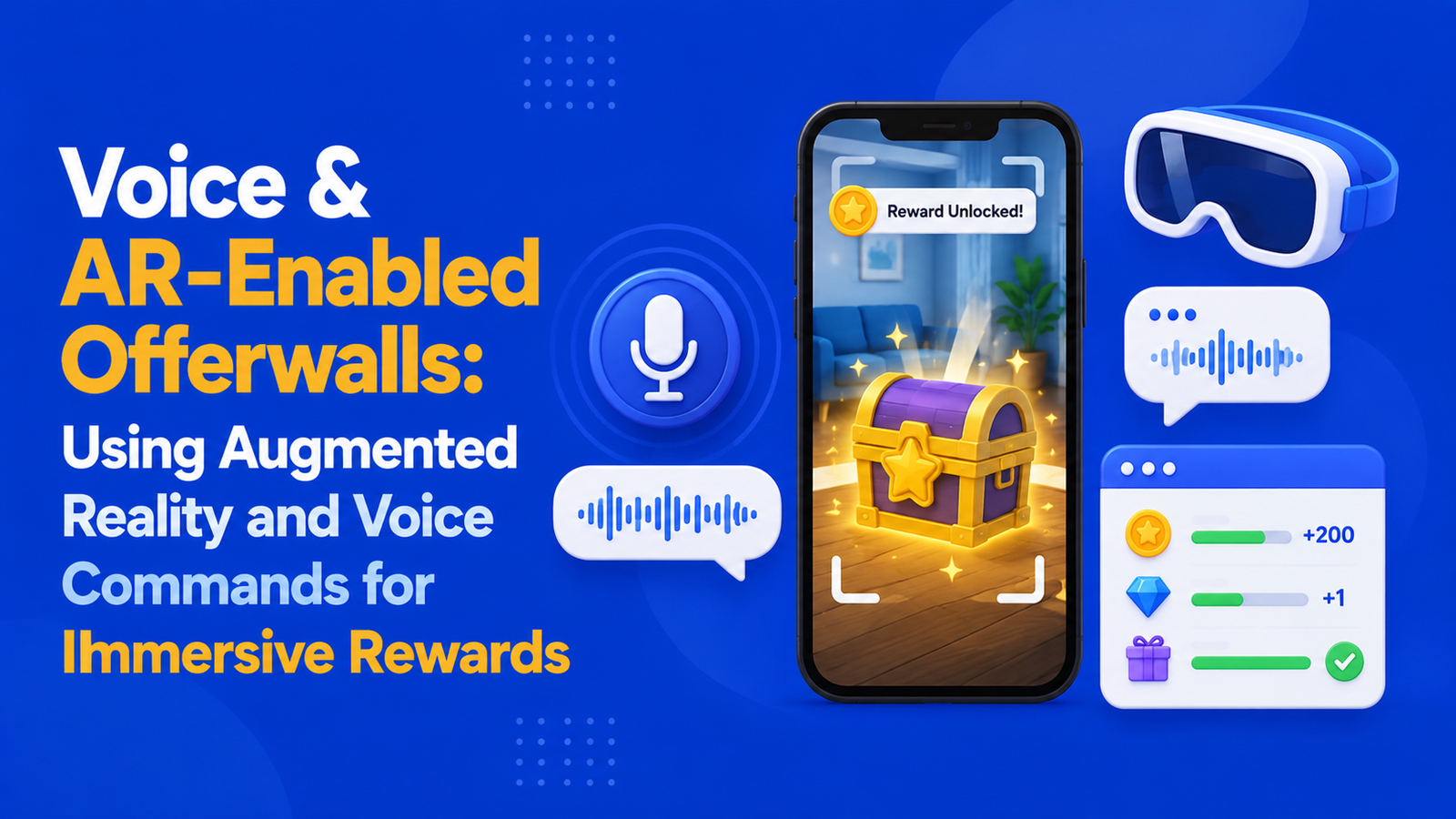
Offerwalls have long been a reliable monetization tool for apps, rewarding users for completing tasks such as installs, surveys, sign-ups, or in-app actions. However, as user expectations evolve and attention spans shrink, traditional offerwall models are being challenged to become more immersive. Users now expect experiences that are interactive, intuitive, and engaging in ways that go beyond tapping a static list of offers. This is where voice and augmented reality (AR) come in. By integrating voice commands and AR overlays into offerwalls, publishers can create deeply immersive reward systems that feel natural and engaging.
The Evolution of Offerwalls into Immersive Experiences

Traditional offerwalls are structured around simple task-reward exchanges. While effective, this model treats interactions as isolated and transactional. Voice and AR-enabled offerwalls transform the interaction into an experiential journey. For example, instead of tapping to complete an offer, a user can speak commands or interact with virtual elements overlaid onto their physical environment. This creates a sense of presence and immediacy, making the offerwall feel like part of the app’s core experience rather than a separate utility.
Voice-enabled interactions allow users to navigate, select, and complete offers without removing themselves from the app’s main flow. AR overlays can make rewards visible in the real world, gamifying the experience through spatial placement, virtual collectibles, or interactive challenges. These mechanics tap into human curiosity and playfulness, increasing engagement beyond what traditional interfaces can deliver.
How Voice & AR Drive Deeper Engagement

Voice and AR mechanics appeal to several core psychological drivers. First, they create a sense of agency—users feel in control of the environment and their choices. Second, the novelty and interactivity of AR spark curiosity and excitement. Third, voice commands reduce friction, making it easier for users to act on offers immediately.
For example, a user might speak a command to unlock a special offer while exploring a virtual AR environment that appears on their screen, such as a treasure hunt scattered across their room or in-app world. Completing these tasks is not only rewarding monetarily but also emotionally stimulating. Users perceive these interactions as playful, intuitive, and dynamic.
These immersive elements encourage repeat engagement. A user who might ignore static offers may re-engage to explore new AR challenges or try voice-based shortcuts. This repeated interaction enhances retention and increases the likelihood of higher-value offer completions.
Integration Challenges and Best Practices

While the potential is significant, integrating voice and AR into offerwalls comes with challenges. Technical accuracy is critical—voice recognition must work reliably across accents and contexts, and AR elements must be stable, responsive, and aligned with real-world spaces. Any mismatch or lag can frustrate users and reduce trust in the system.
Designing these experiences also requires thoughtful user onboarding. Users must understand how to interact with voice commands or AR overlays without feeling overwhelmed. Clear visual cues, tutorial prompts, and progressive difficulty levels help maintain engagement while avoiding cognitive overload. Rewards must be calibrated to match the effort required for immersive interactions.
Security and privacy considerations are equally important. AR interactions often rely on camera access, and voice commands may process sensitive audio. Publishers must ensure data is handled transparently and securely to maintain user trust.
Benefits for Publishers and Advertisers

Immersive offerwalls can drive multiple layers of value. First, they increase engagement by making the offerwall feel like an experiential feature rather than a transactional tool. Second, they improve retention, as users return not just for rewards but to continue exploring interactive environments or voice-controlled experiences. Third, they offer unique branding opportunities—advertisers can create AR experiences tied to their products or services, increasing recall and emotional resonance.
Data collection from AR and voice interactions also provides richer insights. Publishers can analyze user behavior within virtual spaces, track voice-command patterns, and optimize reward placement dynamically. This level of behavioral intelligence allows for more effective targeting and personalized experiences that maximize conversions.
Looking Ahead: The Future of Immersive Offerwalls
As mobile devices become more AR-capable and voice interfaces proliferate, offerwalls will continue to evolve toward fully immersive, multisensory experiences. AI-driven personalization may soon adapt AR environments and voice interactions to each user’s preferences, creating hyper-customized offerwall journeys.
For publishers and advertisers seeking to differentiate in a crowded marketplace, voice and AR-enabled offerwalls represent a significant opportunity. They combine reward-based monetization with interactivity, novelty, and user agency, turning traditional offerwalls into engaging, memorable experiences that drive long-term engagement and revenue.
Related Articles

Gamified Earning: Why Users Love Levels, Streaks & Badges
Earning apps use levels, streaks, and badges to spark motivation and boost retention. See why these gamified features keep users engaged daily.

Why Offerwall eCPM Drops (And How to Fix It)
Offerwall eCPM drops can happen due to offer mix changes, low-quality traffic, reward imbalance, or tracking issues. Learn the real causes and how to fix them fast.

Interoperable Rewards: Using Offerwalls to Reward Users Across Multiple Apps or Devices
Expand the value of offerwalls with interoperable rewards. Let users earn and redeem incentives across apps and devices, boosting engagement and retention.