The “Almost There” Effect: Why Near-Complete Offers Can Drive More Engagement

Ajeet Thapa
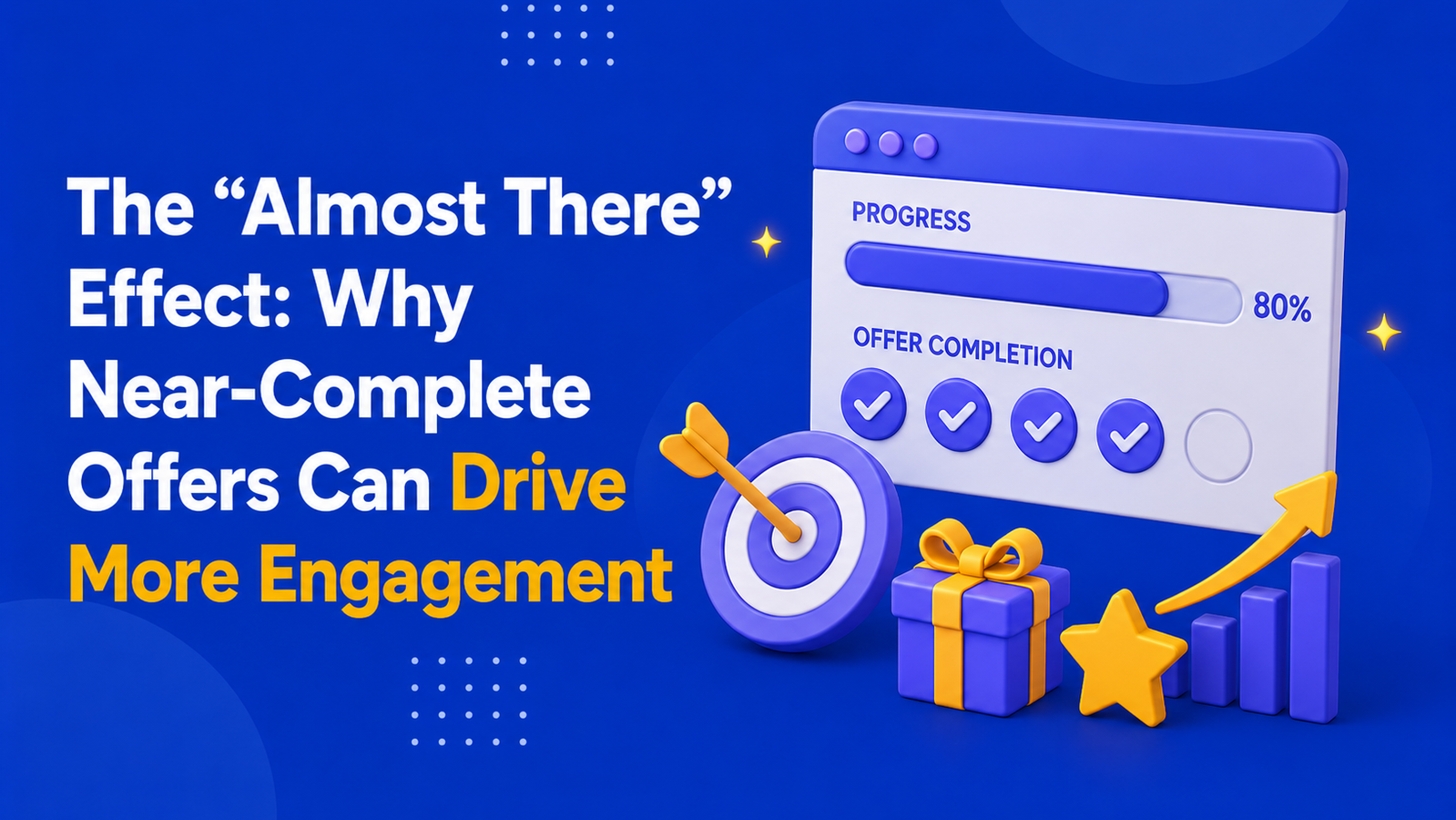
Not every offerwall interaction begins with a strong intention to complete an offer. In many cases, users start because the reward looks appealing, the required action seems manageable, or the offer appears relevant to what they are already trying to accomplish. What happens after that initial action, however, can be just as important as what convinced them to begin.
As users move closer to completion, their perception of the offer can change. An offer that initially required several steps may feel increasingly achievable once progress has been made. The remaining effort becomes easier to evaluate, while the reward feels closer and more tangible. This creates an important behavioral dynamic for publishers: users who can clearly see their progress may be more motivated to finish than users who are presented with the same offer as a single, distant objective.
Understanding this “almost there” effect can help publishers think differently about offer structure, milestone design, progress visibility, and the way rewards are communicated. Several factors determine whether partial progress encourages completion or simply becomes another point where users abandon the experience.
1. Progress Changes How Users Perceive Effort
When users first encounter a multi-step offer, they typically evaluate the entire requirement before deciding whether it is worth pursuing. An offer that requires several actions may appear demanding because the user has not yet invested anything into it. The perceived effort is therefore based on the full journey rather than the immediate step in front of them.
Once users have completed part of that journey, however, the calculation can change. The remaining requirement may appear smaller because some of the work has already been completed. Seeing progress transform a large objective into a shorter remaining task can make completion feel more achievable. This is particularly relevant for offers that involve multiple milestones, levels, or sequential actions, where visible progress can give users a clearer sense of how much remains.
An offer can feel difficult before users begin and surprisingly achievable once they can see how far they have already come.
2. Partial Progress Creates a Stronger Reason to Continue
Starting an offer requires a decision, but continuing an offer involves a different psychological calculation. Once users have invested time or effort, abandoning the experience means leaving behind progress they have already made. This can create additional motivation to reach the next milestone, particularly when the remaining requirement is clearly defined.
The effect becomes stronger when the platform communicates progress in a way that users can easily understand. Showing that a user has completed several stages and has only one meaningful milestone remaining can make the final objective feel more attainable. Instead of asking users to think about the entire offer, the experience encourages them to focus on the next achievable step.
For publishers, this means the structure of an offer can influence completion behavior even when the underlying reward remains unchanged. Progress does not necessarily need to increase the payout; it can increase the perceived attainability of the existing payout.
3. Milestones Can Turn a Long Offer Into a Series of Smaller Goals
Long offers can create a problem when the final reward feels too distant. A user may understand the potential value but struggle to maintain motivation when there is no visible sense of progress between the beginning and the final outcome. Breaking the experience into meaningful milestones can make the same offer easier to understand and more engaging.
Milestones also provide opportunities to reinforce progress throughout the journey. Instead of presenting completion as one distant event, publishers can communicate intermediate achievements and make each stage feel like a meaningful step toward the final reward. This approach can be particularly effective for gaming offers where progression already forms a natural part of the user experience.
The closer users can see themselves getting to a meaningful outcome, the easier it becomes to justify taking the next step.
4. The Final Steps Can Be More Important Than Publishers Expect
The final stage of an offer deserves particular attention because this is where the perceived value of previous effort can become most important. A user who has completed most of the required actions may be highly motivated to finish, but unnecessary friction at this stage can quickly turn momentum into frustration.
If the final requirement is unclear, unexpectedly difficult, or poorly communicated, users may question whether completing the offer is still worthwhile. This makes the final stage a critical part of the user experience. Clear requirements, reliable tracking, visible progress, and predictable reward delivery can help preserve the motivation created by earlier milestones.
Publishers should therefore evaluate completion rates not only across the entire offer but also between individual stages. A significant drop near the end may indicate that users are encountering friction precisely when their motivation should be strongest.
5. Turning Near-Completion Into Sustainable Engagement
The “almost there” effect can be useful, but it should not become an excuse to create unnecessarily long or complicated offers. Users may tolerate additional steps when progress is meaningful, but excessive requirements can eventually outweigh the motivation created by visible advancement. The objective should be to make legitimate progress easier to understand, not to manufacture frustration simply to keep users engaged.
A sustainable offerwall experience combines clear milestones with realistic requirements and reliable rewards. When users understand where they are, what remains, and what they will receive for completing the journey, progress becomes a source of motivation rather than uncertainty. This can improve the likelihood of completion while creating a more transparent experience for users and a healthier monetization environment for publishers.
The goal isn't to make users feel trapped by their progress. It is to make the value of finishing feel increasingly clear as they move forward.
Related Articles
What Users Actually Mean When They Say a Reward “Feels Worth It”
Users judge rewards by effort, usefulness, timing, and outcomes—not just size. Explore what actually makes rewards feel valuable.
Gamified Earning: Why Users Love Levels, Streaks & Badges
Earning apps use levels, streaks, and badges to spark motivation and boost retention. See why these gamified features keep users engaged daily.
Why Users Are Starting to Ignore “Limited-Time” Rewards
Limited-time rewards are losing impact as users become more selective. Discover why urgency alone no longer drives engagement.