How to Detect Bad Traffic Before It Hurts Offerwall Revenue

Ajeet Thapa
1. Why Bad Traffic Is a Bigger Threat Than Low Revenue
Bad traffic is one of the most dangerous problems in offerwall monetization because it can damage performance silently. At first, everything may look fine on the surface. Installs go up, clicks increase, and offerwall activity appears healthy. But behind the scenes, revenue stays flat, completions fail to validate, and advertisers begin reducing payouts. This is how bad traffic hurts publishers. It doesn’t always crash results immediately, but it weakens the entire monetization system over time.
Offerwalls work best when users have real intent. A user who is genuinely motivated to earn rewards will explore offers, complete tasks properly, and return to earn again. Bad traffic behaves differently. It creates activity without long-term value, and it often breaks the trust loop that offerwalls rely on. Detecting low-quality traffic early is critical because once the offerwall ecosystem is damaged, recovery becomes much harder.
2. What “Bad Traffic” Looks Like in Offerwall Monetization
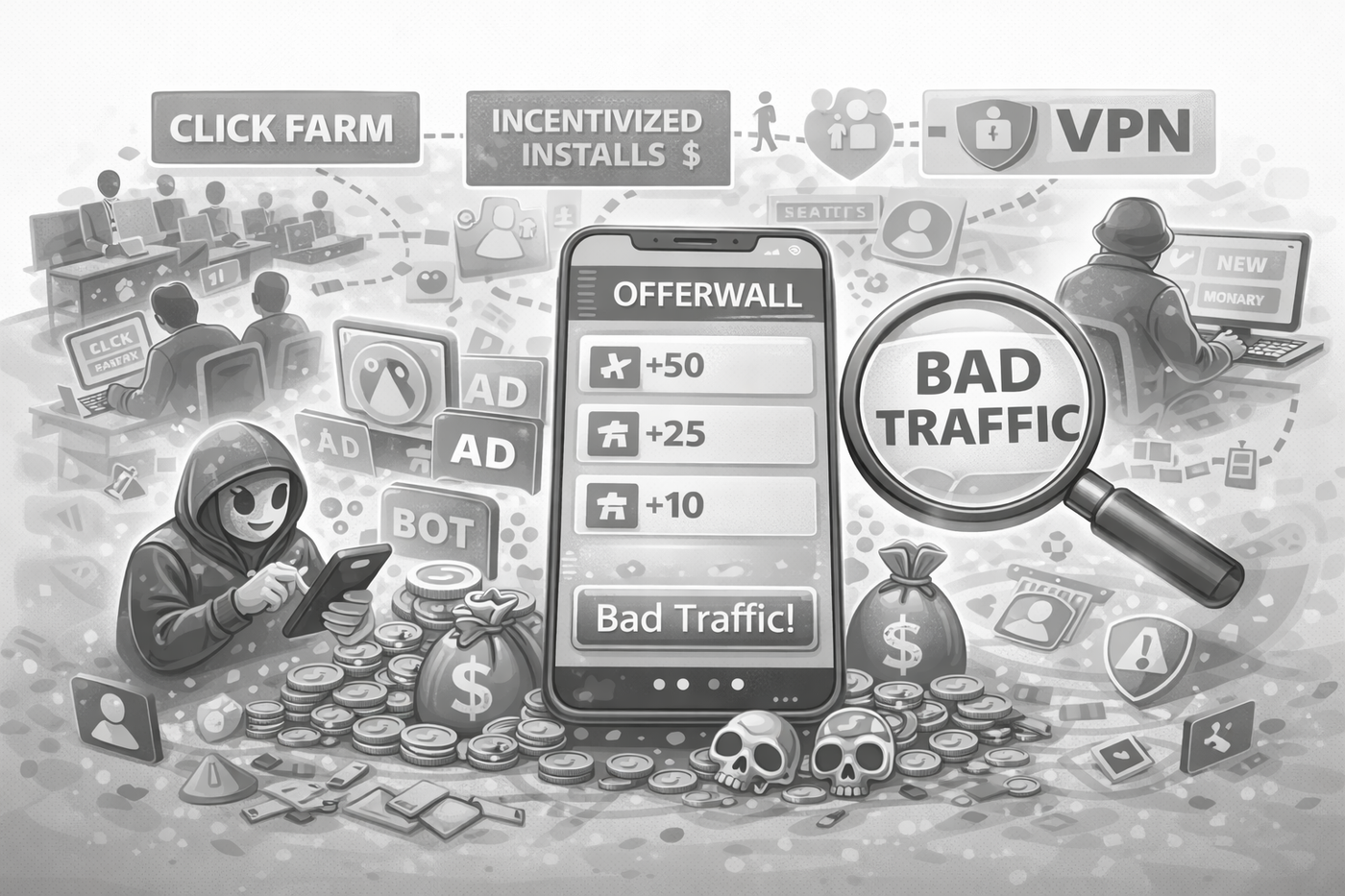
Bad traffic is not always fraud, but it is always low value. It can come from click farms, incentivized installs that are not properly disclosed, bots, emulators, VPN-based traffic, or even poorly targeted acquisition campaigns. In many cases, publishers scale UA too fast and unintentionally bring users who are not a fit for the app. These users may open the app once, click random offers, and disappear. They inflate numbers but do not generate sustainable revenue.
In offerwalls specifically, bad traffic often shows up as high clicks but low completions. Users may tap offers without reading requirements, abandon halfway, or fail verification. Sometimes traffic looks engaged but never produces approved conversions. This causes a gap between engagement and revenue, and that gap is one of the strongest signs that traffic quality is weak.
3. The Early Warning Metrics That Reveal Bad Traffic
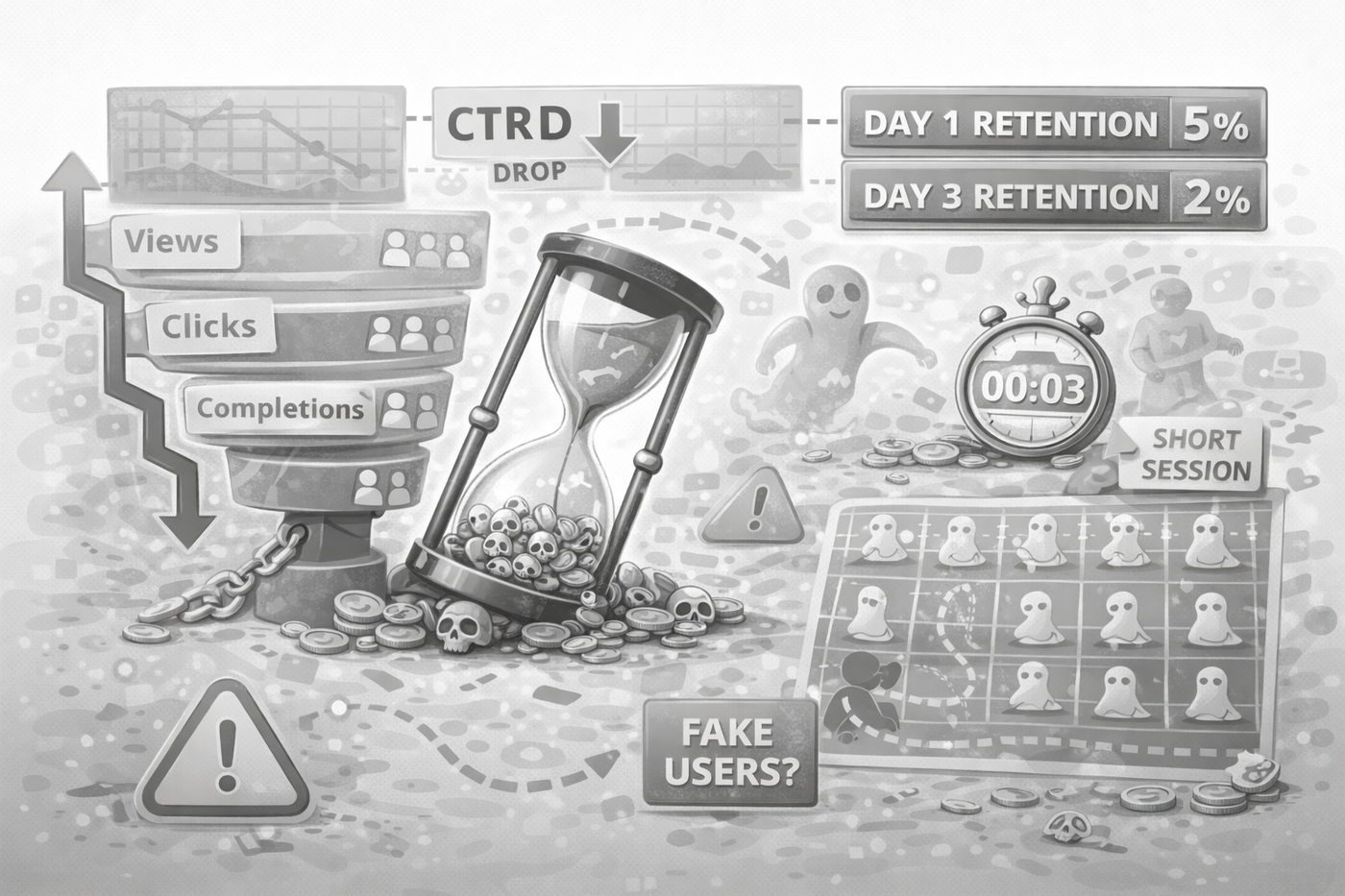
The fastest way to detect bad traffic is by tracking funnel quality, not just volume. If offerwall views and clicks rise but completion rate drops, it usually means users are low-intent. A healthy offerwall funnel looks like a natural progression where users view, click, complete, and return. When the funnel breaks early, it’s often because traffic is not motivated or not real.
Retention is another major warning sign. Bad traffic often produces extremely low Day 1 and Day 3 retention, even when installs look strong. These users don’t return because they never intended to become real app users. You may also see session patterns that look unnatural, such as extremely short sessions, repeated actions at unrealistic speed, or users triggering events without normal navigation behavior. These signals show that engagement is not coming from genuine users.
4. Source-Level and Geo-Level Patterns That Expose Low Quality
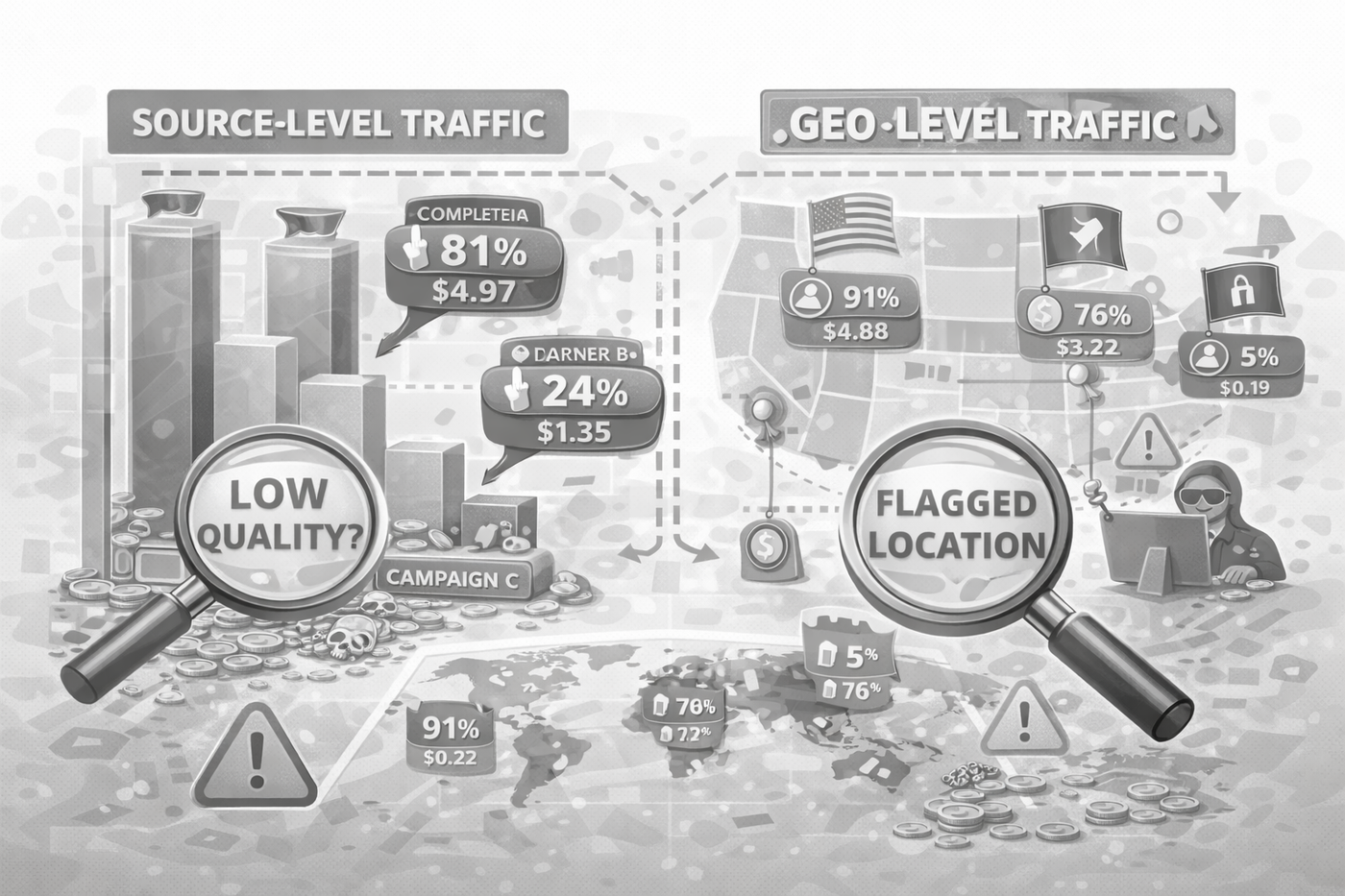
One of the most effective ways to detect bad traffic is by comparing performance across sources. Many publishers only look at total performance, but bad traffic becomes obvious when you break metrics down by partner, campaign, and channel. If one traffic source drives high install volume but produces weak completion rates and low revenue per user, it is likely low quality. Even if the CPI is cheap, the traffic is expensive because it produces no value.
Geo-level analysis is equally important. Offerwall performance varies heavily by region, but sudden spikes from unexpected countries or mismatched locations can signal VPN traffic or misreported attribution. If traffic appears from regions where you do not normally monetize well, and the engagement looks inflated, it is a strong warning sign. A good practice is to monitor revenue per completion and approval rate by country. If certain geos generate clicks but very few approved conversions, traffic quality may be the issue.
5. Behavioral Signals That Separate Real Users From Fake Engagement

Real users behave naturally. They take time to browse, return later, and complete offers in a way that matches real-world behavior. Bad traffic often looks too repetitive and too fast. You may see users clicking multiple offers in seconds, completing actions at unrealistic speed, or following identical paths across thousands of sessions. These patterns are common with bots and scripted traffic.
Another key behavioral sign is reward-only behavior. Some low-quality users open the app only to farm rewards, without using the core features. They may never engage with gameplay, content, or real utility. If offerwall users are generating revenue but also increasing churn, it may mean the offerwall is attracting the wrong segment. This is why it’s important to measure whether offerwall users also behave like long-term product users, not just monetization participants.
6. How to Protect Offerwall Revenue Before Damage Happens
The best defense against bad traffic is proactive monitoring and fast action. Publishers should track offerwall performance daily by source, geo, and cohort. The moment completion rates drop or approval rates weaken, it’s worth investigating. Waiting too long allows low-quality traffic to scale, which can reduce advertiser confidence and lower payouts across the board. Cutting off bad traffic early protects both revenue and long-term stability.
It also helps to set quality thresholds. For example, if a traffic source consistently delivers low retention and weak completion rates, it should be paused or limited. Publishers should also focus on improving the offerwall experience for real users by placing it at high-intent moments, ensuring reward delivery is fast, and keeping offer requirements clear. When the offerwall feels trustworthy and traffic is high quality, monetization becomes predictable and scalable. Detecting bad traffic early is not just fraud prevention, it is revenue protection.
Related Articles

Offerwall SDK vs API Integration: Which Setup Should App Publishers Choose?
Compare offerwall SDK and API integration methods to understand development effort, customization, tracking, security, and how app publishers can choose the right setup.

Offerwall Integration Checklist: What App Developers Should Verify Before Launch
Use this offerwall integration checklist to verify SDK compatibility, conversion tracking, reward delivery, user experience, analytics, and launch readiness before release.
Tapjoy vs AdGem: Comparing Two Mobile Offerwall Platforms
Learn how Tapjoy and AdGem compare across offerwall integration, campaign relevance, tracking, reporting, and monetization strategy to help mobile publishers evaluate their options.