The Impact of Apple's ATT on Offerwall Ecosystems: One Year Later (Post-Implementation Analysis)

Ajeet Thapa
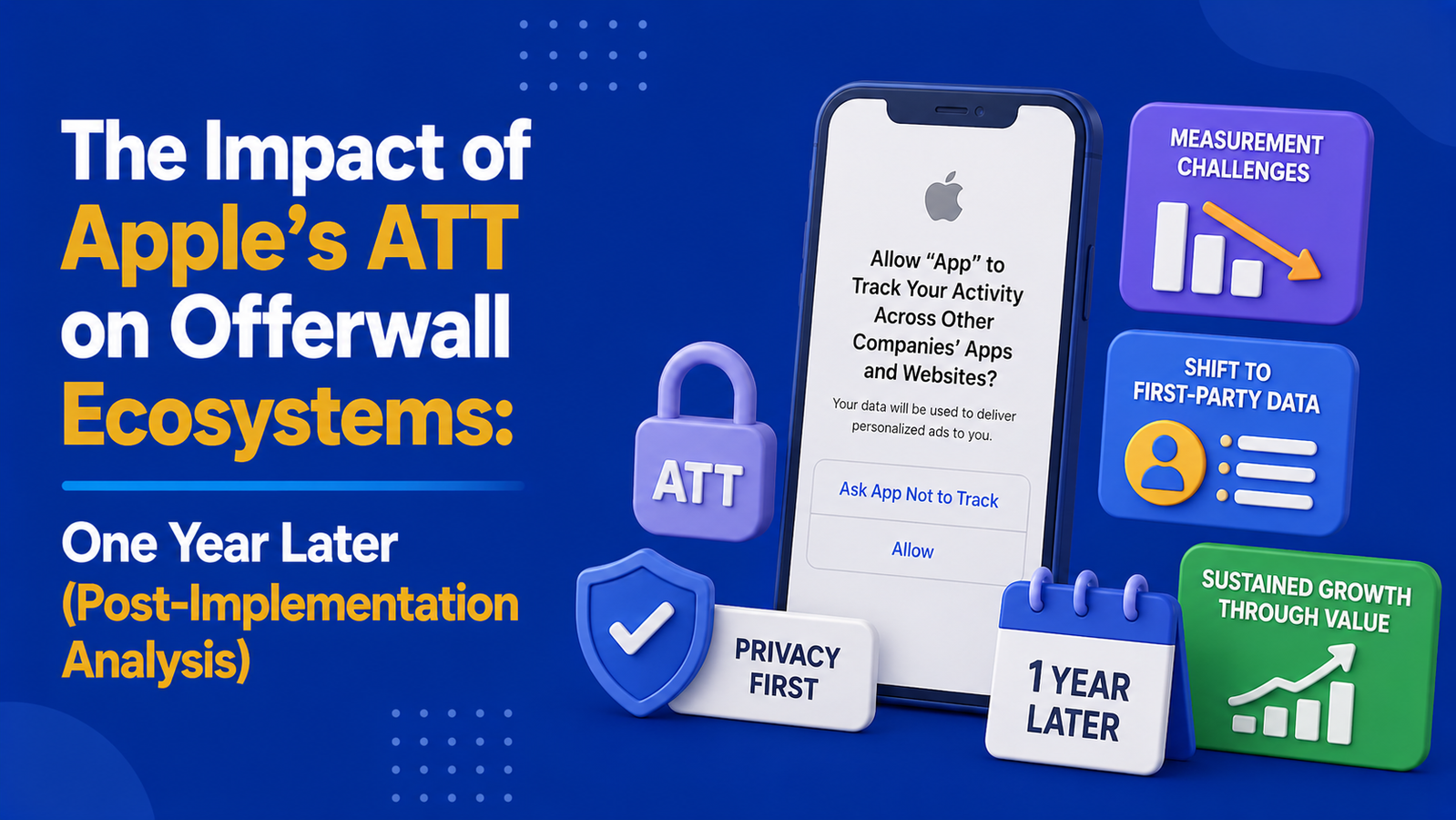
It’s been over a year since Apple officially implemented App Tracking Transparency (ATT) as part of iOS 14.5. When it was first announced, the prioritization of user privacy sent shockwaves through the mobile advertising industry. Offerwalls, which are heavily reliant on tracking, precise attribution, and individualized user targeting, were predicted to be among the hardest hit. The doomsday scenarios were numerous: ad revenues would plummet, conversion rates would crash, and the very concept of a value-driven offer ecosystem would become unviable. Now, a year later, the dust has settled. We have data. We have experience. We have an opportunity for a balanced, post-implementation analysis. The impact of ATT was significant, but the predicted apocalypse did not occur. Instead, the offerwall ecosystem has evolved, adapted, and in many ways, emerged stronger and more resilient than before. Let’s take a closer look at the key impacts of ATT, one year later.
The Initial Shock and Disruption: The ATT Fallout

When ATT first rolled out, the immediate impact was profound. The fundamental mechanics of how offerwalls tracked users and attributed conversions were broken overnight. Attribution Chaos was the first hurdle. The standard practice of using the Identifier for Advertisers (IDFA) to link a user’s click on an offer to their subsequent install or action in a new app was severely disrupted. Without the IDFA, deterministic attribution became fragmented, imprecise, and subject to significant latency. This made it incredibly difficult for advertisers to accurately measure the performance of their offerwall campaigns and for publishers to optimize their yields. This chaos fed into targeting imprecision. Offerwalls lost access to granular user data that had previously powered sophisticated targeting and personalization.
Advertisers were forced to rely on broader, less-effective targeting parameters, leading to lower engagement rates and reduced conversion quality. The cumulative effect of these challenges was a sharp revenue decline. As a direct result of attribution and targeting imprecision, the value of offerwall inventory decreased. Advertisers reduced their bids for less-qualified traffic, and publishers saw a significant decline in their offerwall revenues, often by 30% or more in the immediate aftermath.
The Adaptive Phase: Navigating the New Normal

The first few months post-ATT were characterized by frantic adaptation and the development of new solutions. The offerwall industry, a notoriously resilient sector, began to fight back. This adaptation led to the rise of alternative attribution models. The sudden dependency on IDFA forced the industry to aggressively explore and adopt other attribution methods. Probabilistic Attribution—using data modeling rather than direct identifiers—gained traction, though it is inherently less precise than deterministic matching. The most stable, albeit complex, solution has been the widespread adoption of SKAdNetwork (SKAN), Apple’s own privacy-preserving attribution framework. SKAN provided a path for attribution, but it came with significant limitations, including aggregated data, no user-level granularity, and delayed reporting, requiring a fundamental rethink of measurement strategies. This adaptation phase also necessitated a renewed focus on first-party data. Platforms and publishers realized that relying on third-party data was no longer a sustainable strategy. There was a significant push toward maximizing the value of data collected directly from the user with their consent.
Publishers began to implement more sophisticated user segmentation and contextual targeting, using in-app behavior and stated preferences to deliver more relevant offers. This led directly to the development of internal personalization engines that used machine learning and behavioral analytics to optimize offer delivery within the privacy-preserving constraints of the new ecosystem. This allowed for better offer-to-user matching, compensating for the loss of IDFA-level data.
One Year Later: The Landscape Stabilizes

Twelve months post-implementation, the offerwall ecosystem has largely stabilized. The initial panic has been replaced by operational realism and a new set of best practices. SKAN is now the standard. While initially viewed with skepticism, SKAdNetwork has become the dominant method for iOS attribution. Advertisers have adapted their bidding strategies to work with SKAN’s aggregated data, and the ecosystem has learned to operate effectively within its limitations. While not as granular as IDFA, SKAN provides a consistent, albeit less detailed, measurement framework. Furthermore, contextual is key. The focus on first-party data and contextual targeting has become a cornerstone of effective offerwall strategy. Publishers who are successful in understanding and segmenting their users based on in-app context and explicit preference are seeing higher conversion rates and stronger revenues. This shift towards privacy has also created a premium on trust equity.
Offerwalls that are transparent about data usage, offer clear opt-in mechanisms, and deliver on their reward promises are building stronger, more loyal user bases. This trust is becoming a powerful differentiator in a more competitive market. Finally, diversification is critical. Publishers have realized the danger of relying on a single monetization channel. There has been a clear trend toward diversifying revenue streams, with publishers increasingly adopting a hybrid monetization model that combines offerwalls with standard display ads and in-app purchases (IAPs).
Conclusion: The Future of Offerwalls in a Privacy-First World
The impact of Apple’s ATT on the offerwall ecosystem was undeniable. It disrupted established workflows, reduced revenue for many, and forced a complete rethink of core technologies. However, the predicted apocalypse failed to materialize. One year later, the offerwall industry has adapted and evolved. We have seen the emergence of new, privacy-preserving technologies and a renewed focus on first-party data and user trust. The ecosystem is now more resilient, more transparent, and better positioned for long-term growth in a privacy-first world.
The key takeaway is that the fundamental value proposition of an offerwall—providing users with a clear value exchange for their time and engagement—remains as strong as ever. As long as users value rewards and are willing to complete tasks to earn them, offerwalls will continue to be a vital monetization tool. The methods may have changed, but the destination remains the same. The challenges were real, but the future of offerwalls in a privacy-centric landscape is brighter than many predicted just one year ago.
Related Articles
Offerwalls and the Internet of Things (IoT): Monetizing Everyday Smart Devices
Unlock new revenue streams by integrating offerwalls into everyday smart devices. From hubs to appliances and wearables,explore the future of IoT monetization and contextually relevant value exchange
Tapjoy vs AdGem: Comparing Two Mobile Offerwall Platforms
Learn how Tapjoy and AdGem compare across offerwall integration, campaign relevance, tracking, reporting, and monetization strategy to help mobile publishers evaluate their options.

Why High-Value Offers Can Underperform: The Psychology Behind Bigger Rewards
Discover why bigger rewards do not always drive conversions and how effort, trust, complexity, and perceived value influence offerwall performance.