The Rise of Tiered (Multi-Stage) Offers: Optimizing Conversion Rate vs. Long-Term Value (LTV)

Ajeet Thapa
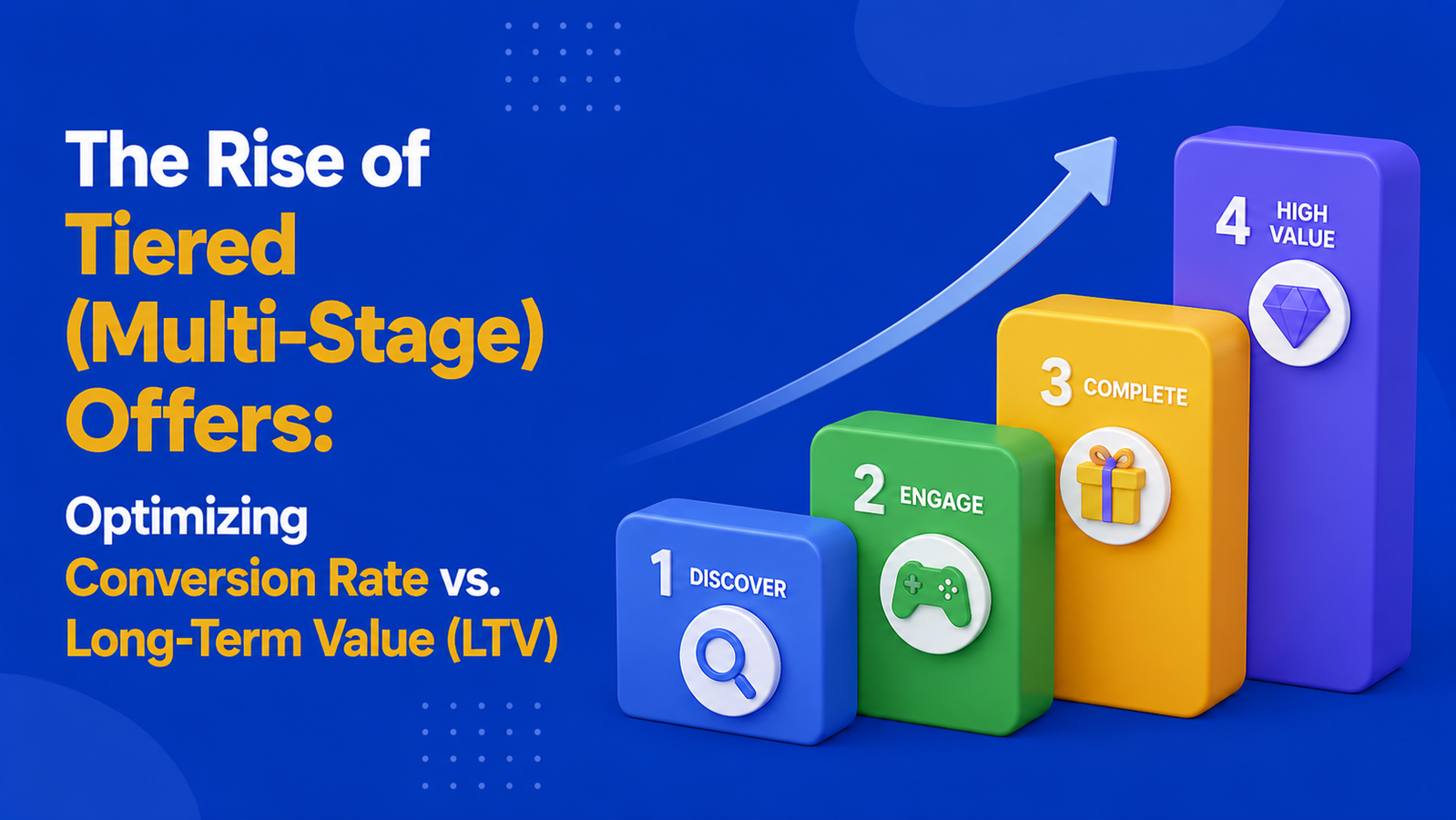
The traditional Cost-Per-Install (CPI) or simple, binary Cost-Per-Action (CPA) model, while foundational to the mobile advertising industry, is no longer the sole peak of offerwall optimization. In the aggressive quest for both sustainable user engagement and high-quality, high-intent traffic, a powerful new structure is rapidly ascending: Tiered (Multi-Stage) Offers. These complex CPA offers are fundamentally redefining the transactional dynamic, shifting the focus from a single, binary conversion event to a progressive, long-term relationship. In this blog, we’ll analyze why multi-stage offers are essential for modern offerwall ecosystems and, more critically, explore the delicate, data-driven balance between maximizing initial conversion rates and unlocking deep, multi-level long-term value (LTV).
The Evolution of Offer Complexity: Beyond Binary CPA

Traditionally, offerwalls thrived on simple, clear interactions: "Install this app," "Register an account," or "Complete this single survey." These binary (complete/incomplete) actions provided immediate user gratification and were easy for platforms to track and attribute. However, as the digital economy matures and user acquisition costs for premium apps continue to rise, both publishers (of the offerwall) and advertisers (the app developers) require significantly deeper signals of intent and value. A simple CPI campaign may deliver a large volume of installs, but those users often churn immediately after receiving their reward, delivering poor LTV to the advertiser and ultimately decreasing the eCPM of the publisher's inventory.
The classic high-payout registration offer (e.g., a complex fintech sign-up or credit card application) may deliver strong immediate conversions, but often results in the same problem: users who have zero intention of using the product long-term, only seeking the initial payout. Multi-stage offers directly solve this core industry pain point by structuring the conversion itself as a journey. Instead of a single $20 payout for an install, an offer might pay $1 for the install, $4 for reaching Level 10, and $15 for making a first in-app purchase (IAP).
This transforms the offer from an interruption into a strategic partnership, incentivizing deeper behavior and providing advertisers with verified, progressive signals of user quality. The user is rewarded incrementally, encouraging them to actually experience the app before reaching the high-payout deep tiers. This ensures that the advertiser is only paying a premium for a user who has demonstrated genuine engagement, dramatically improving their downstream LTV metrics.
Optimizing the First Stage: The Conversion Funnel vs. User Fatigue

While the multi-stage offer is an elegant structural solution, it introduces significant, ongoing optimization challenges that platforms must master. The primary tension exists between the first stage conversion rate and cumulative funnel retention. The first tier must be accessible enough to encourage high initial participation (Conversion Rate), yet difficult enough to filter for users with genuine intent. This is the delicate friction management that defines a successful offer.
If the first stage (e.g., "Install and Open the App") is too easy, it drives massive initial conversion volume. Thousands of users might click, download, and open the app. However, this often results in abysmal downstream funnel retention. The vast majority of these users have zero commitment; they complete the simplest step, receive their minuscule reward, and immediately abandon the offer, never progressing to the higher tiers where the genuine LTV lies. This results in wasted publisher inventory and poor cumulative performance for the advertiser, who paid for a "conversion" that delivered no value.
Conversely, if the first stage requirement (e.g., "Reach Level 10" or "Complete the entire Tutorial") is set too high, user fatigue sets in immediately. Most users will review the requirement, compare it to the reward, decide the effort isn’t worth it, and never engage with the first step at all. This results in a chronically low overall conversion rate, starving the subsequent monetization funnel of the user volume it needs to function. Optimal first-stage optimization often involves identifying a low-friction, high-intent action—for example, "Create and Verify an Account" or "Reach Level 3" (achievable in under five minutes). This requires just enough effort to demonstrate genuine interest, but is simple and brief enough to maximize first-tier conversion, ensuring a sufficient volume of qualified users enters the monetization funnel.
Unlocking Deep Payouts: Maximizing LTV through Strategic Tiers

The true power and sophistication of tiered offers resides in the subsequent stages. This is where the deep payouts live, and where genuine long-term value (LTV) is progressively unlocked for both the publisher and the advertiser. Each subsequent tier should be designed to encourage and, more importantly, reward sustained, high-value user behavior. These aren't just incremental tasks; they are milestones of verified engagement.
Advertisers benefit immensely from this progression. Instead of blindly paying for a user who might eventually reach Level 50 and make a purchase, they pay a high-value premium only when the user is cryptographically verified to have actually reached that milestone. The cost-per-verified-active-user is significantly higher than a basic install, but the data quality and ROI are dramatically improved because the advertiser is paying purely for verified performance. They are acquiring users who have proven they are highly engaged and are far more likely to contribute to the advertiser’s core business metrics long-term.
Publishers, in turn, can unlock exponentially higher cumulative payouts from a single user engagement, driving sustainable revenue growth that would be impossible under a single-payout CPA model. The critical optimization challenge in this phase is the use of advanced analytics and machine learning to dynamically adjust the payout amounts and task requirements per tier, based on real-time data from user progression through the funnel. For example, if data indicates that 80% of users drop off between Tier 2 and Tier 3, the platform can automatically либо reduce the difficulty of the Tier 3 requirement or increase the Tier 3 reward, or both, ensuring the cumulative value of the funnel remains optimized. This is hyper-specific, automated optimization that happens on a per-app, per-offer basis, maximizing LTV across the entire network.
Managing the Offer Journey: Transparency, Consent, and Ethics
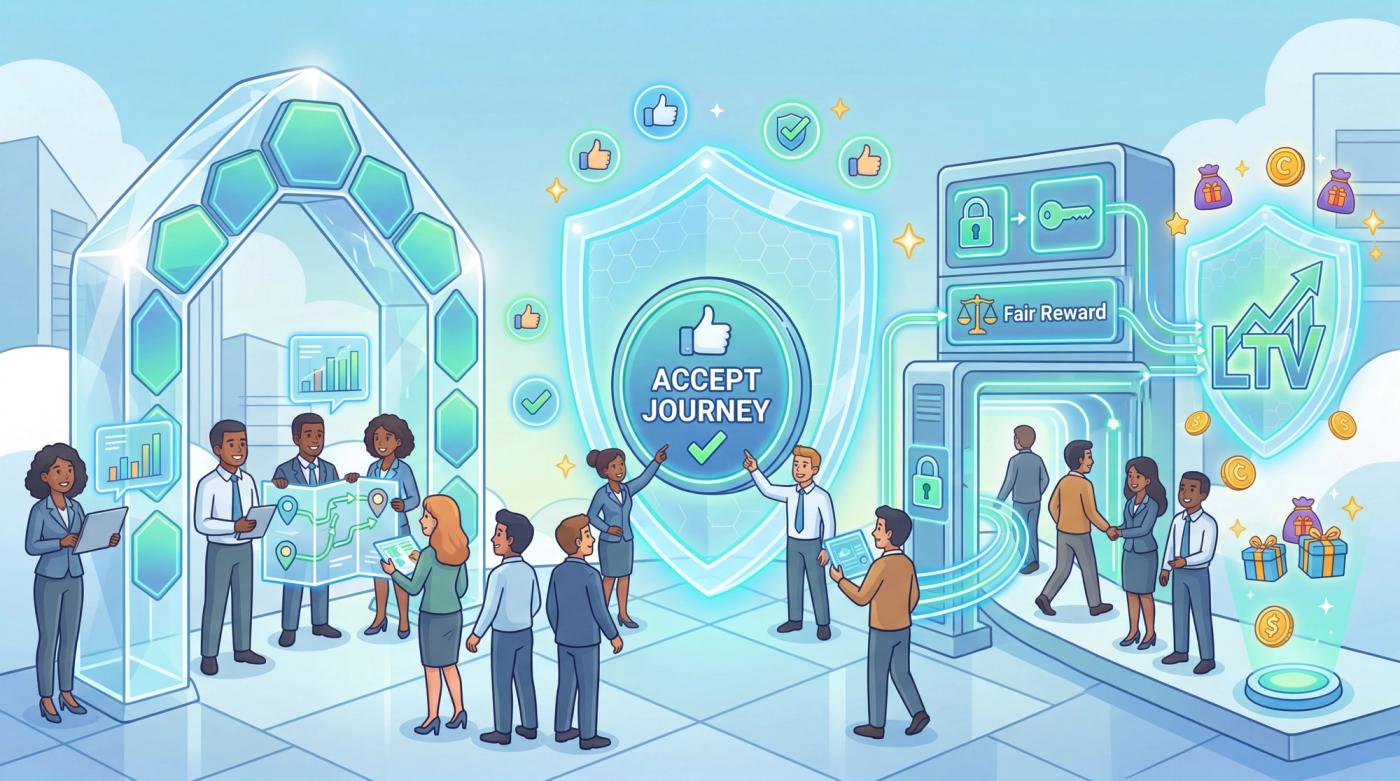
The entire industry shift toward multi-stage offers requires a corresponding shift in ethics and user transparency. These offers are not impulse purchases; they are commitments. Publishers and platforms must ensure that users fully and clearly understand the entire offer journey before they engage with the very first stage.
This means absolute, non-negotiable clarity about the payout amount for each individual tier and the explicit requirements to unlock that specific payout. Users must explicitly and knowingly consent to entering a multi-stage funnel. Hiding deep tiers, misrepresenting the total reward, or using obscure, misleading language to obfuscate the effort required is not just unethical—it severely and permanently damages user trust. When users feel misled, it leads to high churn, negative reviews, and ultimately hurts conversion quality.
A user who feels tricked into an offer is not going to progress to Level 50; they are going to uninstall. The entire journey should be presented as a clear, gamified challenge, where users can at all times see their current progress and the upcoming, increasing rewards they are working towards. This makes the value exchange transparent, fair, and engaging, fostering high trust equity in the platform and ensuring a better user experience, which is the prerequisite for converting high-intent users who will deliver long-term value to advertisers.
Conclusion: The Data-Driven Balance for the Next Generation of Monetization
The rise of multi-stage offers is a decisive shift towards a data-driven digital economy where engagement is measured progressively and value is cryptographically verified. It represents the maturation of the offerwall model, moving from transactional guessing to collaborative utility.
Successfully optimizing multi-stage offers is not about maximizing conversion rates or LTV in isolation; it’s about mastering the dynamic, data-driven balance between the two. The time to transition from single-payout CPA to multi-tier offers is now, and those publishers and advertisers who embrace this progressive, user-centric model will be the ones defining the future of monetization.
Related Articles
Tapjoy vs AdGem: Comparing Two Mobile Offerwall Platforms
Learn how Tapjoy and AdGem compare across offerwall integration, campaign relevance, tracking, reporting, and monetization strategy to help mobile publishers evaluate their options.

Why High-Value Offers Can Underperform: The Psychology Behind Bigger Rewards
Discover why bigger rewards do not always drive conversions and how effort, trust, complexity, and perceived value influence offerwall performance.
The Emerging Economics of Time-Based Digital Rewards
Time is becoming an important part of reward value. Explore how effort, speed, and time-to-reward are changing digital reward economics and user engagement.