How to Create a “Value Exchange” Monetization Model

Ajeet Thapa

1. What a “Value Exchange” Monetization Model Really Means
A value exchange monetization model is built on a simple idea: users get something meaningful, and the app gets something meaningful in return. Instead of forcing monetization through constant ads, aggressive paywalls, or interruptions, value exchange makes monetization feel like a fair trade. The user chooses to engage because the reward is worth it, and the app earns revenue because that engagement is high-intent. This is why value exchange models are becoming one of the most trusted and scalable ways to monetize free users, especially in mobile apps where retention and user experience matter as much as revenue.
In practice, value exchange usually means giving users optional ways to unlock benefits such as coins, premium time, content access, boosts, features, or discounts. The user might watch a rewarded video, complete an offerwall task, sign up for a service, or reach a milestone in the app. The important part is that the user feels in control and understands what they are getting. When done correctly, value exchange improves monetization without damaging retention, because users do not feel like the app is “taking” from them. They feel like the app is giving them a choice.
2. Why Value Exchange Works Better Than Forced Monetization

Forced monetization can generate quick revenue, but it often comes with long-term damage. When users feel interrupted too often, they lose trust, skip sessions, and uninstall faster. This is why many apps see a pattern where ad impressions go up, but retention goes down, and total revenue eventually becomes unstable. Value exchange works differently because it aligns monetization with user motivation. Users are not monetized at random moments. They are monetized when they actively want something and are willing to trade attention or action to get it.
This model also improves the quality of engagement. Rewarded actions tend to produce better ad completion rates, stronger conversion signals, and healthier eCPMs because users are choosing to participate. Advertisers benefit too because the traffic is more intentional, which often leads to better campaign performance. Over time, value exchange creates a more sustainable revenue engine, where users return more often and monetization feels like part of the experience rather than a barrier.
3. Choose the Right “Value” to Offer Users
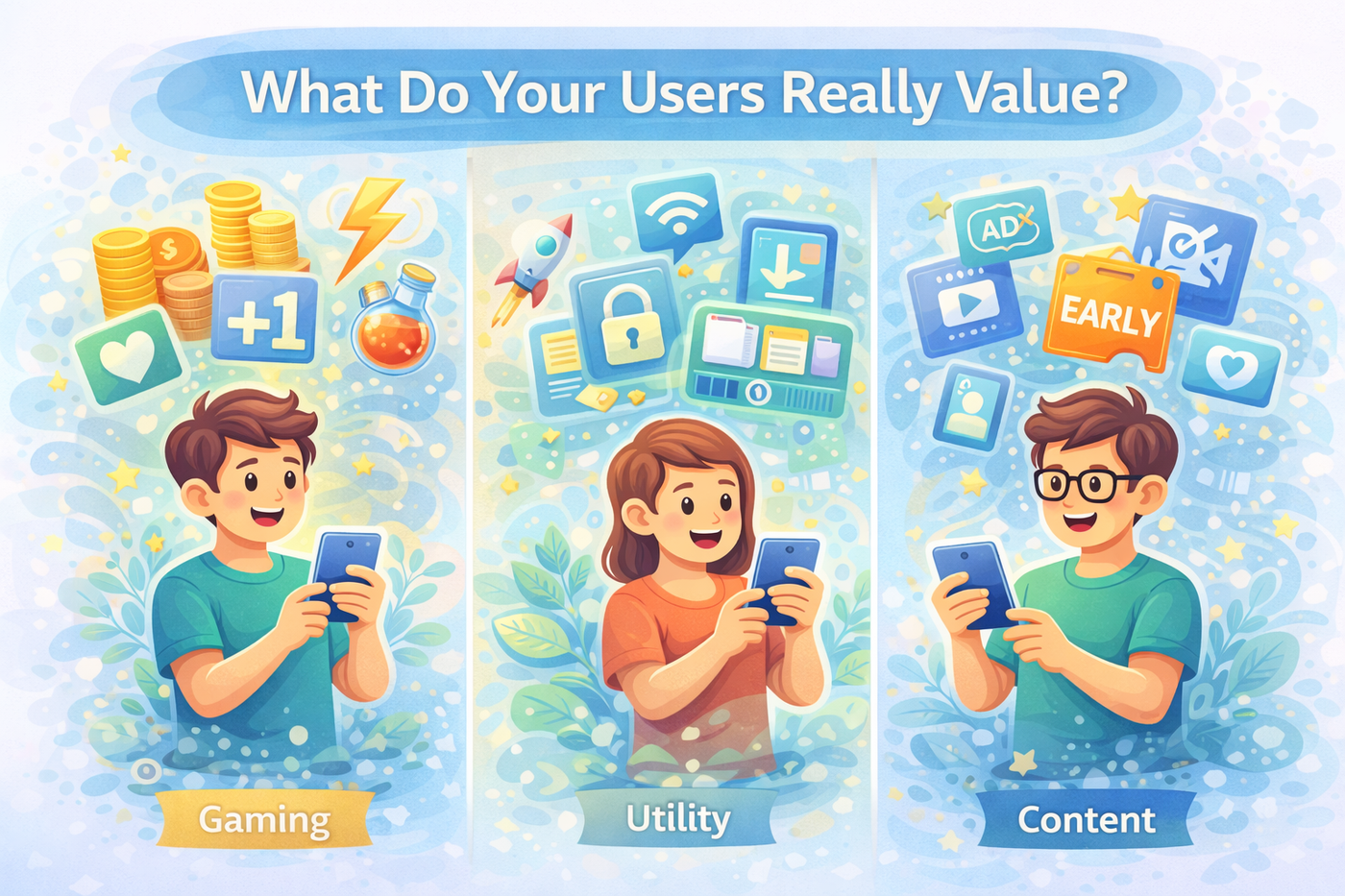
The most important part of value exchange is understanding what your users actually value. Not every reward motivates behavior, and not every user segment responds to the same incentives. In gaming apps, users often value currency, boosters, extra lives, premium characters, or faster progression. In utility apps, users may value removing limits, unlocking features, getting more storage, exporting data, or accessing advanced tools. In content apps, users may value ad-free reading, exclusive articles, early access, or downloads.
A common mistake is offering rewards that feel too small or too disconnected from the user’s goal. If the reward feels weak, users will ignore it. If it feels confusing, users will not trust it. The best rewards feel immediate, clear, and useful. A good rule is that the reward should solve a real friction point in the app. When users feel like the reward makes their experience better right away, they are more likely to repeat the behavior, which increases long-term monetization.
4. Build Monetization Moments Into the User Journey

A value exchange model works best when it appears at the right time. If users see an offer too early, they may not understand why it matters. If they see it too late, they may already churn. The strongest moments usually happen when users are about to hit a limit, want to progress faster, or are trying to unlock something meaningful. That is when value exchange feels natural because the user already has intent. The app is not interrupting them, it is helping them move forward.
This is where rewarded ads and offerwalls can become powerful tools. For example, instead of showing a forced interstitial after every action, an app can give users the option to watch a rewarded video to unlock an extra feature. Instead of forcing users into a subscription, an app can let them complete an offerwall action to earn premium access for a limited time. These moments create a healthier balance between user satisfaction and revenue. When users feel like monetization is supporting them, they engage more often and stay longer.
5. Use Offerwalls and Rewarded Formats to Scale Value Exchange

Offerwalls are one of the strongest value exchange monetization formats because they give users multiple ways to earn rewards while keeping the experience optional. Instead of a single ad decision, users can choose from different tasks such as installing apps, completing surveys, signing up for services, or reaching milestones in another game. This creates higher earning potential for the publisher because offerwalls can monetize deeper user intent, especially in regions where users are price-sensitive and prefer rewards over direct payments.
Rewarded video also plays a key role because it is simple, familiar, and easy to integrate. Users already understand the “watch to earn” model, and it often feels fair when the reward is clear. Many high-performing apps combine rewarded video for quick rewards and offerwalls for higher-value opportunities. This combination gives users flexibility and increases total monetization without needing to increase ad pressure across the entire app. The result is a monetization strategy that feels user-friendly while still driving strong revenue.
6. Measure the Right Metrics and Keep the Experience Trustworthy
A value exchange model is not only about adding rewarded placements, it is about measuring whether it improves long-term performance. Publishers should track retention, session depth, conversion rates, and revenue per user across cohorts who engage with value exchange versus those who do not. The goal is not just to earn more today, but to increase lifetime value without damaging the user experience. If value exchange is working, you should see higher engagement, more repeat sessions, and healthier monetization without an increase in churn.
Trust is also a key factor. Users must feel that the exchange is real and consistent. Rewards should be delivered instantly, the experience should be transparent, and placements should never feel misleading. If users feel tricked, the model breaks. But when value exchange is implemented thoughtfully, it becomes one of the best ways to monetize free users while keeping the app experience positive. It allows users to choose how they pay, either with money or with engagement, and that flexibility is what makes the model powerful for long-term growth.
Tags
Related Articles
Why Reward Timing Matters: Instant vs Delayed Rewards in Offerwall Monetization
Reward timing can shape trust, engagement, and revenue. Learn when instant rewards work best and when delayed rewards protect offerwall quality.
The Real Reason Users Skip Ads (And What They Prefer Instead)
Users don’t skip ads because they hate monetization—they skip ads because of poor timing and low value. Learn what users prefer instead and how apps can monetize smarter.

How User Experience Impacts Revenue
User experience directly shapes how users engage, trust, and spend. Learn why UX plays a critical role in driving sustainable app revenue.